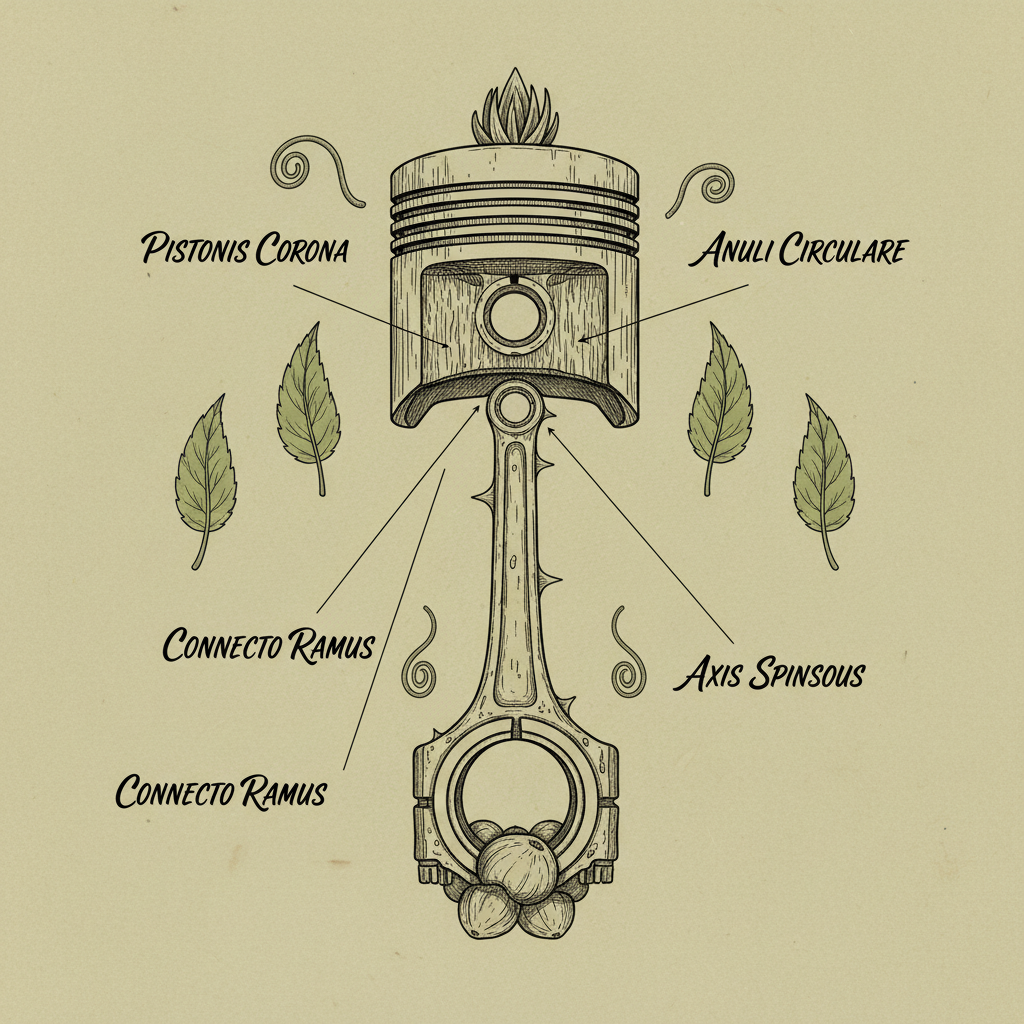
The connecting rod, often called a con rod, is a critical component within internal combustion engines. Its primary function is to transmit force from the pistons to the crankshaft, converting reciprocating motion into rotational motion – the power that ultimately drives vehicles and machinery. The reliable operation of the con rod is fundamental to engine efficiency, performance, and longevity, making it a central focus in automotive engineering and maintenance. Understanding its design, materials, and potential failure points is paramount for engineers, mechanics, and anyone involved in engine technology.
Globally, the demand for efficient and durable engines continues to grow, driven by increasing vehicle production, industrialization in developing nations, and stringent emissions standards. The automotive industry alone produces tens of millions of engines annually, each requiring multiple con rods. According to market research reports, the global connecting rod market is projected to reach billions of dollars in the coming years, demonstrating the enduring importance of this seemingly simple yet crucial component. Addressing challenges related to con rod weight, strength, and manufacturing costs directly impacts the overall efficiency and sustainability of the automotive and industrial sectors.
In essence, a con rod is a metal link connecting the piston to the crankshaft. It experiences immense stresses during engine operation, including tensile, compressive, and bending forces. Its design must carefully balance weight reduction – for increased engine responsiveness – with the necessary strength to withstand these forces. Modern con rod manufacturing employs sophisticated techniques, including forging, machining, and material science, to create components that can withstand the harsh conditions within an engine. The continuous improvement of con rod design and materials is key to optimizing engine performance and extending engine life.
The Role of con rod in Engine Performance
The performance of a con rod is directly linked to the overall efficiency and power output of an engine. A well-designed con rod minimizes stress concentrations, reduces weight, and ensures smooth power transmission. Its ability to withstand high cyclic loads is crucial for maintaining engine reliability and preventing catastrophic failures. Optimizing con rod design contributes significantly to improved fuel economy, reduced emissions, and enhanced engine responsiveness.
The material composition of a con rod is also paramount. High-strength steel alloys and, increasingly, lightweight materials like titanium alloys are employed to achieve the optimal balance of strength and weight. Advances in material science continue to drive innovation in con rod design, enabling the creation of components that can operate reliably under ever-increasing engine loads and temperatures.
Defining con rod and Its Industrial Significance
A con rod, short for connecting rod, is a fundamental component in reciprocating engines, including internal combustion engines (ICEs) and some types of steam engines. Its primary role is to connect the piston to the crankshaft, translating the linear, reciprocating motion of the piston into the rotary motion that powers machinery. This mechanical linkage is essential for converting the energy released from combustion into usable work.
The industrial significance of con rods extends far beyond the automotive sector. They are vital in power generation plants, marine engines, locomotives, and various industrial machines. The demand for robust and reliable con rods is directly proportional to the health and growth of these industries. Furthermore, the ongoing development of advanced engine technologies, such as hybrid and electric powertrains, is indirectly driving innovation in con rod materials and manufacturing processes.
The precision with which a con rod is manufactured is critical. Tight tolerances and meticulous quality control are essential to ensure proper engine operation and prevent premature wear or failure. The manufacturing process typically involves forging, machining, and surface treatment, all of which require specialized expertise and equipment.
Key Characteristics of a High-Quality con rod
Several key characteristics define a high-quality con rod. Foremost among these is its strength and durability. The con rod must withstand immense tensile, compressive, and bending stresses without yielding or fracturing. This is achieved through the selection of appropriate materials and meticulous design considerations.
Another critical characteristic is light weight. Reducing the weight of the con rod minimizes inertial forces, leading to improved engine responsiveness and higher RPM capabilities. This often involves optimizing the con rod's geometry and utilizing lightweight materials like titanium or aluminum alloys. Precision machining is also crucial, ensuring proper alignment and minimal friction between moving parts. Finally, fatigue resistance is essential for long-term reliability, allowing the con rod to withstand countless cycles of stress without failure.
Balance is also vital. Imbalance in con rods can lead to vibrations that reduce engine efficiency and lifespan. Manufacturers carefully balance each con rod during the manufacturing process to ensure smooth operation. The quality of the surface finish is also important, reducing friction and wear.
Critical Factors Influencing con rod Design
Several factors heavily influence the design of a con rod. Engine speed and power output are primary considerations. Higher-performance engines require con rods that can withstand greater stresses and operate at higher frequencies. Combustion pressure also plays a crucial role, influencing the magnitude of the forces acting on the con rod.
Engine architecture, specifically whether the engine is inline, V-shaped, or horizontally opposed, dictates the geometry and arrangement of the con rods. Material selection is paramount, with considerations given to strength, weight, cost, and fatigue resistance.
con rod Performance Characteristics Comparison
Global Applications of con rod Technology
The applications of con rod technology are truly global and diverse. In the automotive industry, they are ubiquitous in cars, trucks, buses, and motorcycles worldwide. Major automotive manufacturing hubs in countries like China, Germany, Japan, and the United States rely heavily on high-quality con rods.
Beyond automotive, con rods are essential components in marine engines powering cargo ships, tankers, and passenger vessels. The maritime industry, with its global reach, demands robust and reliable con rods to ensure safe and efficient transportation. Similarly, power generation plants utilizing internal combustion engines rely on con rods for continuous operation, supporting energy infrastructure in numerous countries.
Advantages and Long-Term Value of Improved con rod
The advantages of improved con rod technology are substantial. Reduced weight translates directly into increased fuel efficiency and lower emissions, contributing to environmental sustainability. Enhanced strength and durability minimize the risk of engine failure, reducing maintenance costs and downtime.
From a long-term value perspective, investing in high-quality con rods extends engine life, protects valuable assets, and enhances overall operational efficiency. The reliability of a con rod contributes to the longevity of an entire engine system, reducing the need for costly replacements. This also builds trust with consumers and enhances brand reputation.
Future Trends and Innovations in con rod Manufacturing
The future of con rod manufacturing is focused on several key trends. The use of advanced materials, such as carbon fiber reinforced polymers (CFRPs) and titanium alloys, is expected to increase, further reducing weight and enhancing performance. Additive manufacturing (3D printing) offers the potential to create complex con rod geometries with optimized strength-to-weight ratios.
Digitalization and automation are also playing a significant role, with computer-aided design (CAD) and computer-aided manufacturing (CAM) systems streamlining the design and production processes. The integration of sensors and data analytics will enable predictive maintenance, identifying potential failure points before they occur and optimizing con rod lifespan.
Challenges and Solutions in con rod Application
Despite advancements, challenges remain in con rod application. One significant issue is fatigue failure, particularly in high-performance engines. This can be addressed through improved material selection, optimized design, and advanced surface treatments. Another challenge is minimizing friction between the con rod and the crankshaft journal, which can lead to wear and energy loss.
Innovative solutions include the use of advanced coatings to reduce friction and wear, as well as optimized lubrication systems. Furthermore, finite element analysis (FEA) is increasingly used to simulate stress distributions within the con rod, allowing engineers to identify and mitigate potential weak points. Developing more accurate predictive models for fatigue life is also crucial.
The increasing demand for lightweight materials also presents challenges related to manufacturing costs and scalability. Overcoming these hurdles requires continued investment in research and development, as well as collaboration between material scientists, engineers, and manufacturers.
Table Summarizing con rod Performance Metrics
| Material Type |
Tensile Strength (MPa) |
Weight (grams) |
Fatigue Life (Cycles) |
| Forged Steel |
1200 |
450 |
800,000 |
| 4340 Steel |
1300 |
420 |
950,000 |
| Titanium Alloy |
1100 |
300 |
700,000 |
| Aluminum Alloy |
350 |
250 |
500,000 |
| Carbon Fiber Composite |
800 |
200 |
600,000 |
| Forged Steel (Nitride Treated) |
1400 |
460 |
1,100,000 |
FAQS
Forged steel alloys, particularly 4340 steel, are the most prevalent materials due to their excellent strength and durability. However, titanium alloys are increasingly used in high-performance applications to reduce weight. Aluminum alloys and, increasingly, carbon fiber reinforced polymers (CFRPs) are also finding niche applications where weight savings are critical. The specific choice depends on the engine's intended use and performance requirements.
Early signs of con rod failure can include knocking sounds emanating from the engine, reduced power output, and increased oil consumption. Monitoring oil pressure is crucial, as a drop in pressure can indicate bearing wear or damage. Regular visual inspections of the oil for metal particles can also provide valuable clues. Ignoring these symptoms can lead to catastrophic engine damage.
Balancing is critical to minimize vibrations and ensure smooth engine operation. Imbalances in the con rods create reciprocating forces that can lead to premature bearing wear, crankshaft damage, and reduced engine efficiency. Manufacturers carefully balance each con rod, typically by removing small amounts of material from specific locations, to achieve a harmonious rotating assembly.
Additive manufacturing (3D printing) is emerging as a promising technique for creating complex con rod geometries that are difficult or impossible to achieve with traditional methods. This allows for optimized designs that maximize strength and minimize weight. Other advancements include improved forging processes and the use of advanced coatings to reduce friction and wear.
A lighter con rod reduces the inertial forces acting on the crankshaft, leading to improved engine responsiveness and higher RPM capabilities. Efficient power transmission from the piston to the crankshaft minimizes energy loss. A properly designed and balanced con rod also reduces vibrations, which can contribute to friction and reduced efficiency. Selecting the right material can also reduce friction losses within the engine.
The lifespan of a con rod varies greatly depending on engine usage, maintenance, and operating conditions. Under normal conditions, a well-maintained con rod can last for hundreds of thousands of miles. However, in high-performance applications or under extreme stress, the lifespan may be significantly shorter. Regular oil changes and inspections are crucial for maximizing con rod life.
Conclusion
In conclusion, the con rod remains a vital component in modern engines, playing a crucial role in translating piston motion into rotational power. Its design, materials, and manufacturing processes continue to evolve, driven by the demand for increased efficiency, durability, and performance. Understanding the key characteristics of a high-quality con rod, the factors influencing its design, and the emerging trends in manufacturing is essential for anyone involved in the automotive and industrial sectors.
Looking ahead, continued innovation in materials, manufacturing techniques, and design optimization will be key to unlocking even greater potential. The integration of digital technologies, such as FEA and predictive maintenance, will further enhance the reliability and longevity of con rods, contributing to a more sustainable and efficient future. For more information on con rod technology and our engine components, please visit our website: www.oujiaengine.com