Precision 1.4L Piston Assembly and Connecting Rod Supplier
Procuring precision-engineered internal combustion components requires a balance between metallurgical integrity and strict dimensional tolerance. For operators managing Daewoo and Chevrolet fleets, the piston assembly for the F14D3 and L14 engines represents a critical failure point if the quality of the reciprocating assembly is compromised. Ensuring that the piston, rings, and connecting rod interface perfectly is essential for maintaining compression and preventing catastrophic engine failure during high-load cycles.
As a professional engine parts provider, Hebei Oujia specializes in providing aftermarket solutions that bridge the gap between OEM specifications and cost-efficiency. By focusing on high-stability materials like ZL109, our components are designed to withstand the thermal stresses of gasoline engines while ensuring a seamless fit for the 1.4L displacement configurations. This guide examines the technical requirements and procurement standards for these specific engine assemblies.

Technical Specifications and Material Composition of the 1.4L Piston Assembly
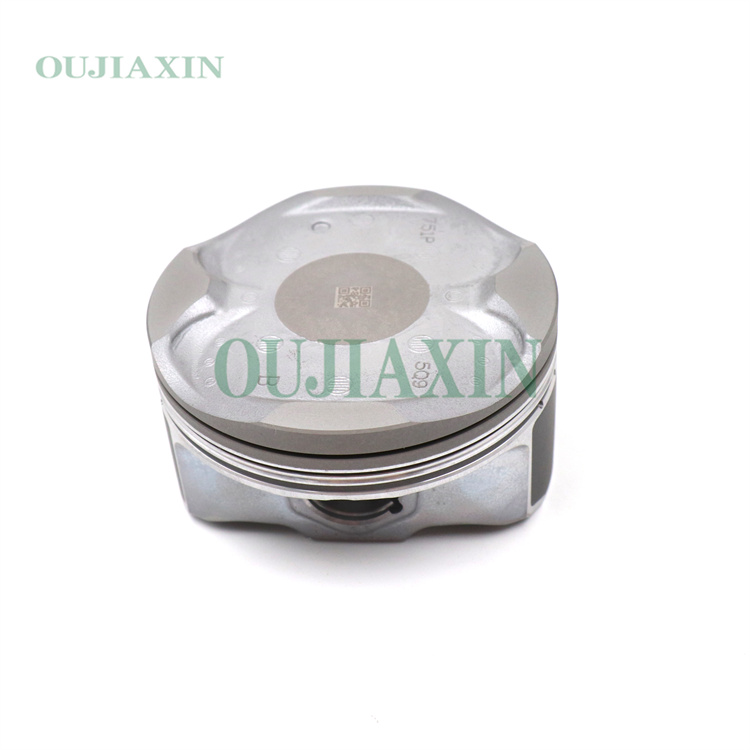
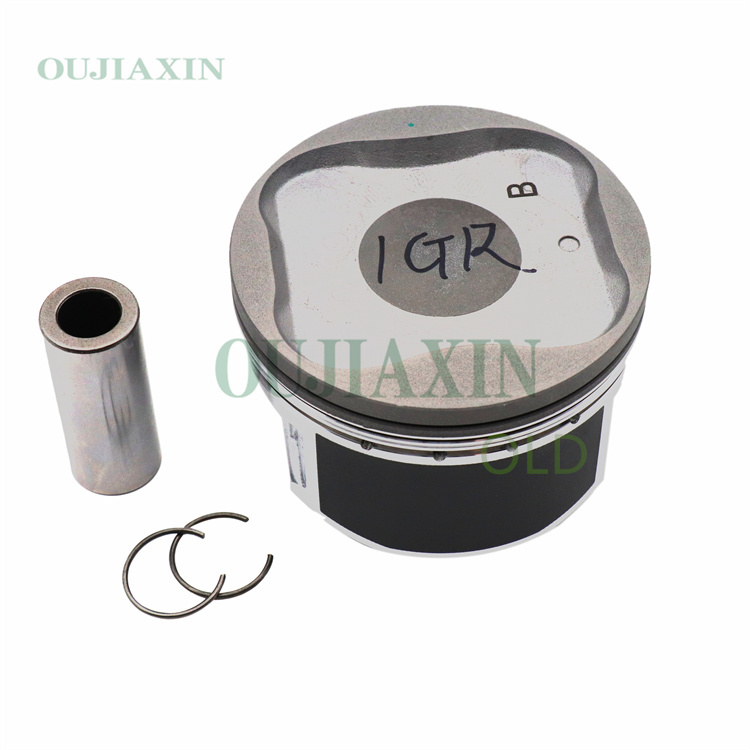
The performance of an internal combustion engine is heavily reliant on the material properties of its piston. The assembly designed for the Daewoo F14D3 and Chevrolet L14 (85CUL4) utilizes ZL109 aluminum alloy, a material specifically chosen for its excellent castability, good thermal conductivity, and sufficient strength at elevated temperatures. This ensures that the piston can dissipate heat rapidly to the cylinder walls, reducing the risk of detonation and thermal cracking.
Precision is paramount in the dimensions of these components. With a cylinder bore of 77.90mm and a compression height of 31.9mm, the assembly is engineered to maintain the exact compression ratio required for the 1.4L engine. The bolt length of 55mm and a bolt diameter of 18mm ensure a rigid connection to the connecting rod, minimizing vibration and maintaining axial alignment during the power stroke. Such strict adherence to OEM NO 96389056 ensures that the aftermarket replacement performs identically to the original factory part.
- Material: ZL109 High-Strength Alloy
- Cylinder Bore: 77.90mm Standard Size [STD]
- Recess Depth: 1.4mm for optimized combustion chamber volume
- Compatibility: Specifically tuned for Daewoo F14D3 and Chevrolet L14

Quality Control Protocols for Reciprocating Engine Components
To ensure longevity, especially in the aftermarket sector, a rigorous four-point inspection system is implemented. First, specifications and dimensions are verified using precision calipers and micrometers to ensure they meet the design requirements of the 1.4L engine block. Any deviation in the 51.9mm length or 77.90mm bore would result in improper lubrication or premature wear.
Second, the appearance and surface quality are scrutinized. This includes checking for surface flatness and smoothness, and ensuring the absence of cracks or burrs that could score the cylinder walls. Third, functional testing ensures the piston rings seat correctly and the bolt assembly provides the necessary clamping force. Finally, material verification confirms that the ZL109 alloy meets the required hardness and thermal expansion coefficients.
These protocols are designed to support Oujia's quality guarantee of 100,000 kilometers, providing peace of mind for distributors and end-users across Germany, Russia, Brazil, and the United States. By cooperating with stable factories in China, we maintain a consistent output of 74,000 products annually without compromising these standards.
Procurement Strategies for Global Aftermarket Engine Parts
For international buyers, sourcing engine parts involves more than just matching a part number. It requires an evaluation of the supplier's ability to provide consistent quality across large batches. When searching for a connecting rod supplier or piston provider, buyers must consider the integration of the entire kit. For instance, pairing the piston assembly with the correct gasket set and crankshaft bearings is essential for a complete engine overhaul.
The logistical aspect is equally critical. With a minimum order quantity (MOQ) of 5 sets, Oujia allows smaller workshops to access high-quality parts while supporting large-scale distributors with rapid delivery times of 1-10 days. Utilizing shipping ports like Xingang, Qingdao, Shanghai, and Shenzhen, and partnering with DHL, UPS, and FedEx, ensures that critical engine components reach their destination without unnecessary delays.
Additionally, OEM and self-brand creation services allow overseas customers to build their own market presence. By leveraging Oujia's network of 7,600 cooperating factories and a stock of 26,000 models, buyers can scale their inventory based on regional demand for specific engine codes like the F14D3.
Technical Comparison and Application Suitability
| Evaluation Factor | Standard OEM Requirement | Oujia Aftermarket Spec | Application Impact |
|---|---|---|---|
| Material Composition | High-Grade Alloy | ZL109 Aluminum | Thermal Stability & Weight |
| Dimensional Tolerance | $\pm$ 0.01mm | Strict Precision | Compression Efficiency |
| Warranty Period | Varies by Dealer | 12 Months / 100k KM | Operational Reliability |
| Delivery Cycle | Long Lead Times | 1-10 Days | Down-time Reduction |
| Customization | Limited | OEM / Private Brand | Market Differentiation |
Overcoming Common Installation Failures in 1.4L Engines
Many engine failures attributed to "part quality" are actually the result of improper installation. For the Chevrolet L14 and Daewoo F14D3, the critical area is the connecting rod bolt torque. If the 18mm bolts are not tightened to the exact specification, the piston can detach during high RPM, leading to total engine destruction. It is recommended to use new bolts with every piston assembly replacement to avoid fatigue-related stretching.
Another common issue is the failure to properly hone the cylinder bores to match the 77.90mm standard size. Even a high-quality ZL109 piston will fail if the cylinder wall has an oval shape or excessive glazing. Ensuring a proper cross-hatch pattern during boring allows the piston rings to seat correctly, reducing oil consumption and maintaining peak horsepower.
Finally, the use of incorrect lubricants during the initial break-in period can lead to premature scuffing of the piston skirts. Using a high-quality assembly lube and following a gradual load-increase schedule ensures that the new assembly reaches its full 100,000km potential.
Future Trends in Gasoline Engine Component Manufacturing
The automotive aftermarket is shifting toward materials that offer higher strength-to-weight ratios and better thermal management. While ZL109 remains a stable and reliable choice for 1.4L passenger car engines, the industry is exploring advanced coatings to reduce friction between the piston skirt and the cylinder wall. These innovations aim to increase fuel efficiency and reduce carbon emissions without requiring a total engine redesign.
From a supply chain perspective, the move toward "Just-in-Time" (JIT) delivery is forcing suppliers to maintain larger, more diverse inventories. Oujia's strategy of stocking 26,000 models allows for an immediate response to market shifts. As electric vehicles grow, the demand for high-quality internal combustion engine (ICE) parts will shift toward the maintenance and restoration markets, where precision and durability are valued over mass production.
Buyers should focus on suppliers who can provide not just a part, but a comprehensive technical ecosystem—including gaskets, bearings, and valves—to ensure that every component in the combustion chamber works in harmony.
Frequently Asked Questions Regarding 1.4L Engine Assemblies
What is the primary benefit of using ZL109 material for pistons?
ZL109 is an aluminum alloy known for its excellent balance of thermal conductivity and mechanical strength, which prevents the piston from warping under the high temperatures of a gasoline engine.
Will this piston assembly fit both Daewoo F14D3 and Chevrolet L14 engines?
Yes, these engines share the same 1.4L architecture and specifications, and our assembly is designed to meet the OEM NO 96389056 standard for both models.
What are the critical dimensions I should verify before installation?
You should verify the cylinder bore (77.90mm), the compression height (31.9mm), and the connecting rod bolt diameter (18mm) to ensure a perfect fit.
How does Oujia ensure the quality of aftermarket parts?
We employ a four-point inspection process covering specifications, appearance, function, and material purity, guaranteeing the parts for 100,000 kilometers.
Can I order custom branding for these piston assemblies?
Yes, Oujia provides long-term self-brand creation and OEM services for overseas customers to help them establish their own brand in their local markets.
What is the typical lead time for international shipping?
Our internal delivery time is 1-10 days, and we ship via DHL, UPS, FedEx, EMS, or TNT depending on the destination and urgency.
Technical References and Industry Standards
- SAE International - Automotive Engineering Standards
- ISO Standards for Automotive Component Quality
- Automotive Technology and Service Resources
- Professional Engine Building Technical Guides
Choosing the right components for an engine rebuild is the difference between a reliable vehicle and a recurring mechanical failure. By prioritizing material integrity and dimensional accuracy, Oujia ensures that every piston assembly delivers OEM-level performance for the global aftermarket.
Related Engine Component Solutions