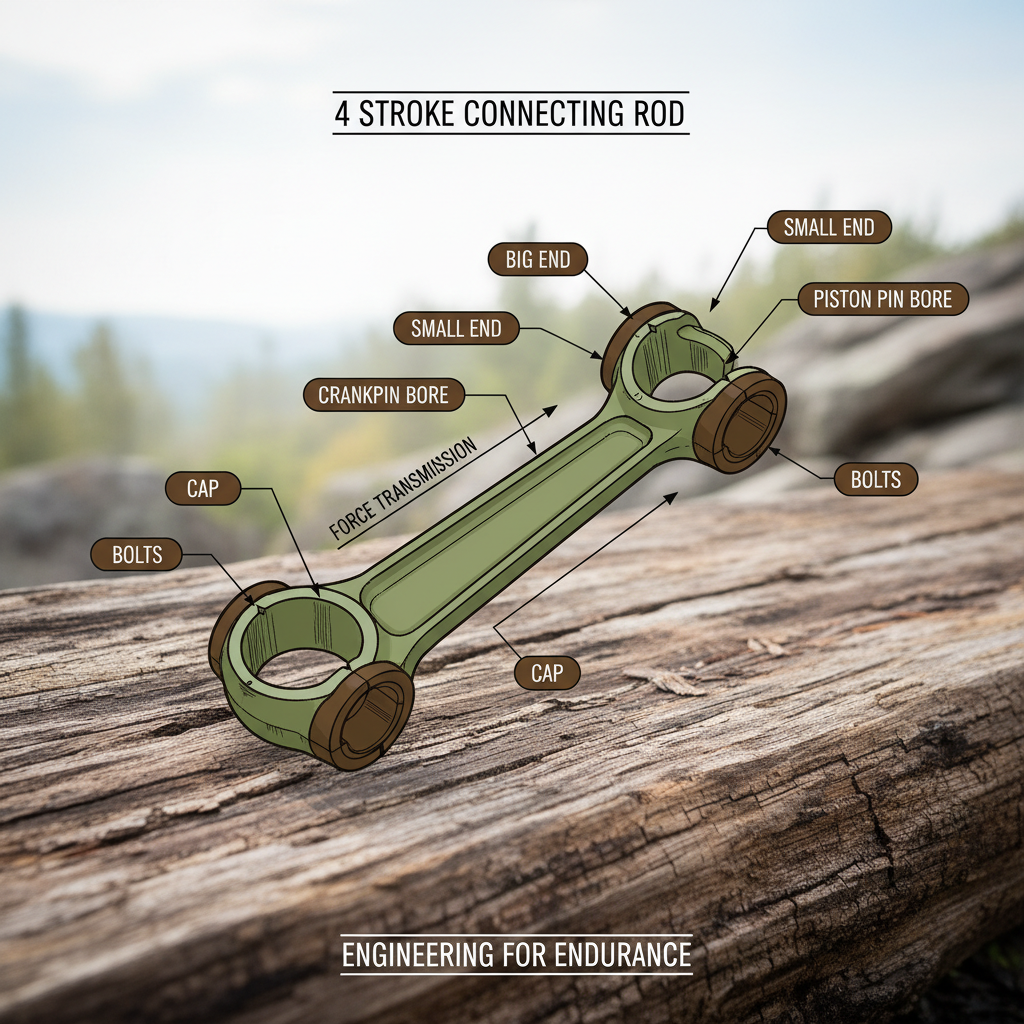
When evaluating the conrod price, it is essential to understand that the cost of a connecting rod is not merely a number, but a reflection of the metallurgical integrity, precision engineering, and stress-bearing capacity required for high-performance internal combustion engines. The connecting rod serves as the critical link between the piston and the crankshaft, converting linear motion into rotational energy, which makes its quality paramount for engine longevity.
For procurement managers and automotive engineers in the automotive parts manufacturing sector, balancing cost with technical specifications is a constant challenge. Variations in pricing often stem from the choice of materials—ranging from cast iron to forged steel and titanium—and the rigorousness of the inspection processes, including ultrasonic testing and precision balancing, which ensure the part can withstand extreme combustion pressures.
This comprehensive analysis provides a technical and commercial framework for understanding what drives conrod pricing. By examining material trade-offs, manufacturing standards, and supplier evaluation criteria, this guide helps professionals make informed decisions that optimize engine performance while maintaining strict budgetary control for aftermarket and OEM projects.

1Understanding Connecting Rod Cost Drivers

The conrod price is primarily influenced by the complexity of the manufacturing process and the raw material costs. In the automotive manufacturing industry, a connecting rod must be engineered to withstand immense compressive and tensile forces. The initial cost is tied to the casting or forging method used; forged rods typically command a higher price due to the superior grain structure they provide, which significantly increases fatigue strength compared to cast alternatives.
Beyond materials, the precision of the machining process plays a vital role. The boring of the big-end and small-end, along with the facing of the mating surfaces, requires high-tolerance CNC machinery. Any deviation in microns can lead to premature bearing failure, meaning that parts with tighter tolerances naturally carry a premium price tag.
Additionally, quality assurance protocols, such as X-ray inspection for internal voids and hardness testing, add to the final cost. For professional suppliers like Oujia, ensuring that parts meet strict design requirements is a non-negotiable part of the production cycle, ensuring the reliability of the engine over 100,000 kilometers.
2Material Influence on Component Pricing
Material selection is the most direct variable affecting the conrod price. Standard passenger car engines often use cast iron or powdered metal, which are cost-effective for mass production. However, high-performance or heavy-duty diesel engines require forged steel or alloys. Forged materials are more expensive because they require higher energy input and specialized tooling to compress the metal into the desired shape without creating stress concentrations.
The use of specialized alloys, such as chrome-molybdenum steel, further elevates the price. These materials provide better elasticity and toughness, which are essential for engines operating at high RPMs. The cost reflects not only the raw ingredient but also the specialized heat treatment processes required to achieve the desired Rockwell hardness.
When selecting materials, engineers must weigh the cost against the intended application. For a standard aftermarket replacement, high-quality forged steel provides the optimal balance of price and durability, whereas racing applications may justify the extreme cost of exotic alloys to reduce reciprocating mass.
3Application Scenarios and Load Requirements
The environment in which a connecting rod operates dictates its design and, consequently, its price. In gasoline engines, the focus is often on reducing weight to increase acceleration and efficiency. In contrast, diesel engines face much higher compression ratios, necessitating thicker beams and stronger materials to prevent buckling. This difference in structural requirements creates distinct pricing tiers within the product catalog.
Operational stress is another factor. Engines used in industrial machinery or heavy transport experience constant, high-load cycles. These rods must be oversized and reinforced, increasing the material volume and machining time. This makes the procurement cost for heavy-duty conrods significantly higher than those for compact passenger vehicles.
Furthermore, the interaction between the conrod and other components, such as the piston assembly and crankshaft, means that the price of a "kit" often provides better value than purchasing individual components. Ensuring that the rod and piston are balanced as a pair reduces internal friction and prevents engine vibration.
4Technical Performance and Value Analysis
Analyzing the value of a connecting rod involves looking beyond the initial purchase price and focusing on the total cost of ownership. A lower-priced rod that lacks proper heat treatment may fail prematurely, leading to catastrophic engine failure. Therefore, the "value" is found in the intersection of material durability and precision tolerances.
Technical metrics such as the compression height and bolt length must be exact. For example, a rod with a bolt length of 56mm must be paired with the correct fastener to ensure the clamping force is sufficient to hold the big-end cap securely under peak cylinder pressure.
conrod price Performance Metrics
As shown in the performance metrics, investing in higher-specification rods leads to significant gains in heat resistance and durability. While the initial conrod price may be higher, the reduction in maintenance frequency and the extension of the engine's service life provide a superior return on investment for the end-user.
5Procurement Strategies for Engine Components
Effective procurement of connecting rods requires a shift from "lowest cost" to "best value." Buyers should evaluate suppliers based on their quality control systems. A reliable supplier will provide detailed inspection reports covering dimensions, surface flatness, and material certification. This transparency reduces the risk of receiving defective parts that could compromise the engine.
Another key strategy is the consolidation of orders. Purchasing connecting rods alongside crankshafts, cylinder heads, and full gasket sets often allows for better pricing through volume discounts. Additionally, ensuring the supplier has a broad stock of models—similar to Oujia's 26,000 models—reduces lead times and simplifies the supply chain.
Finally, procurement teams should consider the warranty period. A 12-month quality warranty or a kilometer-based guarantee (e.g., 100,000 km) serves as a proxy for the manufacturer's confidence in their production process, effectively acting as an insurance policy against premature component failure.
6Industry Trends in Forging Technology
The automotive industry is seeing a move toward advanced forging techniques and automated precision machining. Cold forging is becoming more common for mid-range applications as it reduces material waste and improves dimensional consistency, which can help stabilize the conrod price for mass-market parts.
Furthermore, the integration of AI-driven quality inspection is replacing manual checks. Automated optical inspection (AOI) can detect microscopic surface cracks and burrs that a human eye might miss, ensuring that every part leaving the factory is flawless. This shift increases the initial setup cost but lowers the rate of expensive returns and failures.
As engines become more compact and efficient, the demands on the connecting rod's strength-to-weight ratio increase. This trend is pushing manufacturers to experiment with new composite materials and advanced coatings to reduce friction at the wrist pin and big-end bearings, adding new dimensions to the cost-benefit analysis.
7Comparing Connection Rod Quality Tiers
To simplify the decision-making process, connecting rods can be categorized into three primary quality tiers. Each tier serves a different market segment and comes with a corresponding price point. Understanding these tiers allows buyers to align their selection with the specific performance requirements of the engine.
The choice between these tiers depends on the expected duty cycle of the vehicle. While a budget rod is sufficient for basic transport, any modification to the engine's power output requires a jump to a higher tier to avoid structural failure under increased load.
| Quality Tier | Material Type | Typical Use Case | Price Impact |
|---|---|---|---|
| Budget / Standard | Cast Iron / Powdered | Economy Passenger Cars | Low |
| Performance | Forged Steel | Tuned Engines / SUVs | Moderate |
| Heavy Duty | Alloy Forged Steel | Commercial Diesel Trucks | High |
| Racing / Exotic | Titanium / High-Alloy | Professional Motorsport | Very High |
| OEM Grade | Spec-Matched Forged | Factory Replacements | Moderate-High |
| Custom / Billet | Billet Steel | Custom Engine Builds | Very High |
In conclusion, while the conrod price varies widely, the most critical factor is the alignment of the part's specifications with the engine's operating conditions. For those seeking a reliable partner for high-quality engine parts, exploring the professional range at www.oujiaengine.com provides a pathway to balanced performance and cost.
Frequently Asked Questions
Conclusion
Determining the right conrod price requires a balance between technical necessity and financial constraints. Whether you are procuring for a fleet of commercial vehicles or performing a high-end engine rebuild, the focus must remain on the structural integrity and precision of the component. Forged materials and rigorous quality testing may increase the initial cost, but they significantly reduce the risk of catastrophic engine failure and long-term maintenance expenses.
By understanding the drivers of cost—from material selection to precision machining—professionals can make procurement decisions that ensure engine longevity and efficiency. For those seeking reliable, professional-grade engine parts and OEM-standard connecting rods, detailed product information and sourcing options are available at www.oujiaengine.com.