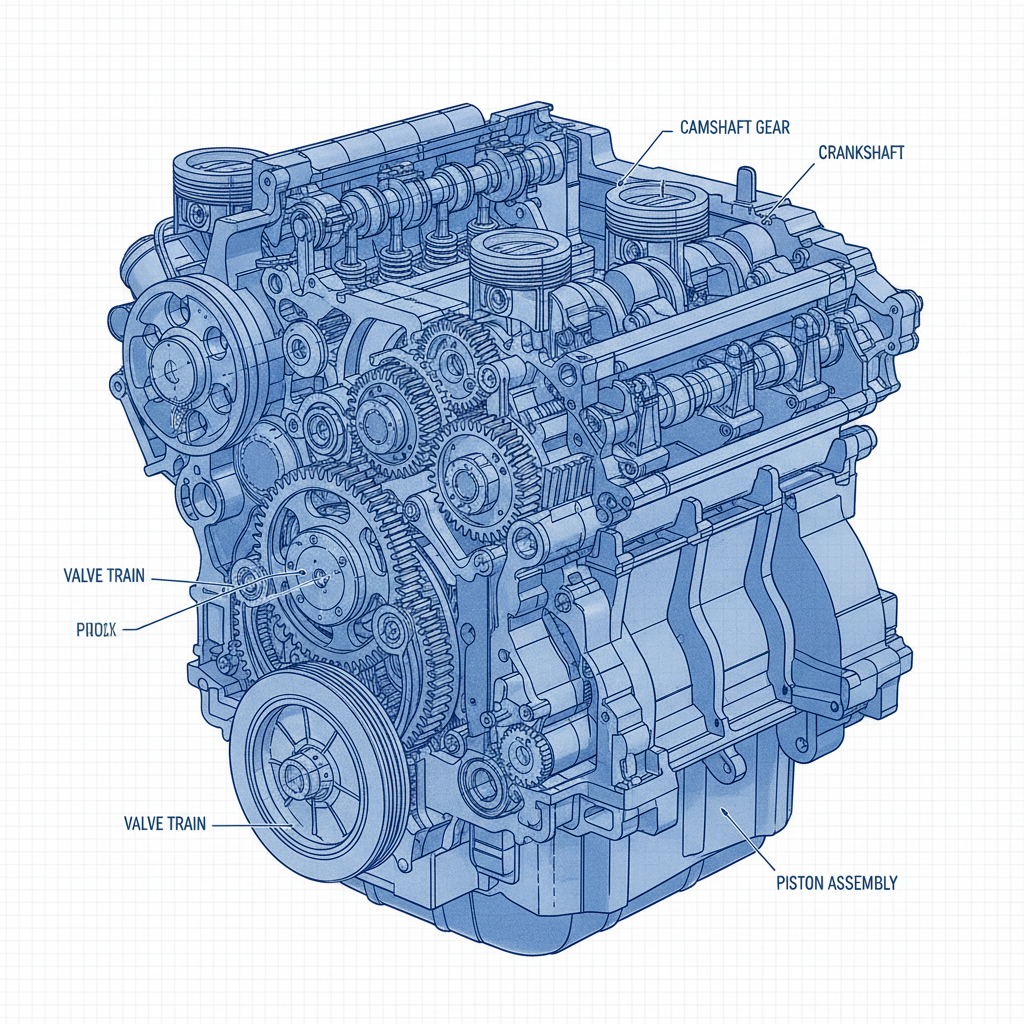
High Quality Engine Parts and Intake Camshaft Price Guide
When sourcing critical valve train components, procurement managers often find that the total cost of ownership extends far beyond the initial intake camshaft price. For high-performance gasoline and diesel engines, the precision of the intake lobe profile directly dictates volumetric efficiency and overall power output. In the competitive automotive aftermarket, finding a balance between material durability and cost-effectiveness is essential for maintaining fleet reliability and reducing downtime.
Hebei Oujia specializes in providing professional-grade engine components, including camshafts designed for stringent OEM standards. By focusing on the specific needs of passenger car engines, we ensure that every component—from the cylinder head to the timing kit—works in perfect synchronization. Understanding the variables that influence pricing and quality allows distributors and repair shops to make informed decisions that protect the engine's internal integrity over long-term operation.

Analyzing the Technical Role of Intake Camshafts in Engine Efficiency
The intake camshaft is a fundamental component of the internal combustion engine, responsible for controlling the opening and closing of the intake valves. By converting rotational motion into linear motion, it regulates the precise timing and duration of the air-fuel mixture entering the combustion chamber. Any deviation in the lobe geometry or timing can lead to significant losses in horsepower and increased fuel consumption.
In professional engine rebuilding, the quality of the intake camshaft price is often tied to the precision of its grinding and the hardness of its surface treatment. High-quality shafts utilize advanced metallurgy to resist wear and tear at the lobe-tappet interface, where friction is highest. For applications such as the BUICK LE5 or LE9 engines, precise timing is not just about performance but about preventing catastrophic valve-to-piston contact.
Furthermore, the synchronization between the intake and exhaust cycles is what defines an engine's "character." Whether designed for low-end torque or high-RPM power, the engineering behind the camshaft must be flawless. This is why professional suppliers focus on rigorous inspection of dimensions and surface smoothness to ensure a seamless fit within the cylinder head assembly.

Key Factors Influencing Procurement Costs and Component Value
For B2B buyers, evaluating the cost of engine components requires a deep dive into the manufacturing process. Several variables dictate the final market value of a camshaft, ranging from the raw material grade to the complexity of the lobe profile. Chilled cast iron or forged steel are common choices, with the latter offering superior strength for heavy-duty diesel applications.
Quality assurance plays a pivotal role in determining value. A low-cost component that fails prematurely results in expensive labor costs for replacement and potential engine damage. At Oujia, we emphasize a comprehensive inspection process that includes:
- Dimensional Accuracy: Ensuring the shaft meets exact design specifications to prevent vibration.
- Surface Integrity: Checking for cracks, burrs, or irregularities that could cause premature wear.
- Functional Testing: Verifying that the lift and duration match the required engine code.
- Material Certification: Ensuring the alloy meets the necessary hardness standards for the intended mileage.
By integrating these quality checks, the value proposition shifts from the lowest purchase price to the lowest cost per kilometer. For the automotive aftermarket, where a 100,000-kilometer guarantee is a benchmark for reliability, investing in components with stable quality is the only viable long-term strategy.
Application Scenarios and Compatibility for Aftermarket Distribution
The versatility of engine parts depends heavily on their compatibility across different engine codes. For instance, parts designed for BUICK LE5, LE9, and LAF engines must adhere to strict OEM numbers to ensure a drop-in fit. In the global aftermarket, distributors serving Germany, Russia, Brazil, and the United States require components that can withstand diverse climatic conditions and varying fuel qualities.
Different application scenarios demand different priorities. In a fleet maintenance setting, the priority is longevity and ease of installation. In a performance tuning scenario, the focus shifts toward optimized lift and duration. Regardless of the scenario, the camshaft must operate in harmony with the piston assembly and the full gasket set to maintain optimal compression.
Operating an engine with a worn-out intake shaft often manifests as rough idling, decreased fuel economy, or audible ticking sounds from the top end. Replacing these components as part of a comprehensive engine overhaul—including the crankshaft and connecting rods—ensures that the entire rotating assembly is balanced, thereby extending the overall lifespan of the vehicle.
Comparison of Camshaft Quality Grades and Buyer Impact
| Quality Grade | Material Standard | Typical Application | Expected Longevity |
|---|---|---|---|
| Standard Aftermarket | Basic Cast Iron | General Commuting | Medium |
| Premium OEM-Spec | Hardened Alloy Steel | Commercial Fleets | High |
| Performance Grade | Forged / Billet Steel | High-RPM Tuning | Very High |
| Heavy Duty Diesel | Reinforced Chromium Steel | Industrial/Trucks | Maximum |
| Economy Line | Recycled/Basic Alloy | Low-Budget Repairs | Low to Medium |
Supplier Evaluation: Why Manufacturing Stability Matters
Choosing a supplier for engine parts is not merely about the product list but about the stability of the supply chain. With 17 years of experience, Hebei Oujia has built a network of over 7,600 cooperating factories in China. This scale allows us to select the most stable quality sources, ensuring that the products delivered to our overseas customers are consistent across different batches.
Reliability in the B2B sector is built on transparency. Whether providing OEM services or helping clients create their own brands, the ability to maintain a stock of 26,000 models ensures that lead times are minimized. For many distributors, the ability to receive parts within 1-10 days is a critical competitive advantage in the fast-paced automotive repair market.
Furthermore, the integration of professional logistics—utilizing DHL, UPS, and FedEx—ensures that precision components arrive without damage. When dealing with parts like camshafts, where a small dent or scratch on the lobe can ruin the component, the packaging and shipping process is as important as the manufacturing itself.
Future Trends in Valve Train Technology and Procurement
The automotive industry is moving toward more complex valve timing systems, such as Variable Valve Timing (VVT). This evolution increases the demand for camshafts with tighter tolerances and specialized materials that can handle frequent adjustments without wearing down. Buyers must now look for suppliers who can provide components compatible with these advanced electronic control systems.
Additionally, there is a growing trend toward "kit-based" procurement. Rather than buying a single shaft, professional workshops are opting for full engine kits—combining the camshaft, piston kit, and gasket set. This approach ensures that all components are matched for the same engine code, reducing the risk of installation errors and improving the efficiency of the repair process.
As sustainability becomes a priority, the focus is shifting toward components that improve fuel efficiency through better air-intake management. The next generation of intake components will likely feature lighter materials and friction-reducing coatings, further driving the need for partners who stay at the forefront of automotive engineering.
Frequently Asked Questions About Engine Camshaft Procurement
How do I determine the correct camshaft for my engine code?
The most reliable method is to match the OEM number provided in your vehicle's technical manual. For example, for BUICK engines, ensuring the part matches codes like LE5 or LE9 is critical for fitment. Our team can assist in verifying the compatibility based on your specific engine serial number.
What are the most common signs of a worn intake camshaft?
Typical symptoms include an increase in engine noise (ticking), a noticeable drop in fuel efficiency, and erratic idling. In severe cases, you may experience misfires or a complete loss of power in specific cylinders due to improper valve opening.
Does the material of the camshaft affect its lifespan?
Yes, significantly. Cast iron is suitable for standard use, but forged steel or hardened alloys offer much higher resistance to friction and wear, making them ideal for high-mileage commercial vehicles or performance-tuned engines.
What is the typical MOQ for wholesale engine parts?
Our minimum order quantities vary by product. For many of our piston assemblies and related engine components, the MOQ starts as low as 5 sets, making it accessible for both small distributors and large-scale wholesalers.
Can you provide OEM services for my own brand of engine parts?
Yes, Oujia provides long-term self-brand creation and OEM services for our overseas customers. We can customize packaging and ensure the products meet your specific quality standards and branding requirements.
What warranty is provided for aftermarket engine components?
Our focus on the aftermarket includes a quality guarantee for 100,000 kilometers for our core product lines, providing peace of mind regarding the durability and stability of the parts.
Technical Resources and Industry References
- Internal Combustion Engine Camshaft Mechanics - Wikipedia
- SAE International - Automotive Engineering Standards
- ISO Standards for Automotive Quality Management
- Professional Engine Component Specifications - Oujia
Selecting the right valve train components is a critical decision for any automotive professional. By prioritizing material quality and precision engineering over the lowest initial cost, you ensure the longevity and performance of the engine. Hebei Oujia remains committed to delivering stable, OEM-grade engine parts to the global market, supporting the reliability of millions of vehicles worldwide.
Related Articles