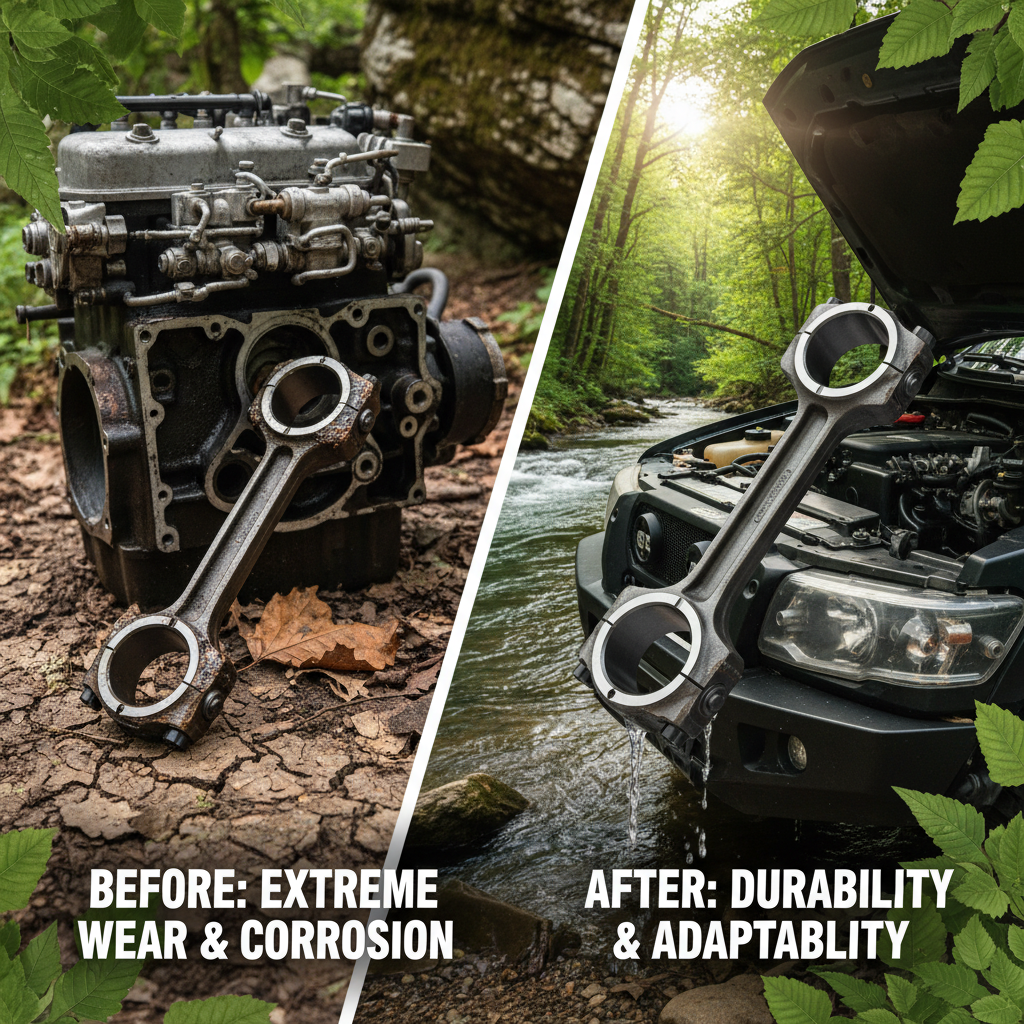
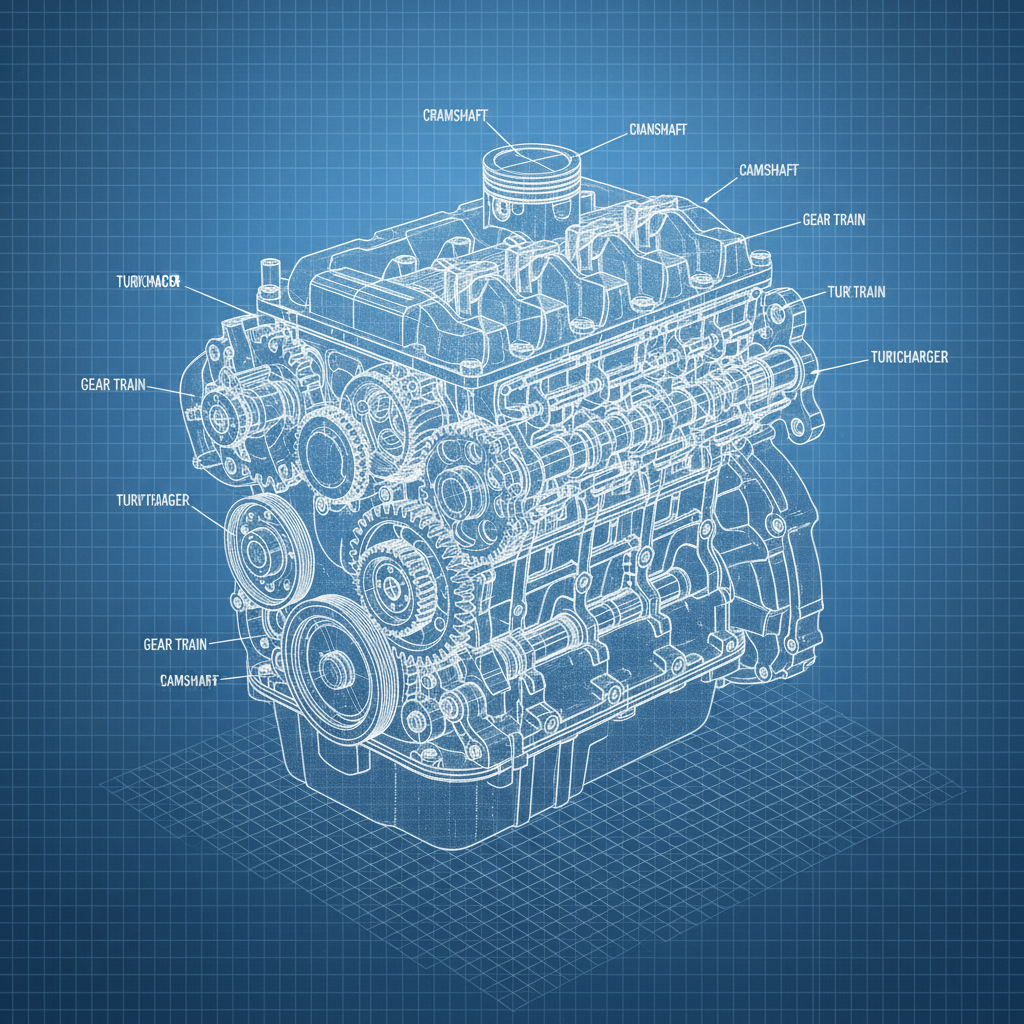
The internal combustion engine remains the backbone of global logistics and industrial power, and at the heart of this machinery lies the connecting rod diesel engine. This critical component serves as the mechanical bridge between the piston and the crankshaft, translating the linear force of combustion into the rotational energy that drives vehicles and generators worldwide. Understanding the intricacies of its design is essential for ensuring engine longevity and operational efficiency.
In the demanding environment of heavy-duty diesel applications, the connecting rod must withstand immense compressive and tensile loads while maintaining strict geometric tolerances. Any failure in this component typically leads to catastrophic engine damage, making the selection of high-grade materials and precision manufacturing paramount. From marine shipping to agricultural machinery, the reliability of the connecting rod diesel engine directly impacts the productivity of global supply chains.
As the industry pivots toward higher efficiency and stricter emission standards, the engineering of diesel engine components has evolved. Modern iterations focus on reducing reciprocating mass without sacrificing strength, thereby improving fuel economy and reducing vibration. This guide explores the technical dimensions, global applications, and future trajectories of the connecting rod diesel engine to provide a comprehensive resource for engineers and procurement specialists.
Global Industry Context of Connecting Rods
The global demand for diesel-powered propulsion continues to be driven by the infrastructure needs of developing economies and the logistical requirements of international trade. According to industrial benchmarks and ISO standards for automotive components, the precision of the connecting rod diesel engine is a primary determinant of an engine's Mean Time Between Failures (MTBF). In regions like Southeast Asia and Africa, where heavy-duty trucks and generators are vital for economic growth, the availability of high-quality replacement parts is a critical challenge.
The primary industry struggle lies in balancing the increasing power output of modern diesel engines with the physical limitations of traditional forged steel. As turbocharged engines push the boundaries of cylinder pressure, the connecting rod is subjected to unprecedented stress levels. This has led to a global shift toward advanced forging techniques and proprietary alloy compositions to prevent structural deformation under extreme thermal and mechanical loads.
Defining the Connecting Rod Diesel Engine
In simple mechanical terms, a connecting rod diesel engine component is a link that connects the piston to the crankshaft. Its primary function is to transfer the force generated by the expanding gases during the combustion stroke to the crankshaft, which then converts this linear motion into rotational torque. Without this precise linkage, the energy produced within the cylinder would have no means of propelling the vehicle or driving an industrial alternator.
Beyond its basic geometry, the connecting rod is a masterpiece of metallurgical engineering. It consists of the "small end," which attaches to the piston via a gudgeon pin, and the "big end," which wraps around the crankshaft journal. In modern industry, this component is not just a piece of metal but a calibrated instrument designed to manage vibration, reduce friction, and maintain the exact timing of the engine's internal movements.
From a humanitarian and industrial perspective, the reliability of these rods ensures that essential services—such as emergency power for hospitals in remote areas or the transport of food supplies in rugged terrains—remain uninterrupted. The pursuit of a "zero-failure" connecting rod is therefore not just about profit, but about the stability of the critical infrastructure that supports global civilization.
Core Engineering Factors for Durability
Material integrity is the most critical factor for any connecting rod diesel engine. Most high-performance rods are manufactured from forged steel or ductile iron to ensure they can withstand the high-pressure environment of a diesel cycle. The forging process aligns the grain structure of the metal, which significantly increases the fatigue strength compared to cast alternatives, allowing the rod to endure millions of cycles without developing stress fractures.
Precision balancing is another pillar of durability. If a connecting rod diesel engine is even slightly off-weight compared to the others in the engine block, it creates centrifugal imbalances. These imbalances manifest as high-frequency vibrations that can wear down the main bearings and lead to premature crankshaft failure. Professional manufacturers use CNC grinding and precision weighing to ensure a tolerance of mere fractions of a gram.
Finally, the quality of the big-end bearings and the bolt tensioning system determines the operational lifespan. The use of high-strength alloy bolts, tightened to precise torque specifications, prevents the rod cap from shifting under load. When combined with advanced lubrication channels, the connecting rod diesel engine can operate at peak efficiency with minimal frictional wear, even during extended heavy-duty haulage.
Global Applications and Industrial Use Cases
The application of the connecting rod diesel engine spans across various heavy-industry sectors. In the maritime industry, massive low-speed diesel engines power container ships, requiring rods that are several meters long and weighing hundreds of kilograms. These components are engineered for extreme longevity, as ship engines often run for weeks without stopping, placing a continuous, steady load on the mechanical linkages.
In contrast, the construction and mining sectors utilize mid-range diesel engines for excavators and haul trucks. In these environments, the connecting rod diesel engine must handle sudden load spikes—such as when a bucket hits hard rock—requiring a higher degree of impact toughness. In remote industrial zones, such as the Siberian oil fields or the Australian Outback, the ruggedness of these components is the only thing preventing costly downtime in inhospitable climates.
Performance Comparison of Connecting Rod Material Methods
Long-Term Value and Reliability Benefits
Investing in a premium connecting rod diesel engine provides tangible economic benefits through the reduction of Total Cost of Ownership (TCO). While lower-grade components may offer a lower initial purchase price, the risk of catastrophic failure—which often destroys the cylinder wall and crankshaft—far outweighs the initial savings. High-reliability rods ensure that engines can reach their intended service life of 10,000+ hours without needing a full overhaul.
Beyond the financial logic, there is a critical safety and trust element. In industrial applications, such as backup power for hospitals or propulsion for fire-fighting vessels, the reliability of the connecting rod diesel engine is a matter of operational dignity and public safety. Knowing that the core mechanical linkage is engineered to the highest standards allows operators to push their equipment to the limit with confidence, fostering innovation in how these machines are deployed in the field.
Future Trends in Material Science
The future of the connecting rod diesel engine is being shaped by the digital transformation of manufacturing. Additive manufacturing, or 3D printing with metal powders, is beginning to allow for "topology optimization." This means engineers can remove material from areas of the rod that experience low stress while reinforcing high-stress zones, creating a component that is significantly lighter yet stronger than a traditional forged rod.
Furthermore, the push toward "Green Diesel" and hydrogen-combustion engines is forcing a re-evaluation of material chemistry. New alloys are being developed to resist the different thermal profiles and corrosive by-products associated with alternative fuels. These innovations ensure that the connecting rod diesel engine remains relevant even as the world transitions away from traditional petroleum-based fuels.
Automation in quality control is also playing a huge role. AI-driven ultrasonic testing can now detect microscopic voids or inclusions within a rod's structure that were previously invisible to human inspectors. This level of precision ensures that every connecting rod diesel engine leaving the factory is virtually guaranteed to be defect-free, further increasing the reliability of global diesel fleets.
Common Challenges and Technical Solutions
One of the most persistent challenges with the connecting rod diesel engine is "rod fatigue," where repeated stress cycles lead to microscopic cracks. To combat this, engineers employ "shot peening," a process where the surface of the rod is bombarded with small spherical shot. This creates a layer of compressive residual stress on the surface, which effectively prevents cracks from initiating and propagating through the metal.
Another common issue is lubrication failure at the big-end bearing, often caused by oil dilution or contaminated fuel. The solution has been the integration of advanced hydrodynamic bearing surfaces and improved oil-gallery drilling techniques. By ensuring a consistent film of oil between the connecting rod diesel engine and the crankshaft, friction is minimized, and the risk of "spun bearings" is drastically reduced.
Lastly, the challenge of thermal expansion can lead to clearance issues. Modern solutions involve the use of precision-matched piston pins and oversized rod journals that are ground to micron-level accuracy. This ensures that as the connecting rod diesel engine heats up during operation, the clearances remain within the optimal range for both lubrication and structural stability.
Technical Analysis of Connecting Rod Failure Modes and Mitigations
| Failure Mode |
Root Cause |
Impact Severity |
Engineering Solution |
| Fatigue Cracking |
Cyclic Overloading |
Critical (9/10) |
Surface Shot Peening |
| Bearing Seizure |
Oil Film Breakdown |
High (8/10) |
Improved Oil Gallery Design |
| Bending/Warpage |
Hydrolock Event |
Critical (10/10) |
High-Yield Forged Steel |
| Bolt Failure |
Improper Torque |
High (7/10) |
Torque-to-Yield Bolts |
| Excessive Vibration |
Weight Imbalance |
Medium (5/10) |
CNC Precision Balancing |
| Surface Wear |
Contaminated Lubricant |
Medium (6/10) |
Hardened Bearing Shells |
FAQS
Forged connecting rods are created by hammering heated metal into shape, which aligns the internal grain structure and significantly increases strength and fatigue resistance. Cast rods are made by pouring molten metal into a mold; while cheaper and easier to produce in complex shapes, they are more brittle and prone to cracking under the high-pressure loads typical of a connecting rod diesel engine application.
Common signs of failure include a rhythmic knocking sound (rod knock) coming from the lower end of the engine, increased vibration, and the presence of metallic flakes in the oil filter. In severe cases, a drop in oil pressure may indicate that the bearing clearances have widened due to wear of the connecting rod diesel engine big-end bearing.
Titanium rods offer an incredible strength-to-weight ratio, which reduces reciprocating mass and allows for higher RPMs. However, they are extremely expensive and can be more susceptible to certain types of surface wear and thermal fatigue in low-speed, heavy-duty industrial diesel engines. They are typically reserved for high-performance or specialized lightweight applications rather than standard industrial connecting rod diesel engine setups.
Precision balancing ensures that the rotational forces are distributed evenly across the crankshaft. If one connecting rod diesel engine is heavier than the others, it creates an imbalance that generates vibration. This not only makes the engine louder but also accelerates the wear on the main bearings and can eventually lead to crankshaft failure.
Inspection intervals depend on the engine's duty cycle, but generally, rods should be inspected during major overhauls or every 5,000 to 10,000 operating hours. Using non-destructive testing (NDT) such as Magnaflux or ultrasonic testing allows technicians to find microscopic cracks in the connecting rod diesel engine before they lead to a total engine failure.
It depends on the bolt type. Many modern diesel engines use "Torque-to-Yield" (TTY) bolts, which are designed to stretch permanently when tightened to a specific torque. These bolts MUST be replaced every time they are removed. Standard alloy bolts may be reused if they are inspected for stretch and wear, but for a critical component like the connecting rod diesel engine, new bolts are always recommended for safety.
Conclusion
The connecting rod diesel engine is far more than a simple piece of hardware; it is the critical link that enables the conversion of thermal energy into mechanical work. From the rigorous demands of material selection and forging to the precision of CNC balancing and surface treatments, every aspect of its production is geared toward maximizing reliability and efficiency. We have seen that while challenges like fatigue and lubrication failure persist, innovations in metallurgy and AI-driven quality control are pushing the boundaries of what these components can endure.
As we look toward a future of hybrid propulsion and sustainable fuels, the principles of robust mechanical linkage will remain unchanged. For operators and engineers, the focus must remain on procuring high-quality, precision-engineered parts to ensure the longevity of their machinery and the safety of their operations. To ensure your engine is equipped with the highest standard of components, we invite you to explore our professional range of engine parts. Visit our website: www.oujiaengine.com