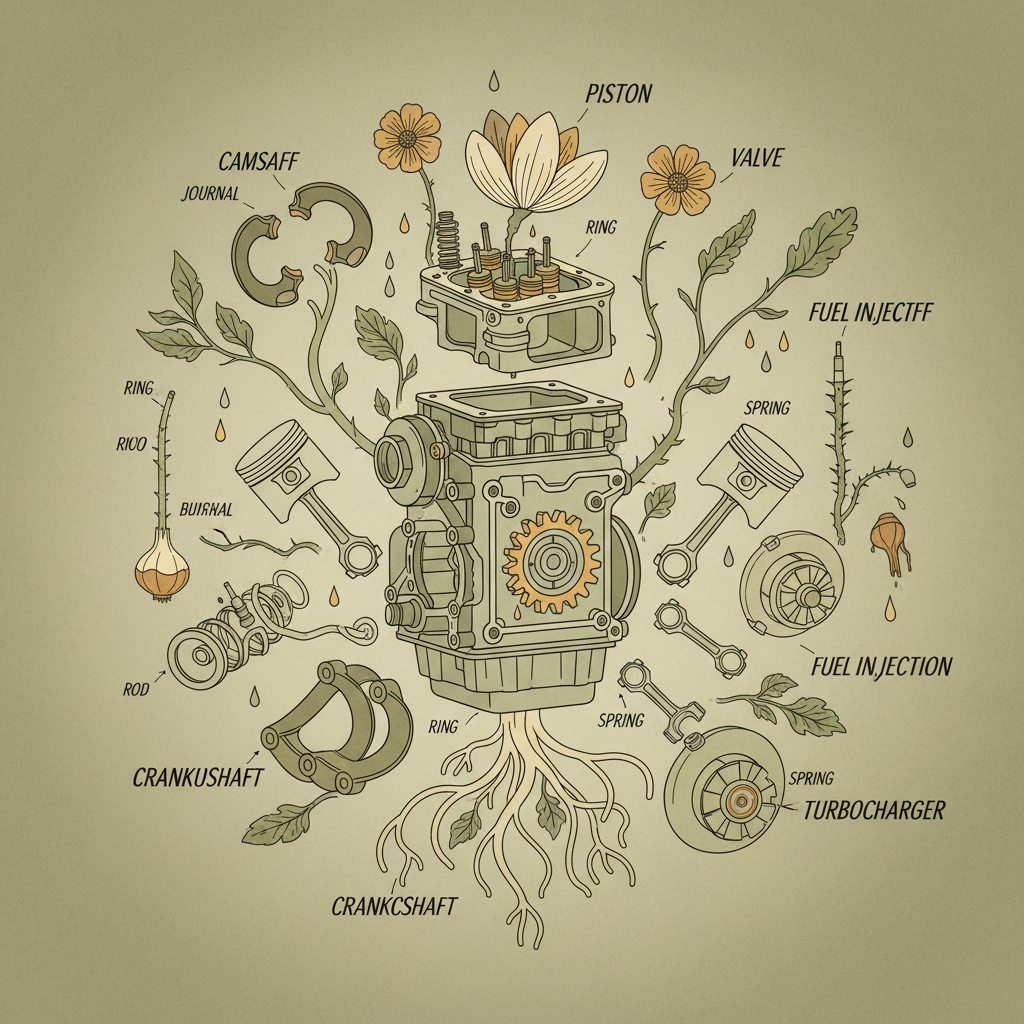
The internal combustion engine relies on a precise sequence of energy transfers, where the connecting rod serves as the critical bridge between the piston and the crankshaft. Any minor deviation in the geometry or material integrity of this component can lead to catastrophic engine failure, making the selection of a competent supplier a primary concern for automotive engineers and fleet managers.
Modern engine demands for higher RPMs and increased thermal efficiency have pushed metallurgy to its limits. Today's market is no longer just about providing a part that fits; it is about ensuring that the component can withstand cyclic fatigue and extreme pressure without compromising the engine's overall balance.
For those navigating the complexities of procurement, understanding the technical benchmarks used by a professional con rod manufacturer is essential to maintaining vehicle longevity and reducing unplanned downtime.


The connecting rod operates under immense alternating stress, transitioning the linear motion of the piston into the rotational motion of the crankshaft. This process subjects the part to compressive forces during the power stroke and tensile forces during the intake and exhaust cycles.
Because it is the primary conduit for energy, the structural integrity of the "small end" (piston side) and "big end" (crankshaft side) must be absolute. Any imbalance in weight between rods in a multi-cylinder engine can lead to vibrations that destroy the crankshaft bearings.
The choice of material is the first line of defense against engine failure. Depending on the application—whether it be a high-performance gasoline engine or a heavy-duty diesel engine—materials typically range from forged steel and powdered metal to high-strength aluminum alloys. Forged components are generally preferred for their superior grain structure, which offers higher fatigue resistance.
Heat treatment processes, such as nitriding or carburizing, are employed to harden the surface while maintaining a ductile core. This prevents surface wear at the bearing journals while ensuring the rod doesn't snap under sudden load spikes, a common issue in modified or overworked passenger car engines.
Consistency in material composition is what separates a professional manufacturer from a generic supplier. Variations in carbon content or the presence of impurities can create "weak spots" that become initiation points for stress cracks during high-cycle operations.
Quality assurance in engine parts cannot be based on sampling alone; it requires a rigorous inspection protocol. Every component must undergo a multi-stage verification process to ensure it adheres to the original equipment manufacturer (OEM) specifications.
A reliable inspection framework must prioritize four critical dimensions: strict adherence to design specifications, surface flatness and smoothness to eliminate burrs, functional verification of moving parts, and material purity validation.
This methodology ensures that when a part is installed, it fits perfectly without requiring excessive machining. For instance, checking for surface cracks and smoothness prevents premature bearing wear, which is the leading cause of crankshaft failure in aftermarket engine rebuilds.
The lifespan of an engine is often limited by the endurance of its reciprocating parts. When analyzing the value of a component, it is not just about the purchase price but the "cost per kilometer" of reliability. Components that meet high stability standards can extend the service interval of a full engine overhaul significantly.
Comparing different manufacturing standards reveals a clear correlation between precision tolerances and engine efficiency. Lower tolerances result in higher friction and heat generation, which accelerate the degradation of the piston kit and gasket sets.
In a typical industrial setting, engine parts must be compatible across various engine codes. For example, a full gasket set for a TOYOTA 1RZ 2.0L engine requires specific materials—a blend of metal and rubber—to seal against the high pressures of the cylinder head and block. The connecting rod must match this environment, ensuring that the big-end bearing clearance is precise to the micron to avoid oil pressure drops.
For overseas customers utilizing OEM services, the focus is on maintaining the balance between cost and stability. Whether it is for passenger cars or light commercial vehicles, the integration of the con rod with the crankshaft and piston kit must be seamless. This is why professional suppliers like Oujia focus on gasoline and diesel parts that guarantee stability over 100,000 kilometers.
The global supply chain for engine components has shifted toward a hybrid model of high-volume production and customized OEM services. Buyers are moving away from simple "off-the-shelf" parts toward components that are verified by strict quality warranties.
The trend toward "self-brand creation" for overseas distributors has also increased. This allows regional players to maintain their own quality standards while leveraging the manufacturing scale of specialized factories in China. The key is finding a partner who can manage 26,000+ models in stock while maintaining consistent delivery times.
Furthermore, the adoption of advanced shipping and logistics (DHL, UPS, FedEx) has shortened the lead time for critical engine parts from months to mere days, allowing workshops to perform rapid engine rebuilds without long-term vehicle grounding.
When evaluating a potential partner, it is critical to look beyond the catalog. A professional supplier should be able to provide detailed inspection reports covering dimensions, appearance, and material composition.
The trade-off usually lies between lead time and customization. While some factories offer immediate shipping from stock, others provide deep OEM customization that requires a longer lead time but ensures a perfect fit for specific engine codes.
The following matrix provides a conceptual framework for comparing different types of component suppliers based on typical aftermarket requirements.
| Evaluation Factor | Generic Trader | Specialized Supplier | Direct Factory | OEM Partner |
|---|---|---|---|---|
| Quality Control | Basic / Random | Strict / Systematic | Process-based | Audit-driven |
| Stock Variety | High / Unstable | Very High / Stable | Low / Specific | Medium / Custom |
| Lead Time | Fast | Fast (1-10 Days) | Slow (Production) | Variable |
| Technical Support | Minimal | Comprehensive | Engineering-led | Collaborative |
| Warranty Terms | Short / Limited | 12 Months / Clear | Material-only | Long-term / SLA |
| Customization | None | Available (OEM) | Full | Integrated |
The most critical failure points are typically the big-end bearing journals and the rod bolts. Fatigue cracks often initiate at the surface of the rod if the material has impurities or if the surface finish is rough. This is why a professional con rod manufacturer emphasizes surface smoothness and precise heat treatment to prevent stress concentrations that lead to catastrophic breakage during high-load cycles.
Quality verification should focus on four pillars: Dimensional Accuracy (matching OEM specs), Appearance (no burrs or cracks), Material Validation (correct alloy), and Functional Testing. Look for suppliers who provide detailed inspection reports and offer a clear warranty, such as a 12-month guarantee, which indicates confidence in the component's long-term stability and material integrity.
Forged rods are generally superior for high-performance or heavy-duty applications because the forging process aligns the grain structure of the metal, significantly increasing fatigue strength. Cast rods are sufficient for standard passenger cars with low-to-moderate stress requirements. For engine rebuilds intended to last 100,000+ kilometers, forged or high-grade powdered metal options are highly recommended.
Engine codes (like the TOYOTA 1RZ) specify the exact internal geometry and tolerances of the engine. Even within the same model year, different codes may have different piston diameters or connecting rod lengths. Using a part that is "close" but not exact can lead to improper compression ratios or interference between the piston and the cylinder head, resulting in immediate engine failure.
For large shipments of engine parts, choosing the correct port (such as Qingdao, Shanghai, or Shenzhen) can significantly reduce inland transit costs and time. Suppliers that offer multiple port options can optimize the logistics chain based on the buyer's destination, ensuring that heavy items like crankshafts and engine blocks arrive efficiently via the most direct maritime route.
Standard stock items typically ship within 1-10 days. However, for OEM services involving custom branding or specific material modifications, lead times vary based on the production volume. Professional partners manage this by maintaining a vast inventory of base models (up to 26,000 variants) and applying final customizations quickly to balance speed with precision.
Maintaining an internal combustion engine requires more than just replacing worn parts; it requires a commitment to precision and material science. The connecting rod, as a central energy transmitter, demands the highest standards of manufacturing to ensure the engine operates efficiently and safely over hundreds of thousands of kilometers.
By prioritizing a supplier that integrates rigorous inspection frameworks with extensive model availability, automotive professionals can mitigate the risks of engine failure and optimize the total cost of ownership for their fleet or customer base.