In modern automotive engines, the connecting rod is one of the most critical mechanical components. It plays a central role in converting the reciprocating motion of pistons into rotational motion that ultimately drives the vehicle. For high-performance passenger cars such as MG MG5 and Roewe models, the design and manufacturing quality of the connecting rod directly affect engine durability, fuel efficiency, and overall performance.
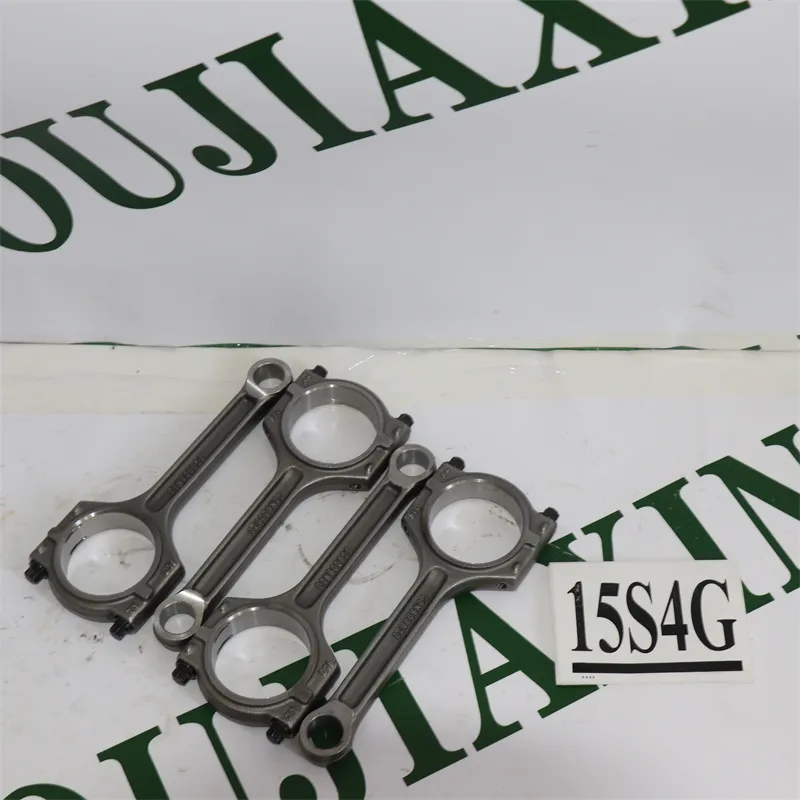
Products such as car connecting rod, car conrod, and car engine connecting rod are designed to withstand extreme forces generated inside the engine cylinder. These components must endure high pressure, rapid movement, and continuous thermal stress during engine operation. With advanced manufacturing technologies and strict quality standards, Hebei OUJIA Import & Export Trading Co., Ltd. provides high-quality connecting rods including the 15S4G connecting rod, which is widely used in engines for MG MG5 and Roewe vehicles.
This article provides a detailed overview of the structure, materials, manufacturing processes, and performance advantages of the 15S4G connecting rod used in these modern automotive engines.
The car engine connecting rod is a vital link between the piston and the crankshaft in an internal combustion engine. When fuel combusts inside the cylinder, the expanding gases push the piston downward. The connecting rod transfers this force to the crankshaft, transforming linear motion into rotational motion that powers the vehicle.
In automotive engineering, the car conrod must meet several critical requirements:
High strength to withstand combustion forces
Excellent fatigue resistance for long-term operation
Precise dimensional accuracy for smooth engine performance
Lightweight design to reduce engine inertia
The car connecting rod typically consists of three main parts:
Small end (piston end) – connected to the piston through a wrist pin
Rod body (shank) – the central structure that transfers force
Big end (crankshaft end) – connected to the crankshaft journal
In engines used by MG MG5 and Roewe vehicles, the 15S4G connecting rod is designed to handle high rotational speeds and strong combustion pressure. This makes it suitable for modern turbocharged or high-efficiency gasoline engines.
The structural design of car engine rods must also consider balance and vibration reduction. Properly balanced connecting rods reduce engine vibration, improve fuel efficiency, and extend engine lifespan.
For vehicles like the MG MG5 and Roewe models, which are designed to provide a balance of performance and fuel economy, high-precision connecting rods are essential to achieving stable engine performance.
Material selection plays a critical role in the performance and durability of connecting rods. Automotive manufacturers use different materials depending on engine design, operating conditions, and cost considerations.
Cast Connecting Rods
One widely used manufacturing method involves cast connecting rods. In this process, molten metal is poured into a mold to form the connecting rod shape. Casting allows manufacturers to produce complex geometries while maintaining good structural strength.
Advantages of cast connecting rods include:
Cost-effective manufacturing
Consistent production quality
Good structural integrity
However, casting alone may not provide sufficient strength for high-performance engines. Therefore, cast components are often combined with additional heat treatment and machining processes to enhance their mechanical properties.
Cast Iron Connecting Rods
Some engines also use cast iron connecting rods, especially in applications where durability and vibration damping are important. Cast iron offers good compressive strength and wear resistance.
However, modern passenger vehicles such as MG MG5 and Roewe models typically use higher-strength alloy steels instead of cast iron to reduce weight and improve fatigue resistance.
Composite Connecting Rods
Another advanced solution involves composite connecting rods, which combine multiple materials to achieve improved performance characteristics. These rods may include fiber-reinforced materials or metal matrix composites designed to reduce weight while maintaining strength.
Composite connecting rods are often used in high-performance engines or racing applications. While they offer significant weight savings, they are more expensive and require advanced manufacturing processes.
For most commercial passenger vehicles, high-strength alloy steel connecting rods remain the preferred choice due to their balance of performance, reliability, and cost efficiency.
The 15S4G connecting rod is specifically designed for engines used in MG MG5 and Roewe vehicles. This component is manufactured using high-quality alloy steel and precision machining techniques to ensure superior strength and durability.
Hebei OUJIA Import & Export Trading Co., Ltd. specializes in supplying high-quality automotive engine components, including connecting rods designed for modern passenger vehicles. The company focuses on strict quality control, advanced production technology, and reliable global supply.
Material and Mechanical Properties
The 15S4G connecting rod is typically produced using high-strength alloy steel. This material provides several key advantages:
Excellent fatigue resistance under cyclic loads
High tensile strength for handling combustion pressure
Good thermal stability at high engine temperatures
Strong resistance to deformation and cracking
These properties make the 15S4G connecting rod ideal for modern gasoline engines used in MG MG5 and Roewe vehicles.
Precision Manufacturing Process
To ensure high performance and durability, the production of the 15S4G connecting rod involves multiple advanced manufacturing steps:
Forging or casting of the rod blank
Heat treatment to enhance mechanical properties
CNC precision machining for dimensional accuracy
Surface finishing and polishing
Quality inspection and testing
During production, strict dimensional tolerances are maintained to ensure perfect alignment between the piston and crankshaft.
High-precision machining also helps reduce friction and improve lubrication between moving components.
Performance Advantages
The 15S4G connecting rod used in MG MG5 and Roewe engines provides several performance benefits:
Improved engine efficiency
Reduced vibration and noise
Longer engine service life
Enhanced fuel economy
Stable performance under high-speed operation
These advantages are essential for modern vehicles that must meet strict efficiency and emission standards.
Quality Assurance by Hebei OUJIA Import & Export Trading Co., Ltd.
Hebei OUJIA Import & Export Trading Co., Ltd. is committed to delivering reliable automotive components for international markets. The company focuses on providing high-quality engine parts that meet global automotive standards.
Quality assurance procedures include:
Raw material inspection
Precision dimensional measurement
Hardness and strength testing
Fatigue life testing
Final product inspection before shipment
By implementing strict quality control systems, the company ensures that every connecting rod meets the performance requirements of modern automotive engines.
The MG MG5 and Roewe models are popular passenger vehicles known for their balance of performance, comfort, and fuel efficiency. The engine systems used in these vehicles require high-quality internal components capable of operating at high speeds and temperatures.
The 15S4G connecting rod plays a crucial role in maintaining engine stability and reliability in these vehicles.
During engine operation, the connecting rod must handle thousands of cycles per minute while transferring combustion forces between the piston and crankshaft. High-strength materials and precise manufacturing ensure that the component can withstand these demanding conditions.
Reliable car engine rods also help maintain smooth engine operation, which contributes to improved driving comfort and reduced mechanical wear.
As automotive technology continues to evolve, connecting rod design is also advancing. Future developments may include:
Lightweight alloy materials for improved fuel efficiency
Advanced surface treatments to reduce friction
Hybrid or composite materials for higher strength-to-weight ratios
Improved manufacturing processes using digital engineering technologies
Despite these advancements, the fundamental function of the connecting rod remains unchanged. It will continue to serve as one of the most critical components in internal combustion engines.
The connecting rod is a key structural component that directly affects engine performance, durability, and efficiency. Products such as car connecting rod, car conrod, car engine connecting rod, and car engine rods must be carefully designed and manufactured to withstand the extreme forces generated during engine operation.
Different manufacturing methods, including cast connecting rods, cast iron connecting rods, and composite connecting rods, offer various advantages depending on the engine application.
The 15S4G connecting rod used in MG MG5 and Roewe engines represents a high-quality solution that combines strong materials, precision engineering, and reliable manufacturing processes. Through strict quality control and advanced production technologies, Hebei OUJIA Import & Export Trading Co., Ltd. provides durable connecting rods that meet the performance requirements of modern automotive engines.
As automotive technology continues to develop, high-quality connecting rods will remain essential for ensuring reliable engine performance and long-term vehicle durability.