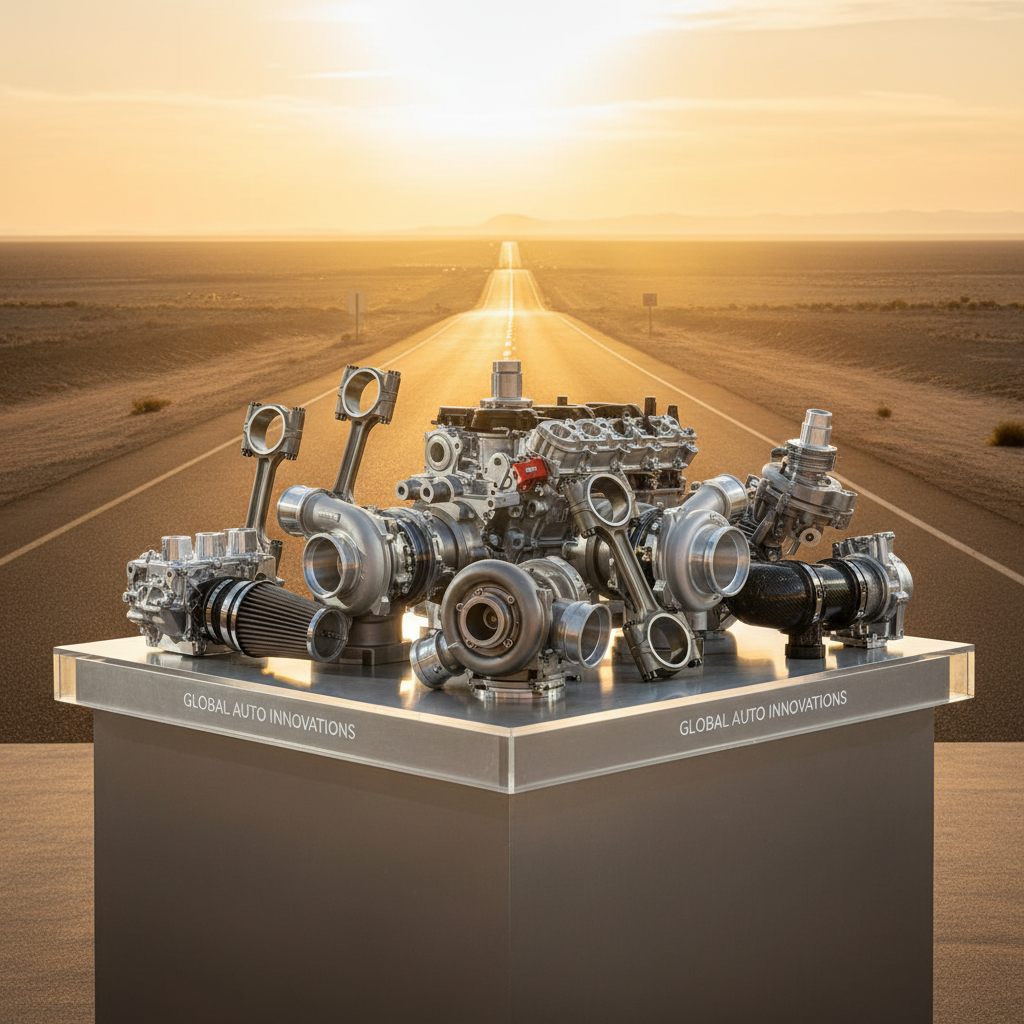
Auto engine components are the foundational elements powering the world's transportation systems. From compact city cars to heavy-duty trucks, and even marine and industrial applications, these components dictate performance, efficiency, and reliability. Understanding the intricacies of these systems is critical not just for automotive engineers, but also for technicians, policymakers, and anyone invested in sustainable mobility. The global automotive industry is a multi-trillion dollar market, and the demand for advanced auto engine components continues to grow, driven by factors like increasing vehicle ownership in developing economies and stricter emissions regulations.
The significance of auto engine components extends beyond simply enabling vehicle movement. They represent a complex interplay of materials science, engineering design, and manufacturing precision. Improvements in these components directly translate into reduced fuel consumption, lower emissions, and enhanced vehicle safety. Moreover, the development and production of these parts supports a vast supply chain, creating employment opportunities across numerous sectors. The challenges of optimizing these components – balancing cost, durability, and environmental impact – are constantly being addressed through ongoing innovation.
Crucially, the evolution of auto engine components is inextricably linked to the broader pursuit of sustainable transportation. As the world transitions toward electric and hybrid vehicles, the expertise in designing and manufacturing high-performance, reliable engine components remains invaluable. This knowledge base is transferrable and adaptable, enabling the development of advanced battery systems, electric motors, and related technologies. Recognizing the critical role of auto engine components is therefore fundamental to achieving a future of cleaner, more efficient, and sustainable transportation.
The Global Significance of Auto Engine Components
The global automotive industry, valued at over $3.8 trillion in 2023 (Statista), relies heavily on the consistent supply and innovation of auto engine components. According to the United Nations Conference on Trade and Development (UNCTAD), automotive parts represent a significant portion of global trade, particularly within complex supply chains spanning multiple countries. This dependence makes the efficient production and distribution of auto engine components vital for maintaining economic stability and facilitating personal mobility worldwide.
A major challenge facing the industry is the increasing demand for fuel-efficient and low-emission vehicles. This necessitates continuous improvements in auto engine components, driving research and development into advanced materials, combustion technologies, and engine management systems. Failure to address these challenges could result in increased environmental pollution, higher energy costs, and a slower transition to a sustainable transportation future. Investing in innovative auto engine components is therefore paramount to achieving global sustainability goals.
Defining Auto Engine Components
Auto engine components encompass all the individual parts that work together to convert fuel into mechanical energy, ultimately propelling a vehicle. This includes, but is not limited to, the engine block, pistons, crankshaft, camshaft, valves, fuel injectors, spark plugs, and cooling system components. These components are often manufactured to extremely tight tolerances, requiring advanced machining and quality control processes.
The connection to modern industry goes beyond simply manufacturing parts. It involves sophisticated supply chain management, advanced materials research, and specialized engineering expertise. The development of auto engine components often serves as a catalyst for innovation in other fields, such as materials science, robotics, and computer-aided design (CAD).
Furthermore, in regions facing humanitarian crises or rebuilding efforts, the availability of reliable auto engine components is essential for maintaining essential services like emergency response vehicles, infrastructure maintenance equipment, and transportation networks. Ensuring a stable supply of these components can significantly aid in recovery and development efforts.
Key Factors Influencing Auto Engine Component Design
Durability is a paramount concern in auto engine component design. These parts are subjected to extreme temperatures, pressures, and mechanical stresses during operation, demanding materials and manufacturing processes capable of withstanding these conditions. Extensive testing and validation procedures are implemented to ensure long-term reliability and minimize the risk of failure.
Cost-efficiency is another crucial factor. While performance and durability are essential, components must also be produced at a reasonable cost to maintain vehicle affordability. This often requires a careful balance between material selection, manufacturing processes, and design complexity. Optimizing these factors is a continuous challenge for automotive engineers.
Weight reduction is increasingly important, driven by the need for improved fuel efficiency and reduced emissions. Lighter components contribute to overall vehicle weight savings, resulting in better performance and lower environmental impact. This often involves utilizing advanced materials like aluminum alloys, magnesium, and composite materials.
Core Auto Engine Components and Their Applications
The cylinder block forms the foundation of the engine, providing structural support for other components. Its design directly influences engine size, weight, and rigidity. Applications vary from cast iron blocks for heavy-duty engines to aluminum alloy blocks for lighter-weight vehicles.
Pistons convert the energy from combustion into mechanical motion. They must withstand extreme temperatures and pressures while maintaining precise tolerances. Different piston designs are optimized for specific engine types and applications, ranging from high-performance racing engines to fuel-efficient passenger vehicles.
Auto Engine Components Performance Comparison
Global Applications and Industry Impact
In the automotive manufacturing sector, stringent quality control of auto engine components is paramount. Global standards like ISO 9001 are widely adopted to ensure consistent product quality and reliability across international supply chains. This impacts regions like Germany, Japan, and the United States, which are major automotive manufacturing hubs.
The agricultural industry relies heavily on robust auto engine components for tractors, harvesters, and other machinery. Demand is particularly strong in regions with large-scale agricultural operations, such as the American Midwest, Brazil, and parts of Asia. The availability of durable and efficient components directly impacts food production and agricultural productivity.
Advantages and Long-Term Value
Investing in high-quality auto engine components translates to reduced maintenance costs and increased vehicle lifespan. Durable components minimize the need for frequent repairs or replacements, saving owners money over the long term. This is particularly important for commercial fleets and vehicles used in demanding applications.
Advanced auto engine components contribute to enhanced vehicle safety. Reliable performance and reduced risk of failure help prevent accidents and protect drivers and passengers. This builds trust in automotive brands and reinforces the importance of component quality.
From an environmental perspective, optimized auto engine components contribute to lower emissions and improved fuel efficiency, promoting sustainability and reducing the carbon footprint of transportation. This aligns with global efforts to combat climate change and protect the environment.
Future Trends and Innovations in Auto Engine Components
The development of electric and hybrid vehicle technologies is driving significant innovation in auto engine components. While traditional internal combustion engines may eventually be phased out, the expertise in materials science, manufacturing precision, and thermal management remains crucial for developing advanced battery systems and electric motors.
Additive manufacturing (3D printing) is emerging as a disruptive technology in the production of auto engine components. This allows for the creation of complex geometries and customized designs, potentially reducing weight, improving performance, and accelerating prototyping.
The integration of digital technologies, such as artificial intelligence (AI) and machine learning (ML), is enabling predictive maintenance and optimized component design. AI algorithms can analyze data from sensors embedded in components to identify potential failures before they occur, maximizing uptime and reducing maintenance costs.
Challenges and Solutions
One significant challenge is the rising cost of raw materials, particularly those used in high-performance auto engine components. Fluctuations in global commodity prices can impact manufacturing costs and potentially limit innovation. Addressing this requires exploring alternative materials, optimizing component designs, and strengthening supply chain resilience.
Another challenge is the need to balance performance with environmental sustainability. Reducing emissions and improving fuel efficiency often requires trade-offs in component design and manufacturing processes. Finding innovative solutions that minimize environmental impact without compromising performance is crucial.
Maintaining the skill set required for manufacturing and maintaining advanced auto engine components is also a concern. Investing in workforce development programs and fostering collaboration between industry and educational institutions is essential to ensure a continued supply of qualified personnel.
Summary of Challenges and Solutions for Auto Engine Component Optimization
| Challenge Area |
Specific Challenge |
Potential Solution |
Implementation Priority (1-5, 5=High) |
| Material Costs |
Fluctuating raw material prices |
Explore alternative materials (composites, advanced alloys) |
4 |
| Environmental Impact |
Reducing emissions and fuel consumption |
Optimize combustion processes and component design |
5 |
| Manufacturing Complexity |
Producing complex geometries |
Implement additive manufacturing techniques (3D printing) |
3 |
| Supply Chain Resilience |
Disruptions in global supply chains |
Diversify sourcing and build strategic partnerships |
4 |
| Workforce Skill Gap |
Shortage of skilled technicians and engineers |
Invest in workforce development and training programs |
5 |
| Quality Control |
Maintaining consistent product quality |
Implement advanced inspection technologies and processes |
3 |
FAQS
The most common materials include various grades of steel, aluminum alloys, cast iron, and increasingly, lightweight composite materials like carbon fiber reinforced polymers. The choice of material depends on the specific component, its operating conditions, and performance requirements. Steel provides high strength and durability, while aluminum alloys offer weight reduction. Cast iron is cost-effective for certain applications, and composites provide exceptional strength-to-weight ratios.
Component design plays a crucial role in minimizing friction, optimizing combustion, and reducing overall engine weight. Streamlined designs, precision manufacturing, and the use of low-friction coatings can significantly reduce energy losses. Optimizing combustion chamber geometry and fuel injection systems ensures more complete fuel burning. Lighter components, achieved through material selection and design, reduce the energy required to accelerate and decelerate the vehicle.
Rigorous quality control is essential. This includes dimensional inspection using coordinate measuring machines (CMMs), material testing to verify mechanical properties, non-destructive testing (NDT) techniques like ultrasonic testing and radiography to detect internal flaws, and performance testing under simulated operating conditions. Statistical process control (SPC) is also employed to monitor manufacturing processes and ensure consistent quality.
Additive manufacturing enables the creation of complex geometries and customized designs that are difficult or impossible to achieve with traditional manufacturing methods. This allows for weight reduction, improved performance, and faster prototyping. It also facilitates the production of small batches and customized components, catering to niche markets. However, challenges remain in scaling up production and ensuring consistent material properties.
Predictive maintenance utilizes sensors and data analytics to monitor the condition of components in real-time. By analyzing parameters like temperature, pressure, vibration, and oil quality, potential failures can be detected before they occur. This allows for proactive maintenance, minimizing downtime and extending component lifespan. AI and machine learning algorithms are increasingly used to improve the accuracy of predictive maintenance models.
While electric vehicles don't have traditional internal combustion engines, the expertise in designing and manufacturing high-performance, reliable components is transferable. The focus is shifting to components for electric motors, battery systems, and thermal management systems. Materials science, precision manufacturing, and quality control remain crucial skills, and many existing auto engine component manufacturers are adapting their capabilities to serve the electric vehicle market.
Conclusion
In conclusion, auto engine components remain a cornerstone of the global transportation system, driving innovation in materials science, engineering, and manufacturing. Their efficient design, production, and maintenance are critical for optimizing vehicle performance, reducing emissions, and ensuring safety. As the automotive industry undergoes a transformation toward electric and hybrid vehicles, the foundational knowledge and expertise in auto engine components will continue to be invaluable.
Looking ahead, continued investment in research and development, coupled with a focus on sustainable materials and manufacturing processes, will be essential to address the challenges of a rapidly evolving automotive landscape. Exploring new technologies like additive manufacturing and artificial intelligence will unlock further opportunities for optimizing auto engine components and shaping the future of mobility. Visit our website at www.oujiaengine.com to learn more about our range of high-quality auto engine components.