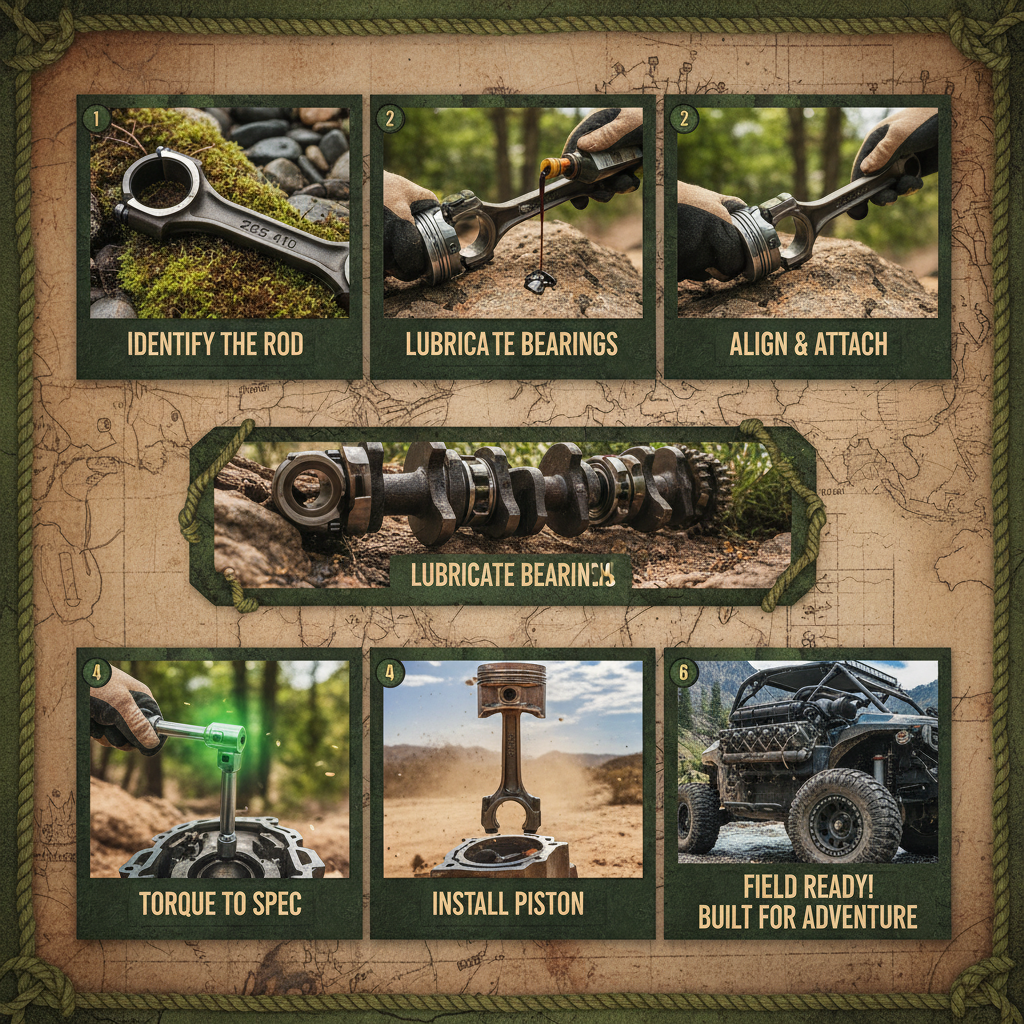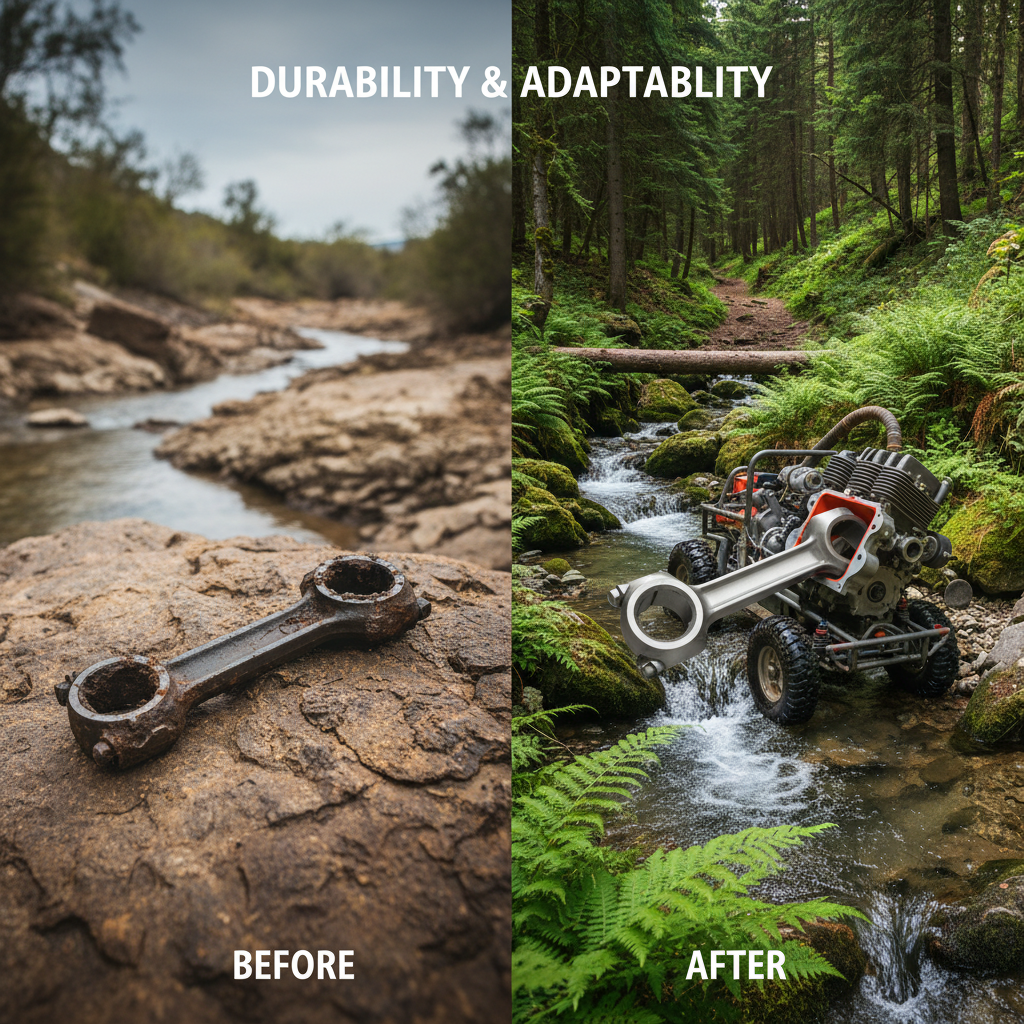
Look, I spend my days knee-deep in dust and concrete, talking to the guys actually building things. And let me tell you, when it comes to engine components, particularly connecting rods, you can’t afford to mess around. We're talking about serious forces, high RPMs, and the difference between a machine running smoothly for years and a catastrophic failure that costs time, money, and potentially lives. That’s where composite connecting rods come in. They're not just a marketing buzzword; they're changing the game, and I'm seeing it firsthand on sites across the country.
For years, forged steel has been the standard. It's strong, sure, but it’s also heavy. That weight adds up, impacting engine balance and efficiency. Then you've got the manufacturing process, which can be wasteful and time-consuming. And honestly, the risk of microscopic flaws that can lead to fatigue is always there. Composite connecting rods offer a way to address all of these issues—lighter weight, improved consistency, and a design flexibility that's frankly, pretty exciting.
We're seeing increased demand across several sectors. From high-performance racing engines, where every ounce counts, to industrial applications demanding reliability and extended service life. This isn't about replacing steel entirely, it’s about using the right material for the right job. And for a growing number of applications, that material is composite.

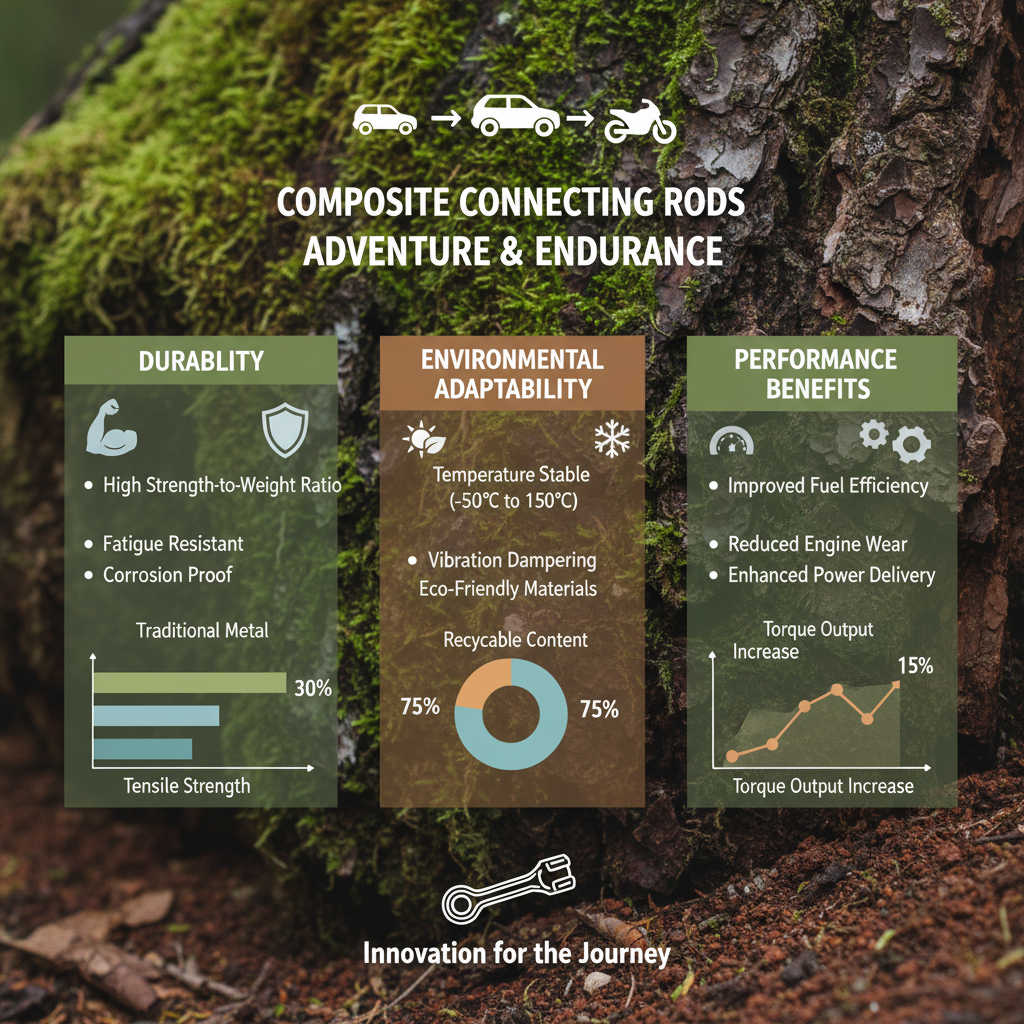
At their core, composite connecting rods aren’t a single material, they’re a carefully engineered combination of materials – typically carbon fiber reinforced polymers. Think of it like layering different strengths. You get the tensile strength of the fibers and the compressive strength of the polymer matrix. This results in a rod that’s incredibly strong for its weight.
What really matters is the design and manufacturing process. It's not enough to just slap some carbon fiber around anything. You need precise fiber orientation, controlled resin infusion, and rigorous quality control to ensure consistent performance and prevent delamination. That’s why partnering with a reputable manufacturer, like Oujia Engine, is so crucial.
The key advantages lie in weight reduction, improved strength-to-weight ratio, and enhanced damping characteristics. Composite rods are significantly lighter, reducing reciprocating mass for quicker engine response and higher RPM potential. They can also be engineered to match or exceed the strength of steel while absorbing vibrations more effectively, leading to reduced engine stress and potentially longer component life. While the initial cost is higher, the performance benefits and potential for long-term reliability often outweigh the investment.
Composite rods require slightly different maintenance considerations than steel. Traditional visual inspections for cracks are less effective with composites, so non-destructive testing methods like ultrasonic inspection are recommended at regular intervals. It’s also critical to ensure compatibility with engine oils and other fluids to prevent material degradation. Repairing composite rods is more specialized and typically requires skilled technicians and specific repair kits. Preventative maintenance and careful monitoring are key to maximizing their lifespan.
The performance of composite rods in high-temperature environments depends heavily on the resin system used. High-performance resins are designed to withstand elevated temperatures without significant degradation. However, prolonged exposure to extreme heat can still affect their mechanical properties. Proper engine cooling and ventilation are crucial to maintaining the integrity of composite rods in demanding applications. Manufacturers often specify temperature limits, and exceeding those limits can compromise performance.
Not all engines are suitable for composite connecting rods. They are best suited for applications where weight reduction and performance gains are critical, such as high-performance racing engines, aerospace applications, and some high-end automotive engines. For standard production engines with moderate performance requirements, the cost-benefit ratio may not be as favorable. Careful consideration of engine operating conditions, load cycles, and overall design is essential to determine suitability.
The lifespan of composite connecting rods can be comparable to or even exceed that of steel rods, provided they are properly designed, manufactured, and maintained. The key factor is fatigue resistance. Composites can exhibit excellent fatigue properties, but it's crucial to avoid damage from impacts or improper installation. Regular inspections and adherence to manufacturer's recommendations are essential to maximizing their lifespan. With proper care, a well-engineered composite rod can deliver years of reliable performance.
Initially, composite connecting rods are generally more expensive than their steel counterparts. This is due to the higher cost of raw materials (carbon fiber and specialized resins) and the more complex manufacturing processes involved. However, when considering the long-term benefits – such as improved fuel efficiency, reduced engine stress, and potentially longer service life – the total cost of ownership can be competitive. As manufacturing technologies advance and production volumes increase, the price gap is expected to narrow.
Composite connecting rods represent a significant advancement in engine component technology. They offer a compelling combination of reduced weight, improved performance, and enhanced durability, making them an increasingly attractive option for a wide range of applications. From high-performance racing to aerospace and beyond, these rods are pushing the boundaries of what’s possible.
The future is bright for composites in the automotive industry. Continued innovation in materials science, manufacturing processes, and inspection techniques will further enhance their performance and reduce costs. If you’re looking for a competitive edge and a way to build engines that are more efficient, more reliable, and more sustainable, Oujia Engine is a great place to start. Visit our website at www.oujiaengine.com to learn more.