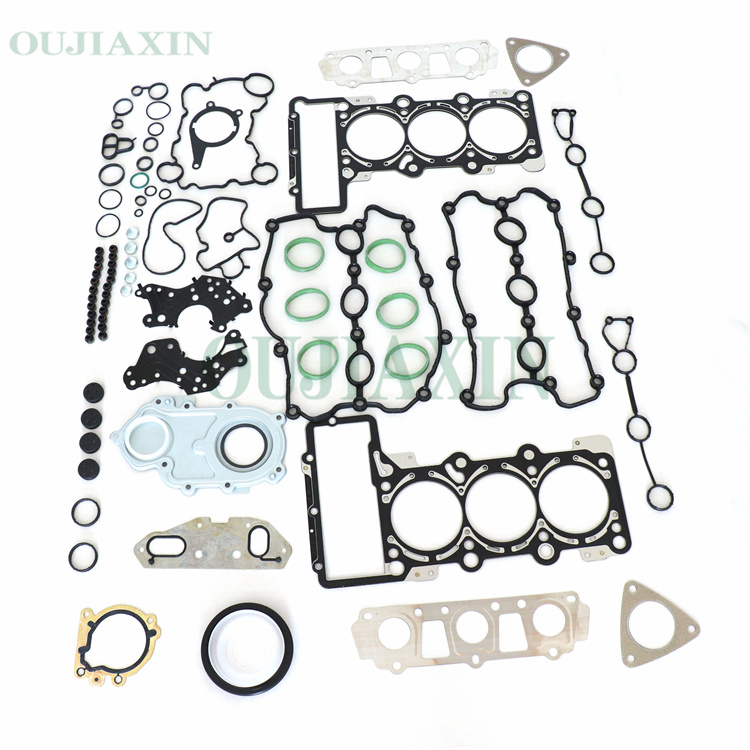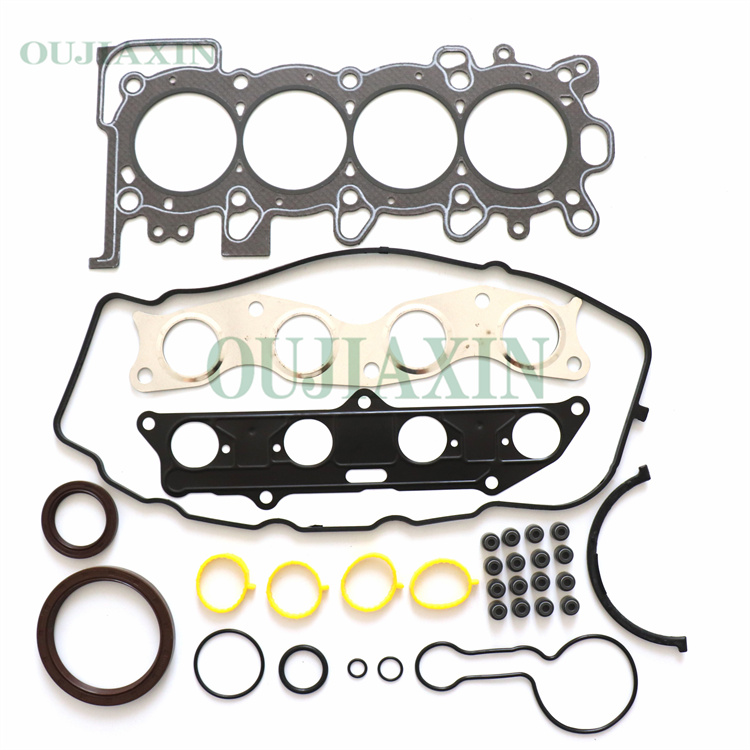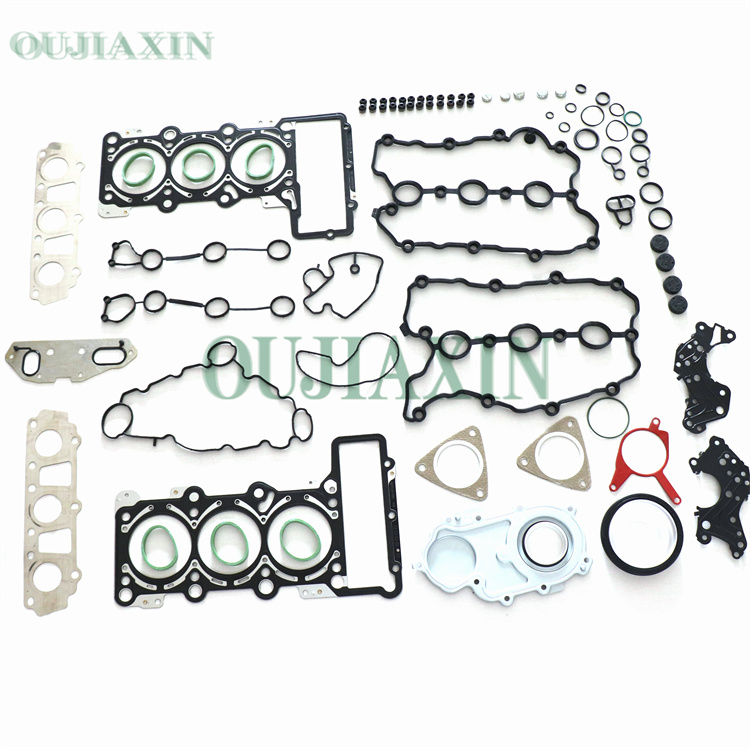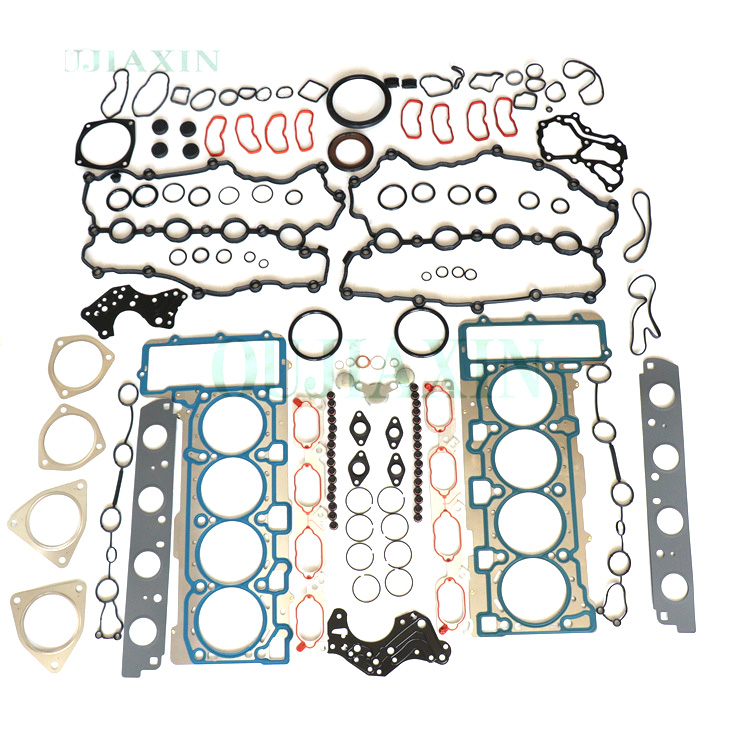
The engine is the heart of the Audi Q7, and maintaining proper sealing throughout the engine is essential for reliable operation. When an engine undergoes major repair or rebuilding, replacing only one damaged gasket may not always provide a comprehensive solution. Once major engine components have been removed, technicians may need to replace multiple gaskets, seals, and related sealing components at the same time. This is where a Full Gasket Set can provide an efficient solution for engine repair professionals, distributors, and automotive parts suppliers.
For the Audi Q7 4.2L engine, Hebei Oujia Import And Export Trade Co., Ltd. offers the Full Gasket Set 079198042F, specifically listed for the Audi Q7 4.2L application. Oujia's product catalog also distinguishes this product from the separate 03H198016Q Full Gasket Set for the Audi Q7 3.6L engine, highlighting the importance of matching the gasket set with the correct engine application before ordering.
A gasket is a relatively small engine component, but its function is critical. Gaskets create controlled seals between mating engine surfaces and help prevent the unwanted movement of combustion gases, engine oil, and coolant. During an engine overhaul, damaged, compressed, aged, or disturbed sealing components can contribute to leaks or sealing problems. A comprehensive gasket kit helps repair professionals organize the required replacement components for the relevant engine service.
For workshops and aftermarket distributors working with Audi Q7 4.2L engines, selecting the correct Full Gasket Set is therefore an important part of the repair process. The purpose is not simply to replace a single gasket, but to restore sealing performance across the engine areas involved in the overhaul.

The Audi Q7 has been offered with different engine configurations across different model years and markets. This means that "Audi Q7" alone is not sufficient information for selecting an engine gasket kit. Engine displacement, engine code, OE reference number, vehicle year, and application should be checked before ordering replacement parts.
For example, Audi's technical information for newer Q7 models lists different engine configurations, including a 2.0 TFSI four-cylinder and a 3.0 TFSI V6. This illustrates why replacement parts should be matched according to the specific engine rather than the vehicle name alone.
The Oujia catalog specifically lists Full Gasket Set 079198042F for Audi Q7 4.2L. The same catalog identifies 03H198016Q separately for the Audi Q7 3.6L engine. For professional buyers, this distinction is particularly important because a gasket set designed for one engine family should not automatically be assumed to fit another Q7 engine.
The 4.2L application is especially relevant for workshops handling engine rebuilds, cylinder-head-related repairs, sealing-system maintenance, or older Q7 vehicles that require comprehensive engine service. During these operations, technicians may have to remove major engine components. Once these components have been separated, replacing disturbed sealing elements with new components is an important part of reassembly.
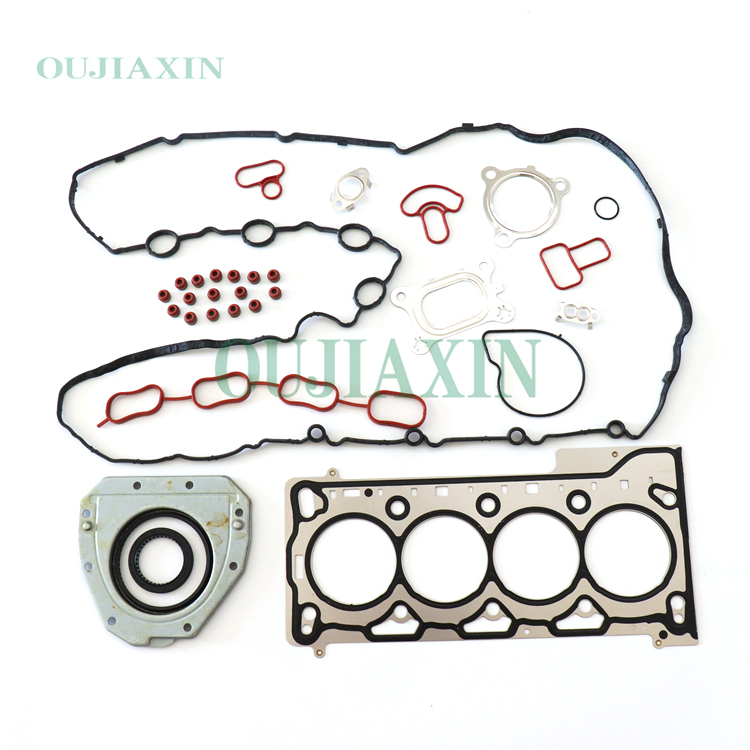
A Full Gasket Set is designed to consolidate multiple sealing components into one repair package. Depending on the specific application and kit configuration, a complete engine gasket package can include cylinder-head gaskets, valve-cover gaskets, intake and exhaust-related gaskets, oil-pan sealing components, seals, O-rings, and other engine-specific sealing parts. The exact contents should always be confirmed against the supplier's application information and packing list.
For the Audi Q7 4.2L application, the Oujia listing identifies 079198042F as the OEM reference for the corresponding gasket set. The product information also states that the set is made from metal and fiber materials and is supplied for trade and replacement applications. Oujia's listed product specifications include a minimum order quantity of five sets and a 12-month warranty.
The purpose of a complete gasket kit is to help simplify procurement and repair preparation. Instead of sourcing individual sealing components from several suppliers, a workshop or distributor can purchase a coordinated gasket set for the intended engine application. This can be particularly useful for B2B customers who need to manage inventory and reduce the possibility of overlooking a required sealing component during an overhaul.
Proper installation remains essential. Even a correctly matched gasket set cannot compensate for incorrect installation, damaged mating surfaces, incorrect tightening procedures, or unsuitable engine assembly practices. Technicians should follow the relevant manufacturer's repair procedures, including specified torque values, tightening sequences, surface preparation requirements, and installation directions.
For automotive repair businesses, product compatibility and supply reliability are both important. A gasket set must correspond to the correct engine application, while the supplier needs to provide consistent product information and support for international buyers.
Hebei Oujia Import And Export Trade Co., Ltd. has been supplying professional engine parts for 17 years, according to the company's official website. Its product range includes engine assemblies, cylinder heads, crankshafts, piston kits, connecting rods, and Full Gasket Set products. Oujia states that it focuses particularly on gasoline and diesel engine parts for passenger cars and works with factories in China to provide products for overseas customers.
For the Audi Q7 4.2L application, the Full Gasket Set 079198042F provides a clearly identified reference point for buyers. This is especially useful for wholesalers and repair businesses because part-number-based purchasing can reduce ambiguity when several Q7 engine versions exist.
Oujia's published product information describes its quality-control process as including checks of specifications and dimensions, surface quality, function, and materials. The product page for 079198042F also identifies metal and fiber as material categories and provides trade-oriented details such as MOQ, warranty, packaging dimensions, and shipping options.
For international B2B buyers, these details can help with purchasing evaluation. A distributor may need to know the OEM reference, engine application, packaging information, MOQ, delivery method, and warranty terms before placing an order. Providing this information clearly can make communication between suppliers, distributors, workshops, and purchasing departments more efficient.
Another advantage of purchasing a complete gasket solution is inventory organization. Automotive parts distributors often manage hundreds or thousands of individual SKUs. A clearly identified Full Gasket Set can simplify product classification by linking the kit directly to the relevant engine application.
For repair workshops, a complete gasket kit can also help with project preparation. Before starting a major engine repair, technicians can verify the engine identification and prepare the corresponding gasket package. This reduces the need to stop the repair process to source additional sealing components.
However, buyers should always verify compatibility before purchasing. The Audi Q7 has been produced with different engines, and the 4.2L application should not be confused with the 3.6L, 3.0L, or 2.0L versions. Oujia's own catalog demonstrates this distinction by listing different gasket-set references for different Q7 engine applications.
For this reason, B2B buyers can provide the vehicle model, production year, engine displacement, engine code, existing gasket-set number, or OE number when requesting a quotation. If the buyer has the original part number, providing that reference can make compatibility confirmation more straightforward.
The Full Gasket Set 079198042F is primarily relevant to repair and overhaul work associated with the Audi Q7 4.2L engine application. It can be considered by engine rebuilders, automotive repair workshops, aftermarket parts distributors, vehicle maintenance companies, and importers specializing in European automotive components.
During an engine overhaul, sealing components are exposed to repeated thermal cycles, mechanical pressure, engine oil, coolant, and combustion-related conditions. A gasket's job is to maintain separation between areas that need to remain isolated. A failure in an important sealing point can potentially lead to oil leakage, coolant leakage, compression loss, or fluid contamination.
For this reason, gasket replacement should be treated as an integrated part of engine repair rather than simply a cosmetic replacement. When an engine is already disassembled, replacing relevant sealing components can help establish a fresh sealing interface during reassembly.
A Full Gasket Set can also be useful when the repair involves several sealing areas at once. Instead of purchasing each gasket individually, the complete kit provides a more centralized procurement option. Oujia's published guidance explains that standard engine full gasket sets can contain components such as head gaskets, oil-pan gaskets, intake and exhaust manifold gaskets, and valve-cover gaskets, although the exact contents vary by application.
Material selection is another important consideration. Gaskets operate under different temperatures, pressures, and chemical environments depending on their location in the engine. Oujia's technical content notes that gasket material selection should take into account sealing requirements, operating temperatures, engine fluids, and application conditions.
Installation quality is equally important. Before installing a new gasket, technicians should inspect the relevant mating surfaces and make sure they meet the required condition. Surface damage, contamination, improper alignment, or incorrect tightening can affect sealing performance. Installation should follow the appropriate service procedures for the specific Audi engine.
For distributors, the Full Gasket Set 079198042F can be positioned as an application-specific engine repair product rather than a generic gasket kit. This distinction is valuable when communicating with professional customers. Instead of simply advertising a "gasket set," suppliers can provide the application, engine displacement, OE reference, material information, and packaging details to help buyers make a more informed purchasing decision.
Hebei Oujia Import And Export Trade Co., Ltd. serves international customers and states that its engine products are exported to markets including Germany, Russia, Brazil, Japan, the United States, and the Middle East. The company also offers OEM and self-brand services for overseas customers.
For customers purchasing in wholesale quantities, Oujia can therefore serve as a potential source for Audi engine sealing components and other engine parts. Buyers can contact the company with their required OE number, engine code, quantity, destination market, and packaging requirements to confirm product availability and compatibility.
The Audi Q7 4.2L is a specific application, and accurate identification is the foundation of a successful engine-parts purchase. The Full Gasket Set 079198042F listed by Hebei Oujia Import And Export Trade Co., Ltd. provides a dedicated gasket-set solution for this application. By combining an identifiable OE reference with application information and B2B supply support, the product can help workshops and distributors prepare for professional engine repair and overhaul projects.
For buyers looking for a Full Gasket Set for an Audi Q7, the key step is to confirm the exact engine before ordering. With the correct engine identification, OE reference, and application verification, the appropriate gasket kit can be selected more efficiently. For Audi Q7 4.2L applications, buyers can refer to 079198042F and contact Hebei Oujia Import And Export Trade Co., Ltd. for further product, quotation, MOQ, and compatibility information.