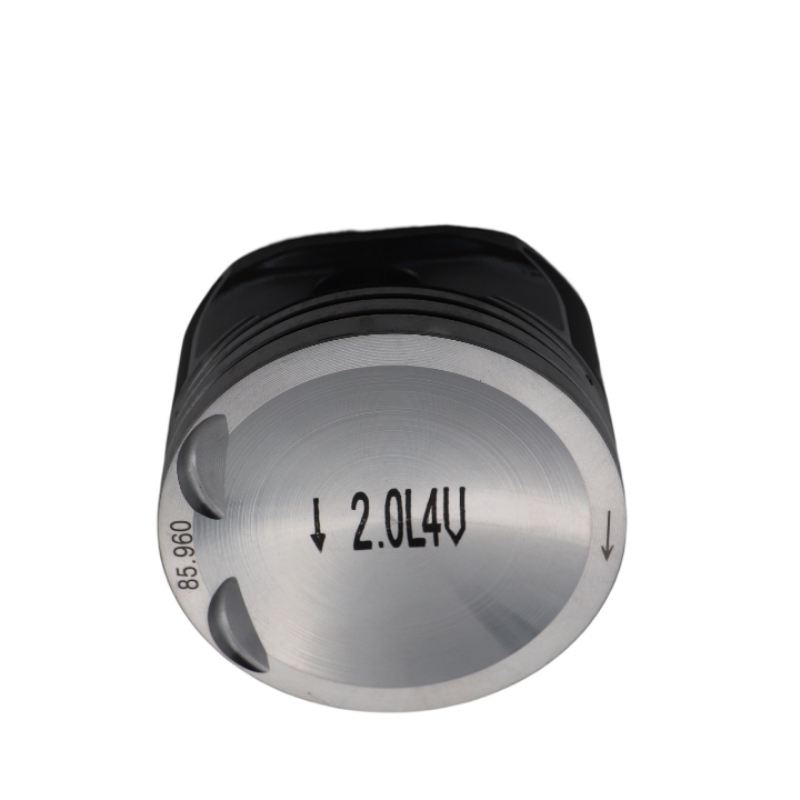
The piston is one of the most important moving components inside an internal combustion engine. It works together with the cylinder, piston rings, connecting rod, crankshaft, and cylinder head to convert combustion pressure into mechanical power. For Audi vehicles, advanced engine designs place particularly high demands on piston strength, dimensional accuracy, heat resistance, and friction control. When an engine requires an internal rebuild or piston replacement, selecting the correct Piston Kit is therefore essential for restoring engine performance and reliability.
Audi has developed a wide range of gasoline and diesel engines for models including the A3, A4, A5, A6, A7, A8, Q3, Q5, Q7, Q8, TT, S, and RS models. These engines can differ significantly in displacement, cylinder configuration, piston dimensions, compression ratio, piston crown design, piston-pin specifications, and piston-ring configuration. As a result, a Piston Kit designed for one Audi engine should not automatically be considered suitable for another.
Audi's official parts catalog demonstrates this variety. For example, Audi parts listings include different engine pistons for 2.0-liter applications, with some piston assemblies supplied with piston pins and piston-ring sets.
For international automotive parts buyers, repair workshops, distributors, and engine rebuilders, understanding the relationship between the piston and the complete engine system is important when sourcing replacement components. Hebei Oujia Import And Export Trade Co., Ltd. can provide sourcing support for customers looking for Audi engine components and piston-related products, helping buyers focus on application information and compatibility when selecting a suitable solution.

A piston operates inside the engine cylinder and moves up and down during the combustion cycle. The piston receives the force generated by combustion and transfers this force through the connecting rod to the crankshaft. This continuous movement allows the engine to transform combustion energy into rotational power.
A typical Piston Kit may include a piston, piston rings, piston pin, and related retaining components, depending on the specific application and supplier configuration. Audi parts catalogs show that certain genuine engine pistons are supplied with piston pins and piston-ring sets, while other applications list piston rings separately.
The piston itself normally contains several important design areas. The piston crown forms the upper surface exposed to combustion. Its shape can influence combustion chamber volume, compression characteristics, airflow interaction, and valve clearance. The piston skirt guides the piston inside the cylinder and helps maintain stable movement. The ring lands accommodate piston rings, while the piston-pin bore connects the piston to the connecting rod.
Different Audi engine generations can use different piston designs. Audi technical documentation for its 3.0-liter V6 TFSI, for example, describes cast aluminum pistons with an anti-friction coating on the piston skirt. The engine uses multiple piston rings, including a rectangular compression ring, a tapered piston ring, and a three-piece oil-control ring.
Audi technical documentation for another engine generation also illustrates how piston engineering can include specialized cooling ducts, anti-friction skirt coatings, enlarged valve recesses, offset wrist-pin positioning, and specially coated piston pins. These features demonstrate that an automotive piston is a precision-engineered component rather than simply a cylindrical metal part.
The piston rings are equally important. Compression rings help seal combustion pressure between the piston and cylinder wall, while the oil-control ring helps regulate the amount of engine oil remaining on the cylinder surface. If piston rings lose their sealing capability because of wear, incorrect installation, or cylinder problems, the engine may experience increased oil consumption, reduced compression, blow-by, and declining performance.
The piston pin, sometimes called the wrist pin, connects the piston to the small end of the connecting rod. It must withstand repeated loads while allowing the connecting rod to articulate as the piston moves. Because of the forces involved, the dimensions and material characteristics of the piston pin must correspond precisely with the piston and connecting rod.
This is why a complete Piston Kit can be an efficient solution during an engine rebuild. Replacing related piston components together can help ensure that the piston, rings, and pin are matched to the intended engine application.
Audi engine designs also demonstrate how piston specifications can vary according to engine output and application. In one Audi technical document, different piston constructions are specified for different engine variants, with piston crown shape being one of the principal differences.
Choosing an Audi Piston Kit should begin with accurate engine identification. The vehicle brand alone is not sufficient because Audi has used multiple engine generations and configurations across different models and production years.
A buyer should normally confirm several important specifications before purchasing:
Audi model
Production year
Engine displacement
Engine code
Cylinder configuration
Original piston part number
Cylinder bore diameter
Piston diameter
Compression height
Piston-pin diameter
Piston crown design
Piston-ring dimensions
Standard or oversize piston specification
Left/right or cylinder-bank requirements where applicable
The engine code is particularly important. Two Audi vehicles may both use a 2.0-liter engine but have different engine generations, internal components, piston dimensions, or piston-ring configurations.
Audi's official parts catalog provides a good illustration. A listing for a 2011 Audi Q5 2.0L application identifies a specific piston and separate piston-ring products, while Audi's parts catalog also shows other piston part numbers for different model years and applications.
Modern Audi engines can also have highly specific piston requirements. For instance, Audi parts information for a 2023 S8 and other 4.0-liter applications lists different piston part numbers for different cylinder banks, while the corresponding piston-ring listing specifies a complete set of eight ring sets.
This means that buyers should avoid purchasing a Piston Kit solely according to a general description such as "Audi 2.0 piston kit" or "Audi 4.0 piston." The exact engine code and original part number should be checked whenever possible.
Another important consideration is whether the engine requires standard-size or oversize pistons. During an engine rebuild, the cylinder walls may be inspected, measured, honed, or machined. If the cylinder bore has been modified, the appropriate piston dimensions must be selected according to the final cylinder specification.
Cylinder condition is also important. A new piston cannot compensate for a cylinder that has excessive wear, distortion, scoring, or incorrect geometry. Before installing a new Piston Kit, professional engine rebuilding procedures should include appropriate measurement of cylinder bore, piston-to-cylinder clearance, ring gap, piston-pin fit, and related components.
Piston rings require particular attention during installation. Ring orientation, end gaps, side clearance, and installation position should follow the applicable engine manufacturer's specifications. Incorrect ring installation can cause oil consumption, poor compression, excessive blow-by, or premature wear.
The connecting rod should also be inspected because it directly connects the piston to the crankshaft. If the connecting rod, rod bearing, piston pin, or related components show signs of damage, replacing only the piston may not provide a complete repair solution.
For high-performance Audi engines, the requirements can be even more demanding. S and RS models can use powerful turbocharged engines that place substantial thermal and mechanical loads on pistons and connecting rods. Therefore, the replacement piston must be selected according to the original engine specification and intended application.
A properly matched Piston Kit provides an important foundation for an engine rebuild. However, piston selection should always be considered together with the cylinder, connecting rod, crankshaft, piston rings, lubrication system, and cooling system.
For international buyers, sourcing Audi engine components requires careful communication and accurate product identification. A professional supplier or sourcing partner can help customers organize the technical information needed to identify the appropriate product before an order is placed.
Hebei Oujia Import And Export Trade Co., Ltd. focuses on international automotive parts sourcing and can support customers looking for Audi engine components, including piston-related products. For buyers searching for an Audi Piston Kit, providing detailed application information is the first step toward finding the correct product.
Customers can provide information such as the Audi model, model year, engine displacement, engine code, original piston number, VIN information where appropriate, and photos of the existing component. With this information, the required piston configuration can be evaluated more accurately.
This approach is particularly important because Audi uses many different piston specifications. Audi's parts catalog contains piston products for different engine applications, and some listings explicitly include piston rings and piston pins, while other listings separate these components.
For example, Audi's parts information for certain 2.0-liter engines lists pistons with rings and pins, while other product listings identify piston-ring sets separately. This variation means buyers should confirm exactly what is included in a Piston Kit before placing an order.
For wholesale distributors and automotive repair businesses, this level of product identification can also help reduce purchasing mistakes. A visually similar piston may have different dimensions, ring grooves, compression height, valve pockets, piston-pin specifications, or crown geometry.
When purchasing Audi piston products internationally, buyers should consider several factors:
Application matching: Confirm the exact Audi model, engine code, and production year.
Dimensional accuracy: Check piston diameter, bore size, compression height, piston-pin dimensions, and other critical measurements.
Kit configuration: Confirm whether the package includes pistons only or also includes piston rings, piston pins, circlips, or other related components.
Engine condition: Check cylinder wear and determine whether standard or oversize pistons are required.
Part-number verification: Compare the original part number with the proposed replacement product whenever possible.
Quantity requirements: Confirm the number of pistons required for the complete engine rebuild.
For customers operating automotive workshops or distribution businesses, these details can make the sourcing process more efficient and reduce the risk of receiving an unsuitable product.
Hebei Oujia can communicate with customers according to their specific Audi engine requirements and assist in the sourcing process for different piston applications. Whether the requirement involves a replacement Piston Kit, individual pistons, piston rings, piston pins, or other engine components, accurate application information helps establish a more reliable purchasing process.
Audi's advanced engine technology makes piston quality and compatibility especially important. From efficient 2.0-liter turbocharged engines to high-performance V6, V8, and other powertrains, each engine family can have its own piston specifications and component requirements.
For this reason, choosing an Audi Piston Kit should not be based simply on vehicle brand or engine displacement. The correct solution should be determined through engine code, part number, dimensions, application, and actual engine condition.
With professional sourcing support from Hebei Oujia Import And Export Trade Co., Ltd., international customers can more efficiently communicate their requirements and evaluate suitable Audi piston solutions for engine repair, rebuilding, replacement, wholesale, and aftermarket applications. A correctly matched piston and ring combination can provide an important foundation for restoring compression, controlling oil consumption, supporting efficient combustion, and maintaining dependable engine performance.
If you are sourcing an Audi Piston Kit for a specific vehicle or engine application, providing the engine code and original part number can help make product identification faster and more accurate.