The piston is one of the most important moving components inside a modern automotive engine. It operates continuously within the cylinder, converting the pressure created by combustion into mechanical force and transferring that force through the connecting rod to the crankshaft. For BMW engines, where precise engineering and responsive performance are important characteristics, the condition and quality of piston components can have a significant impact on engine efficiency, power output, durability, and overall driving performance.
When pistons or related components become severely worn or damaged, replacing only one individual component may not always be the most practical solution. A properly matched Piston Kit can provide a more comprehensive replacement solution by supplying several piston-related components designed to work together. Depending on the specific application and supplier configuration, a Piston Kit may include pistons, piston rings, piston pins, circlips, and other associated components.
For engine rebuilders, automotive repair workshops, distributors, and aftermarket customers, selecting a suitable BMW Piston Kit requires careful attention to engine specifications and component compatibility. BMW has used numerous engine families, displacements, and configurations across different vehicle generations. Therefore, a piston kit suitable for one BMW engine may not be suitable for another, even when the vehicle models appear similar.
Hebei Oujia Import And Export Trade Co., Ltd. provides automotive engine-related products for international aftermarket customers. By focusing on application information, product specifications, and compatibility requirements, the company can support customers sourcing engine components such as a BMW Piston Kit for repair, rebuilding, maintenance, and aftermarket distribution.

A piston performs a demanding role inside an internal combustion engine. During operation, the piston moves repeatedly up and down inside the cylinder bore. Combustion pressure pushes the piston downward, while the connecting rod transfers this movement to the crankshaft. The crankshaft then converts the reciprocating movement into rotational motion that ultimately provides power to the vehicle.
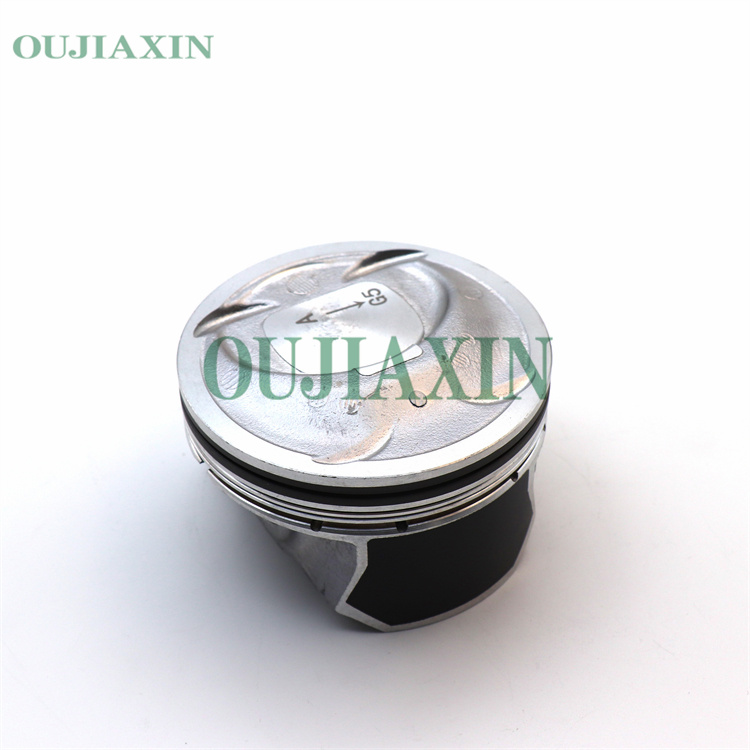
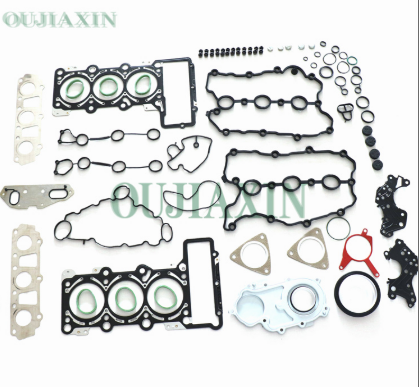
A BMW Piston Kit is designed to address several components involved in this process. The exact contents depend on the engine application and product configuration, but a typical kit may include the piston itself, piston rings, piston pin, and retaining clips.
The piston is generally manufactured from aluminum alloy or another material selected for a combination of strength, low weight, heat resistance, and dimensional stability. Reducing unnecessary piston weight can help control reciprocating mass, while sufficient strength is required to withstand combustion pressure and continuous high-temperature operation.
Piston rings perform several essential functions. Compression rings help seal combustion gases between the piston and cylinder wall, helping maintain compression within the combustion chamber. The oil control ring helps regulate the amount of engine oil remaining on the cylinder wall and assists with oil management during piston movement.
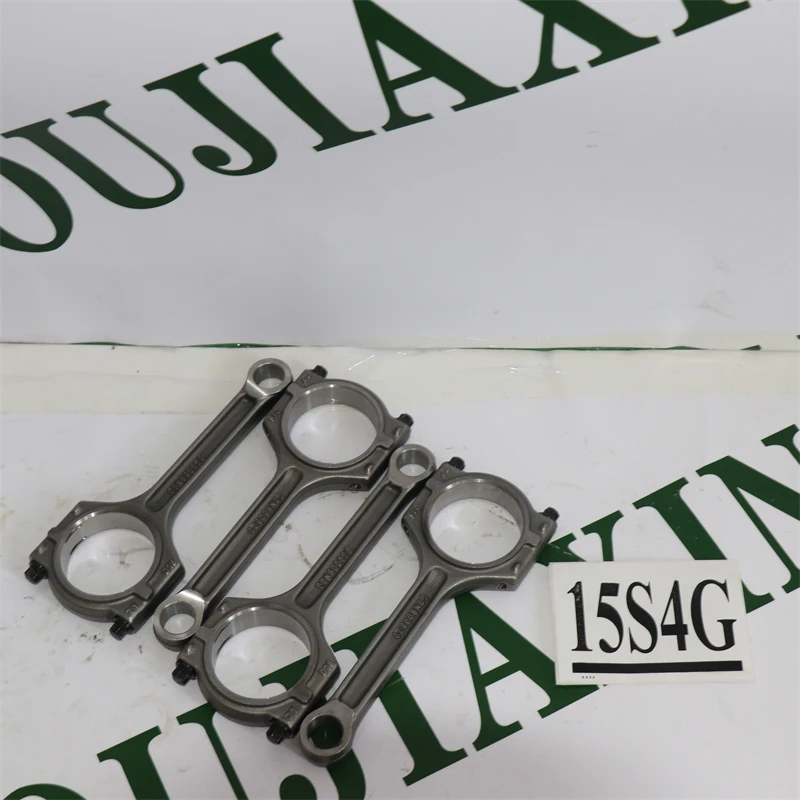
Piston pins, also called wrist pins, connect the piston to the small end of the connecting rod. They must withstand repeated loads while allowing the connecting rod and piston to move correctly relative to each other. Retaining clips or circlips help secure the piston pin in the piston assembly.
The piston skirt is another important part of the piston design. It guides the piston within the cylinder and helps control lateral movement. Proper clearance between the piston skirt and cylinder wall is critical. Excessive clearance can contribute to piston noise and instability, while insufficient clearance may increase the risk of friction or seizure, particularly when the engine reaches operating temperature.
The crown or top surface of the piston is directly exposed to combustion. Its shape can influence combustion chamber characteristics, compression, airflow, and thermal behavior. Different BMW engine designs may therefore use different piston crown shapes and dimensions.
Turbocharged engines can place additional demands on piston components because they may operate with increased cylinder pressure and temperature. A properly designed piston must be capable of handling these conditions while maintaining dimensional stability and reliable sealing.
A BMW Piston Kit should therefore be viewed as a coordinated group of components rather than simply a replacement piston. The piston, rings, pin, and related parts need to match the engine's bore diameter, stroke, compression requirements, connecting rod specifications, and other design parameters.
When selecting a replacement kit, engine identification is essential. Buyers should confirm the exact BMW model, model year, engine family, engine code, displacement, bore size, and original component information. Where available, the original part number can also be an important reference for compatibility verification.
The performance of a Piston Kit depends heavily on material selection, manufacturing accuracy, surface treatment, dimensional control, and quality inspection. Because pistons operate under high temperatures, pressure, friction, and repeated mechanical loading, even small dimensional differences can affect engine performance.
Aluminum alloys are widely used in automotive piston manufacturing because of their relatively low weight and good thermal conductivity. However, the specific alloy and manufacturing process depend on the engine design and performance requirements.
Pistons may be produced through casting or forging processes. Forged pistons are formed under controlled pressure and can offer high mechanical strength and resistance to demanding operating conditions. Cast pistons can provide suitable performance for many applications and can be manufactured efficiently with carefully controlled processes.
After forming, pistons undergo machining operations to achieve the required dimensions. Features such as the piston crown, ring grooves, pin bore, and skirt require accurate machining. The piston must maintain appropriate dimensional characteristics across different operating temperatures.
Piston ring grooves are particularly important. If the grooves are not accurately manufactured or if the rings do not fit correctly, sealing and oil control can be affected. Excessive ring clearance may contribute to combustion gas leakage or increased oil consumption, while incorrect installation can also cause premature wear.
Surface treatment may be applied to certain piston areas depending on the design. Such treatments can improve wear resistance, friction characteristics, or durability. The specific treatment should correspond to the requirements of the engine application.
One of the most common causes of piston-related problems is inadequate lubrication. Engine oil helps reduce friction between the piston skirt, rings, and cylinder wall. If oil quality deteriorates, oil supply becomes insufficient, or the lubrication system experiences a problem, friction and temperature can increase.
Overheating can also damage piston components. Excessive engine temperature may affect piston dimensions, rings, cylinder walls, and other internal components. In severe cases, overheating may contribute to piston deformation or surface damage.
Carbon deposits can create additional problems. Deposits around piston ring grooves may restrict ring movement and reduce sealing effectiveness. This can contribute to increased oil consumption, reduced compression, or poor engine performance.
Typical symptoms of piston or piston-ring problems may include excessive oil consumption, blue exhaust smoke, reduced engine power, poor compression, unusual engine noise, or increased crankcase pressure. However, these symptoms can also be caused by other engine problems, so professional diagnosis is recommended before replacing components.
When rebuilding a BMW engine, technicians should inspect the cylinder bores, pistons, connecting rods, crankshaft, bearings, and lubrication system as a complete system. Installing a new Piston Kit into a damaged cylinder block without correcting the underlying problem may result in premature wear.
Cylinder bore measurement is particularly important. The replacement piston must have the correct diameter and operating clearance for the specific cylinder. If the cylinder has excessive wear, taper, or out-of-round conditions, machining or additional repair work may be required before installing new pistons.
Hebei Oujia Import And Export Trade Co., Ltd. can support international customers sourcing automotive engine components by communicating product requirements and application information. For a BMW Piston Kit, providing detailed engine specifications allows suppliers and buyers to evaluate compatibility more accurately.
Choosing the correct Piston Kit is one of the most important steps in an engine rebuilding project. BMW engines have evolved considerably across different generations, and pistons can vary in diameter, compression height, pin diameter, crown design, ring configuration, and material.
The first consideration should be the exact engine application. Buyers should provide the BMW model, model year, engine code, displacement, fuel type, and other relevant technical information. Engine code is particularly useful because vehicles with similar model names may use different engines.
The original piston part number can provide another useful reference. If the old component is available, technicians can record identification marks and measure critical dimensions. Comparing these details with the specifications of the replacement Piston Kit can help reduce compatibility risks.
Bore size is another essential specification. A piston that is too large or too small for the cylinder cannot provide the required operating performance. In some engine rebuilding situations, cylinders may be machined to an oversize dimension, requiring corresponding oversize pistons and rings. Such decisions should always be based on professional measurements and the applicable engine specifications.
Compression height should also be considered. It affects the position of the piston relative to the cylinder head and combustion chamber. Incorrect compression height may influence compression ratio and mechanical clearances.
Piston pin diameter and pin length must match the connecting rod and piston design. Ring dimensions and configuration are equally important. Rings should be installed in the correct grooves and orientation according to the applicable installation requirements.
The quality of the Piston Kit is also important for distributors and professional repair businesses. Consistent dimensions, accurate machining, appropriate material selection, and reliable quality control can contribute to predictable engine rebuilding results.
For international customers, Hebei Oujia Import And Export Trade Co., Ltd. can be considered as a sourcing partner for automotive engine components. Customers can provide detailed product information, original part numbers, engine codes, or technical drawings when necessary, helping the sourcing process focus on the correct application rather than simply matching the vehicle brand.
Installation should be carried out by qualified technicians. Before installing a new Piston Kit, the engine block should be thoroughly cleaned and inspected. Cylinder dimensions should be measured, piston-to-cylinder clearance should be checked, and connecting rod condition should be evaluated.
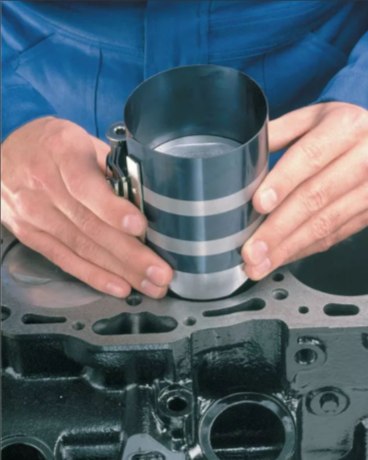
Piston rings must also be installed carefully. Ring gaps should be checked according to the applicable engine specifications, and rings should be positioned correctly within their respective grooves. Incorrect ring installation can cause poor sealing, excessive oil consumption, or accelerated wear.
The connecting rod and piston pin should be assembled correctly, with retaining clips properly positioned where applicable. During installation, appropriate assembly lubrication should be used to prevent dry contact during the initial engine startup.
After assembly, the engine should be inspected carefully before operation. The lubrication and cooling systems should be verified, and the engine should be operated according to suitable break-in and maintenance procedures when applicable.
It is also important to identify the reason for the original piston failure. If the previous pistons were damaged because of overheating, lubrication problems, abnormal combustion, injector issues, turbocharger problems, or cylinder damage, these underlying causes should be corrected before the replacement engine components are put into service.
For automotive parts distributors, engine rebuilding workshops, and repair businesses, a properly matched BMW Piston Kit can provide a practical solution when restoring an engine's internal components. Instead of sourcing the piston, rings, pins, and retaining components separately, a suitable kit can simplify the component selection process and help ensure that the related parts are designed to work together.
However, the most important consideration remains compatibility. A high-quality piston kit is only effective when its specifications match the engine correctly. Careful identification, professional measurement, reliable sourcing, and proper installation are all essential.
As demand for automotive aftermarket components continues to grow, reliable engine repair solutions are becoming increasingly important. BMW vehicles require replacement components that correspond closely with their specific engine designs. A carefully selected Piston Kit can help restore compression, oil control, mechanical efficiency, and overall engine performance when the original piston components have reached the end of their service life.
For international buyers seeking BMW engine components, Hebei Oujia Import And Export Trade Co., Ltd. provides an option for sourcing automotive parts according to specific application requirements. By supplying detailed engine information and confirming product specifications before purchase, customers can make more informed decisions and reduce the risks associated with incorrect component selection.
Ultimately, a Piston Kit is more than a collection of replacement parts. It is an important part of the engine's internal operating system, where piston design, ring sealing, lubrication, cylinder condition, and dimensional accuracy all work together. For BMW engine repair and rebuilding projects, selecting the appropriate piston kit and installing it according to professional technical requirements can provide a solid foundation for dependable engine performance and long-term durability.