A reliable engine depends on the precise coordination of its internal components. Among these components, the piston plays a critical role in converting combustion pressure into mechanical movement. For BMW engines, selecting a suitable Piston Kit is essential when carrying out engine repairs, rebuilding worn engines, or preparing an engine for specific performance requirements.
BMW vehicles use a wide range of gasoline and diesel engines across different generations, including turbocharged four-cylinder engines and larger six-cylinder and eight-cylinder configurations. Each engine family has its own requirements for piston dimensions, compression ratio, piston pin design, ring configuration, and thermal performance. Therefore, choosing the correct piston kit requires accurate engine identification and careful verification of technical specifications.
Hebei Oujia Import And Export Trade Co., Ltd. focuses on international automotive parts trade and piston sourcing opportunities. For overseas distributors, engine rebuilders, importers, and wholesale buyers, understanding piston kit construction and compatibility can help improve purchasing decisions and reduce the risk of incorrect fitment.
This article introduces the structure and working principles of BMW piston kits, explains important material and manufacturing considerations, and provides a practical guide to selecting suitable products for the automotive aftermarket.

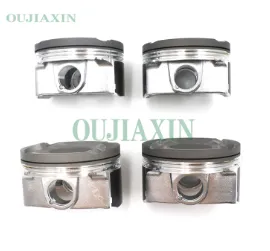
A Piston Kit is a group of engine components designed to work together within an engine cylinder. Depending on the supplier and application, a typical kit may include a piston, piston rings, a piston pin, and retaining clips. Some kits may include additional components, while others supply only selected parts. Buyers should always confirm the exact package contents before ordering.
The piston moves up and down inside the cylinder bore as the engine completes its operating cycle. During combustion, expanding gases push the piston downward. The connecting rod transfers this force to the crankshaft, converting reciprocating movement into rotational power.
Piston rings perform several essential functions. They help seal combustion gases, control the amount of oil remaining on the cylinder wall, and transfer heat from the piston to the cylinder. The piston pin connects the piston to the connecting rod, allowing the required movement between the two components.
In a BMW engine, these parts must operate under repeated mechanical loads and significant temperature changes. Their dimensions, material properties, and compatibility with the cylinder bore and connecting rod directly affect engine reliability.
A replacement Piston Kit should therefore be selected according to the original engine specifications or a properly engineered modification plan rather than appearance alone.
Understanding the function of each component helps buyers assess product specifications and determine whether a kit is suitable for a particular engine rebuilding project.
Piston body: The piston forms the moving boundary of the combustion chamber and transfers combustion pressure to the connecting rod. Its crown, ring grooves, skirt, and pin bosses are designed to withstand the mechanical and thermal conditions of the engine. Piston geometry varies according to engine design, compression requirements, and combustion chamber configuration.
Piston rings: Piston rings are installed in grooves around the piston. Compression rings help seal combustion gases, while oil-control rings regulate the oil film on the cylinder wall. Ring thickness, groove dimensions, material, and end gap must match the application. Incorrect ring selection or installation can lead to excessive oil consumption, poor compression, or accelerated wear.
Piston pin: Also known as a wrist pin or gudgeon pin, the piston pin connects the piston to the small end of the connecting rod. It transfers mechanical loads while allowing the required articulation. Its diameter, length, surface condition, and fit must be compatible with the piston and connecting rod.
Retaining clips: Some piston designs use retaining clips to secure the piston pin. These small components are essential to the assembly because improper installation or an incorrect clip can allow unwanted pin movement and cause serious engine damage.
Piston crown and skirt: The crown is exposed to combustion heat and pressure, while the skirt guides the piston within the cylinder bore. Their shapes and surface characteristics influence combustion behavior, friction, and piston stability.
The exact construction of a BMW piston kit depends on the engine family and product design. A kit for one BMW engine should not be assumed to fit another, even if both engines have a similar displacement.
BMW has used different engine families across passenger cars, SUVs, and performance vehicles. Examples include the B48 four-cylinder gasoline engine, B58 six-cylinder gasoline engine, N20 four-cylinder gasoline engine, N52 and N55 six-cylinder engines, and N62 V8 engine family. The actual applications vary by model, generation, market, and production year.
Each engine family may have different piston diameters, compression ratios, crown shapes, pin dimensions, ring specifications, and cylinder construction. Even within the same engine family, changes in production specifications can affect compatibility.
For example, a piston kit designed for a turbocharged engine must be evaluated against that engine's original compression ratio, combustion chamber design, and operating conditions. A piston with a different crown shape or compression height may alter the relationship between the piston and cylinder head.
When purchasing a Piston Kit, buyers should verify the engine code, original equipment part number, bore size, piston dimensions, and required compression ratio. If the engine has already been modified or rebored, the actual cylinder measurements and machining requirements are equally important.
Hebei Oujia Import And Export Trade Co., Ltd. can use these technical details as the basis for sourcing discussions with customers seeking piston kits for BMW engine applications. Providing accurate identification information at the beginning of the inquiry helps reduce confusion and supports more efficient product matching.
Pistons must combine low weight, adequate strength, heat resistance, and dimensional stability. Their design depends on the engine's intended output, operating temperature, cylinder pressure, and expected service conditions.
Cast aluminum alloy pistons are widely used in passenger-car engines. Casting can produce complex crown and internal geometries suitable for high-volume manufacturing. The alloy composition, casting quality, and subsequent processing influence the finished piston's strength and durability.
Forged aluminum pistons are produced by shaping aluminum alloy under controlled pressure. Depending on the material and design, forging can provide properties suited to demanding applications. Forged pistons are often considered for performance-oriented engine builds, but they are not automatically the best choice for every standard replacement application.
Machining and finishing: After forming, pistons undergo machining to establish critical dimensions, including the skirt profile, ring grooves, pin bore, and other specified features. Accurate machining is essential because even small dimensional deviations can affect piston clearance, ring seating, and engine operation.
Surface treatments and coatings: Depending on the product design, the piston crown, skirt, or other areas may receive specific surface treatments. These treatments can serve different purposes, but their suitability depends on the actual application. Buyers should confirm the treatment specification rather than assuming every piston kit includes a particular coating.
Piston ring manufacturing: Rings must maintain the required elasticity, wear resistance, and sealing behavior. The ring material, surface finish, profile, and dimensions should match the piston grooves and cylinder bore. Incorrect combinations may lead to poor sealing or premature wear.
Dimensional inspection: Quality control may include measuring piston diameter, pin bore, ring groove dimensions, and other critical features. Depending on the application, inspection can also involve material verification, hardness testing, and checks for manufacturing defects.
For international buyers, documented specifications and consistent production quality are more meaningful than general claims about premium materials. Where available, technical drawings, dimensional reports, and product identification records can help support purchasing decisions.
Piston damage can result from excessive heat, abnormal combustion, inadequate lubrication, incorrect clearances, contamination, or prolonged wear. Identifying the underlying cause is important before installing a replacement kit.
Piston ring wear: Worn rings may reduce combustion sealing and increase oil consumption. Symptoms can include blue exhaust smoke, reduced compression, or excessive crankcase pressure. However, these symptoms may also be caused by cylinder wear, valve stem seals, or other engine problems.
Piston scuffing and scoring: Insufficient lubrication, excessive operating temperatures, or incorrect piston-to-cylinder clearance can damage the piston skirt and cylinder wall. Severe scoring may require additional machining or cylinder block replacement rather than a piston kit alone.
Piston crown damage: Excessive combustion temperature, abnormal combustion, or mechanical interference can damage the piston crown. Turbocharged engines require particular attention to the intended fuel quality, boost control, ignition timing, and engine calibration.
Piston cracking or deformation: Excessive mechanical or thermal stress may cause cracks or deformation in critical areas. Damaged pistons should be evaluated alongside the connecting rods, bearings, cylinder head, and other related components.
Oil consumption: Excessive oil consumption can have several causes, including worn rings, cylinder wear, damaged pistons, crankcase ventilation problems, and valve stem seal deterioration. Replacing the piston kit without identifying the actual cause may not resolve the issue.
Incorrect piston clearance: Piston clearance must be appropriate for the material, design, operating temperature, and cylinder dimensions. Too little clearance may contribute to scuffing or seizure, while excessive clearance can cause noise, instability, and increased wear.
Before replacing pistons, professional engine rebuilders should inspect the cylinder bores, measure relevant dimensions, assess ring condition, and investigate any evidence of overheating or lubrication failure. The repair plan should follow the specifications applicable to the exact BMW engine.
Correct installation is essential for achieving the intended performance of a replacement piston kit. Even a correctly specified product can fail prematurely if the engine is assembled incorrectly.
Before installation, technicians should measure the cylinder bore and confirm whether honing, machining, or other preparation is necessary. The required piston-to-cylinder clearance should be determined using the applicable technical specifications.
Piston ring end gaps and side clearances must be checked according to the ring manufacturer's instructions. Rings should be installed in the correct grooves and orientation, and their gaps should be positioned according to the specified assembly procedure.
Piston pins and retaining clips must be installed correctly, with the appropriate lubrication and inspection practices. The connecting rod, bearings, crankshaft, and cylinder head should also be checked for wear or damage that could affect the rebuilt engine.
During the first operating period after rebuilding, technicians should follow the recommended running-in procedure for the selected components and engine configuration. Suitable engine oil, correct cooling system operation, and appropriate engine calibration help support reliable service.
For modified or turbocharged BMW engines, buyers should consult qualified engine builders to ensure that piston design, compression ratio, fuel system capacity, and expected cylinder pressure are compatible with the intended application.
The first step in purchasing a BMW Piston Kit is confirming the exact engine application. Vehicle model names alone are not sufficient because the same model may be offered with different engines across production years and markets.
Before requesting a quotation, buyers should prepare the following information:
BMW model and production year.
Engine code and displacement.
Original equipment part number, if available.
Cylinder bore diameter and required piston size.
Piston compression height and pin dimensions, where applicable.
Required compression ratio and piston crown design.
Ring dimensions and configuration.
Whether the engine remains standard or has been modified.
Required quantity and destination market.
The original part number is often the most useful starting point for cross-referencing. However, part number changes and production revisions should be checked against reliable parts information.
For an engine that has been rebored or modified, the actual cylinder measurements are particularly important. The replacement piston must be matched to the finished bore and specified clearance. Selecting a piston solely by the original nominal displacement may result in an incorrect fit.
Buyers should also clarify whether they need a standard replacement kit or a performance-oriented product. A performance piston may use a different crown, compression ratio, material specification, or ring package. These differences must be compatible with the engine's overall design and intended operating conditions.
For distributors, wholesalers, and professional engine rebuilders, product evaluation should consider technical compatibility, quality documentation, package contents, and commercial reliability.
Application coverage: Confirm which BMW engine codes and part references are available. Compatibility should be verified for the exact engine rather than inferred from a broad vehicle description.
Material and dimensions: Request available information about piston material, bore size, compression height, pin diameter, ring groove specifications, and other critical dimensions.
Kit configuration: Confirm whether the kit includes pistons, rings, piston pins, retaining clips, and any additional components. Package contents can vary between suppliers and applications.
Product consistency: For multi-cylinder engines, dimensional and weight consistency across the supplied piston set can be important. Buyers should clarify the applicable inspection requirements when purchasing multiple kits.
Packaging protection: Pistons and rings should be protected against impact, corrosion, and contamination during storage and transportation. Packaging should keep precision surfaces and small components secure.
Order quantities and lead times: Discuss the required volume, minimum order quantity, availability, and expected delivery schedule before confirming the purchase.
Documentation and after-sales support: Ask about available quality records, product identification, warranty terms if offered, and procedures for addressing incorrect references or quality concerns.
A competitive price is important, but the overall value of a piston kit also depends on compatibility, dimensional accuracy, product consistency, and the cost of potential installation errors.
International automotive parts buyers often need a clear process for matching technical requirements with suitable products. For BMW piston kits, accurate engine identification and communication of critical dimensions can help simplify the sourcing process.
Hebei Oujia Import And Export Trade Co., Ltd. welcomes inquiries from automotive parts distributors, importers, wholesalers, and professional engine rebuilders seeking piston kits and related engine components.
Customers can provide their BMW engine code, original part number, required piston size, order quantity, and destination market to begin a product sourcing discussion. Drawings, photographs, or other technical information can also help clarify the requested configuration.
Before confirming an order, buyers should discuss the exact application, kit contents, available technical documentation, packaging requirements, delivery schedule, and applicable commercial terms. For non-standard or modified engines, the required dimensions and engineering specifications should be confirmed with the engine builder.
For businesses serving the automotive aftermarket, consistent product identification and clear purchasing requirements can help reduce ordering mistakes and support repeat procurement. Establishing the correct specifications at the beginning of a transaction is especially valuable for engine components that require precise dimensional matching.
Hebei Oujia Import And Export Trade Co., Ltd. aims to support international trade communication and automotive parts sourcing discussions. Specific claims about manufacturing facilities, testing equipment, certifications, inventory, or brand authorization should only be published when supported by verified company information.
A BMW Piston Kit is an important group of engine components responsible for supporting combustion sealing, transferring pressure through the connecting rod, and controlling oil within the cylinder. The piston design, ring configuration, pin dimensions, material properties, and cylinder clearance all influence its suitability for a particular engine.
Whether purchasing for routine repairs, complete engine rebuilding, wholesale distribution, or performance applications, buyers should verify the engine code, part number, and required dimensions before placing an order. Correct installation and investigation of the original engine problem are equally important for reliable results.
Hebei Oujia Import And Export Trade Co., Ltd. welcomes inquiries from international automotive parts buyers interested in BMW piston kits and related engine components. Share your engine specifications, part reference, required quantity, and destination market to discuss suitable sourcing options for your business.