The internal combustion engine remains a marvel of mechanical engineering, and at its very heart lies the cylinder connecting rod, a critical link that transforms linear energy into rotational motion. Without this robust component, the power generated during the combustion stroke would have no way to reach the crankshaft, effectively rendering the engine useless. For fleet managers and automotive engineers, understanding the nuances of this part is essential for maximizing engine longevity and efficiency.
Globally, the demand for high-precision engine components has surged as industrial sectors push for higher power densities and lower emissions. The cylinder connecting rod must withstand immense compressive and tensile forces thousands of times per minute, making its material composition and structural integrity a primary focus for ISO-certified manufacturers. A single failure in this component can lead to catastrophic engine failure, underlining the necessity of using premium, precision-engineered parts.
By focusing on the synergy between the piston, the rod, and the crankshaft, operators can significantly reduce downtime and operational costs. This guide explores the technical depth of the cylinder connecting rod, from its metallurgical properties to its role in the broader ecosystem of engine kits, including piston kits and full gasket sets, ensuring your machinery operates at peak performance.
Global Relevance of Cylinder Connecting Rod Engineering
In the current global automotive landscape, the cylinder connecting rod is more than just a piece of forged steel; it is a critical variable in the quest for fuel efficiency and reduced carbon footprints. As international standards like ISO 9001 drive manufacturers toward tighter tolerances, the precision of the rod's weight and balance becomes paramount. Even a few grams of variance can cause harmonic vibrations that degrade the entire engine assembly over time.
From heavy-duty shipping vessels in the Atlantic to agricultural machinery in the heartlands of Brazil, the reliability of the cylinder connecting rod ensures that global supply chains remain uninterrupted. The challenge today lies in balancing the need for extreme durability with the demand for lighter materials to improve overall vehicle efficiency and responsiveness.
Defining the Role of the Cylinder Connecting Rod
Simply put, a cylinder connecting rod is the mechanical bridge that links the piston to the crankshaft. Its primary function is to transmit the force generated by the expanding gases in the cylinder during the combustion stroke, pushing the piston down and turning that linear motion into the rotational torque that eventually turns the wheels or drives an industrial pump.
In modern industrial contexts, this component is the "muscle" of the engine. It must be rigid enough to prevent bending under immense pressure yet flexible enough to absorb the shock of combustion. This delicate balance is what separates a standard commercial rod from a high-performance engineered component, especially in high-compression diesel engines where the stresses are exponentially higher.
Beyond the basic mechanical function, the cylinder connecting rod plays a vital role in humanitarian and essential services. Whether it is powering a backup generator in a remote medical clinic or a water pump in a disaster-stricken region, the integrity of this small part ensures that critical infrastructure remains operational when it is needed most.
Core Components and Material Factors
The durability of a cylinder connecting rod begins with its metallurgy. Most high-end rods are crafted from forged steel or powdered metal to ensure a dense, grain-consistent structure that resists fatigue. This prevents the microscopic cracks that often lead to catastrophic "throwing a rod" scenarios in overworked engines.
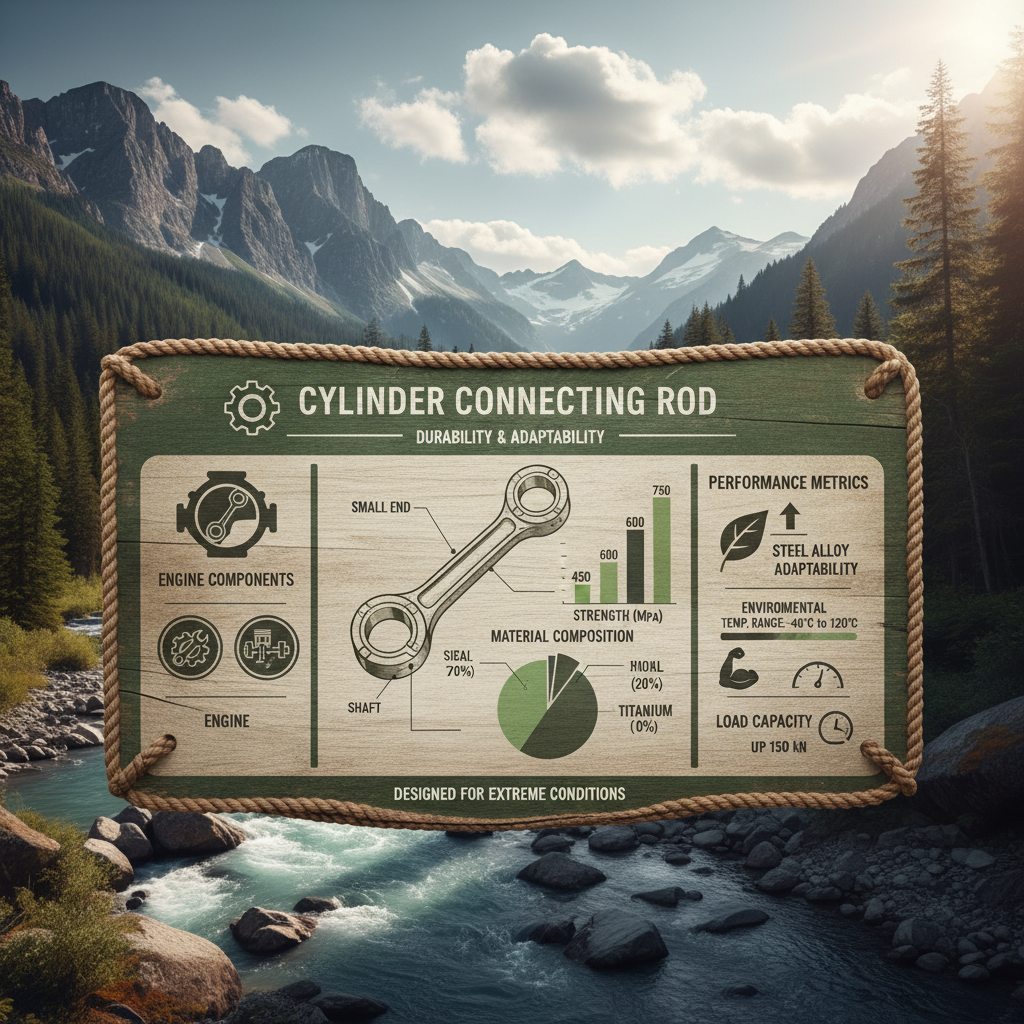
Precision is also found in the "big end" and "small end" of the cylinder connecting rod. The small end connects to the piston pin, while the big end wraps around the crankshaft journal. The use of high-quality shell bearings at the big end is crucial to reduce friction and prevent heat buildup, which could otherwise lead to seizing.
Finally, scalability in design allows the cylinder connecting rod to be adapted for various engine sizes, from compact four-cylinder commuter cars to massive V12 industrial engines. The geometry—specifically the I-beam or H-beam cross-section—is engineered to provide maximum strength while minimizing reciprocating mass.
Performance Metrics for Connecting Rod Designs
When evaluating a cylinder connecting rod, engineers look at a set of KPIs including tensile strength, fatigue limit, and weight-to-strength ratio. A lighter rod reduces the inertial forces acting on the crankshaft, allowing the engine to rev higher and respond faster, while a stronger rod ensures the engine can handle increased turbocharger boost.
Comparing different manufacturing methods—such as casting, forging, and CNC machining—reveals a clear trend toward forged components for professional-grade applications. Forged rods offer superior grain flow, which significantly increases the lifespan of the cylinder connecting rod under high-load conditions.
Performance Comparison of Connecting Rod Materials
Global Applications across Industrial Sectors
The versatility of the cylinder connecting rod means it is utilized in far more than just passenger cars. In the maritime industry, massive low-speed diesel engines rely on specialized rods to propel container ships across oceans. These components are often several meters long and must handle pressures that would crush a standard automotive part.
In remote industrial zones, such as mining operations in the Australian Outback or oil rigs in the North Sea, the cylinder connecting rod is a lifeline. Because these environments are prone to extreme temperature swings and heavy dust, the rods used in these regions often feature advanced coatings to reduce wear and tear and prevent premature corrosion.
Long-Term Value and Reliability Benefits
Investing in a premium cylinder connecting rod provides tangible long-term value by drastically reducing the total cost of ownership. While a cheaper alternative might save money upfront, the risk of premature fatigue failure is significantly higher. When a rod fails, it often destroys the cylinder wall and crankshaft, turning a simple part replacement into a full engine rebuild.
Beyond the financial logic, there is the element of safety and trust. For operators of heavy machinery or public transport, knowing that every cylinder connecting rod is balanced and stress-tested provides peace of mind. This reliability is the cornerstone of innovation, allowing engineers to push the boundaries of horsepower and torque without compromising operator safety.
Furthermore, the use of precision-engineered rods contributes to environmental sustainability. A well-balanced engine operates more smoothly, resulting in lower fuel consumption and fewer harmful emissions. By ensuring the cylinder connecting rod operates with minimal friction, we extend the overall lifespan of the vehicle, reducing the frequency of scrap and waste.
Future Innovations in Rod Manufacturing
The future of the cylinder connecting rod is being shaped by additive manufacturing and digital twin technology. 3D printing of metal alloys allows for complex internal geometries that were previously impossible to forge, enabling rods that are even lighter yet stronger. This "generative design" optimizes material placement based on real-time stress analysis.
Digital transformation is also entering the workshop. By using IoT sensors during the machining of a cylinder connecting rod, manufacturers can create a "digital birth certificate" for every part, tracking its precise dimensions and material properties. This allows for predictive maintenance, where operators can replace a rod based on actual wear data rather than estimated hours.
As the world transitions toward hybrid systems, the role of the cylinder connecting rod is evolving to support engines that cycle on and off more frequently. This requires materials that can handle more frequent thermal expansion and contraction cycles, leading to the development of advanced ceramic-metal composites.
Comparison of Cylinder Connecting Rod Manufacturing Technologies
| Manufacturing Method |
Structural Integrity |
Production Cost |
Application Focus |
| Traditional Casting |
Moderate (6/10) |
Low |
Economy Engines |
| Hot Forging |
High (9/10) |
Medium |
Heavy-Duty Trucks |
| Powder Metallurgy |
Good (7/10) |
Medium |
Modern Passenger Cars |
| CNC Machined Billet |
Very High (9/10) |
High |
Racing/Performance |
| 3D Metal Printing |
Experimental (8/10) |
Very High |
Aerospace/Prototypes |
| Composite Forging |
Superior (10/10) |
High |
Industrial Power Gen |
FAQS
The most prominent sign is a loud, rhythmic knocking sound coming from the lower end of the engine, often called "rod knock." This is caused by excessive clearance in the big-end bearing, allowing the rod to hammer against the crankshaft. Other signs include increased vibration, metallic particles in the oil filter, and a sudden drop in engine oil pressure.
Technically yes, but it is generally not recommended. Since the rod and piston work as a balanced unit, a failure in the rod often implies that the piston pin or rings have also been subjected to abnormal stress. For maximum reliability, we suggest installing a complete piston kit, which ensures the new rod is perfectly mated with a compatible piston.
Forged rods are created by compressing metal under extreme pressure, which aligns the grain structure and makes the part significantly stronger and more resistant to fatigue. Cast rods are made by pouring molten metal into a mold; while cheaper to produce, they are more brittle and prone to cracking under high-load or high-RPM conditions.
Weight is critical because the rod is a reciprocating mass. Heavier rods require more energy to move up and down, which can limit the engine's maximum RPM and reduce throttle response. Lighter, high-strength rods reduce inertial stress on the crankshaft and bearings, leading to better efficiency and a smoother-running engine.
Inspection intervals depend on the application. For standard automotive use, they are typically checked during a major engine overhaul. However, for heavy-duty industrial engines or high-performance racing engines, bearings should be inspected every 5,000 to 10,000 hours of operation or whenever oil analysis shows an increase in copper or lead levels.
While titanium offers an incredible strength-to-weight ratio, it is generally overkill for daily driving. Titanium rods are extremely expensive and can be more sensitive to specific types of wear. For most users, a high-quality forged steel rod provides the perfect balance of longevity, cost, and performance.
Conclusion
The cylinder connecting rod is far more than a simple link; it is the critical point of failure or success for any internal combustion engine. From the precision of its forge to the quality of its bearings, every detail contributes to the engine's overall efficiency, safety, and lifespan. By prioritizing high-grade materials and precise balancing, operators can avoid catastrophic failures and ensure their machinery delivers consistent power in the most demanding environments.
As we move toward a future of smarter manufacturing and sustainable energy, the engineering of the cylinder connecting rod will continue to evolve, embracing new alloys and digital precision. For those seeking to maintain or upgrade their equipment, investing in certified, high-performance components is the only way to guarantee long-term operational success. Visit our website for premium engine solutions: www.oujiaengine.com