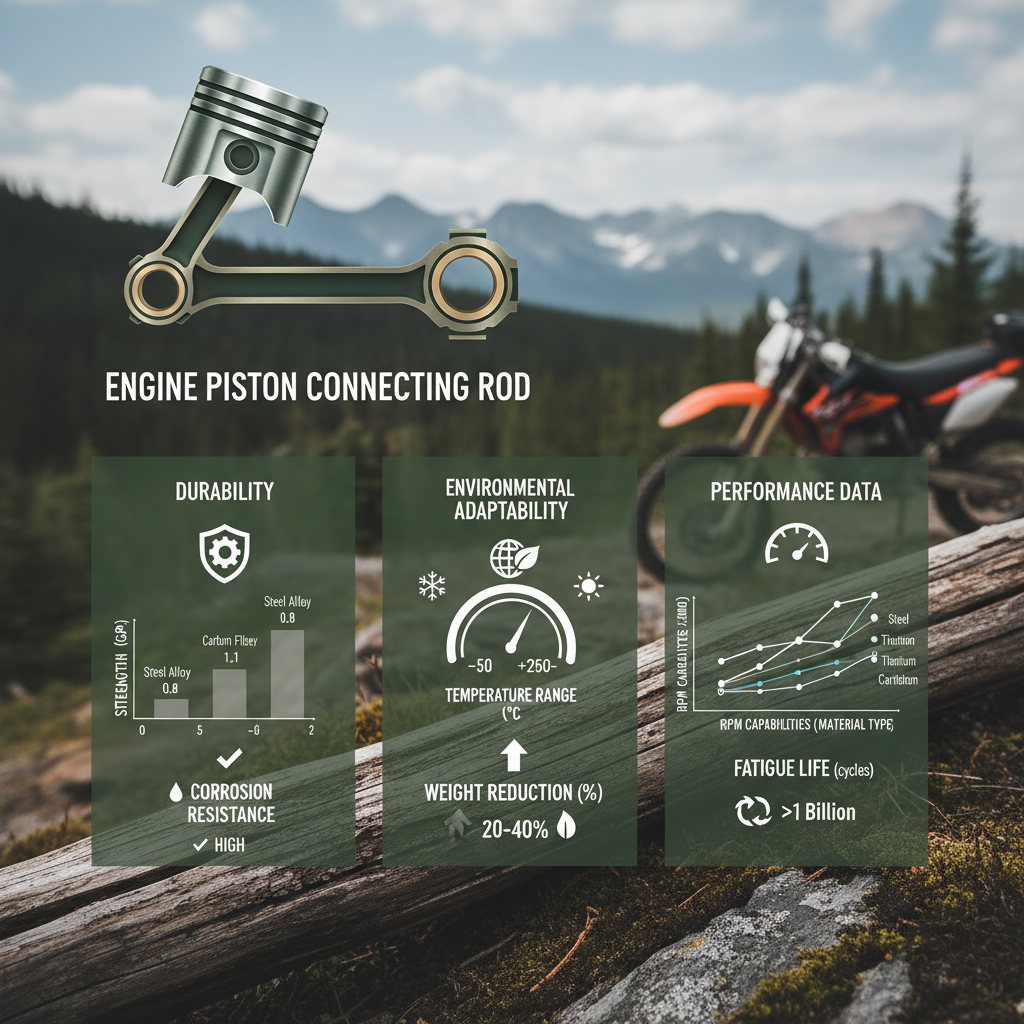
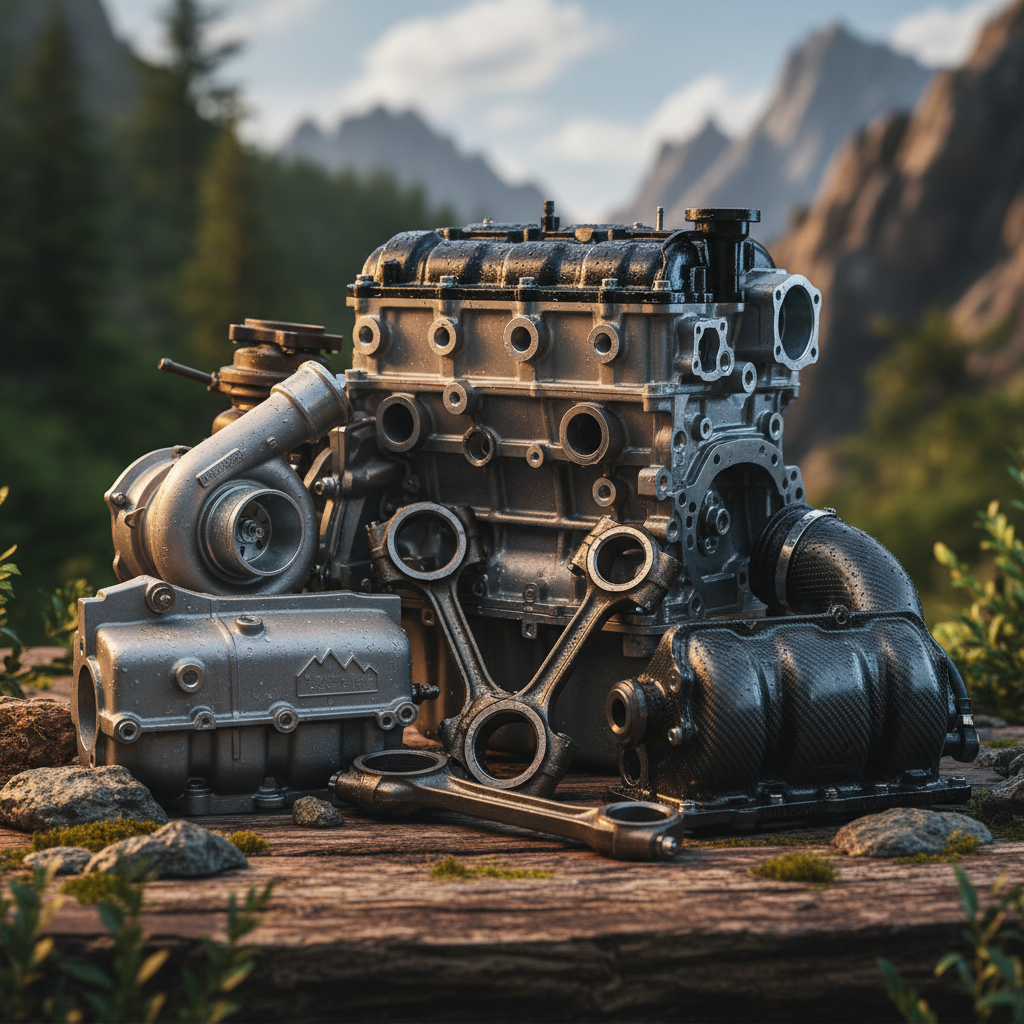
The engine piston connecting rod serves as the critical mechanical bridge in an internal combustion engine, converting the linear motion of the piston into the rotational force required to drive the crankshaft. In the demanding world of automotive manufacturing, the precision and structural integrity of this component determine the overall efficiency, power output, and longevity of the entire powertrain. Understanding the intricacies of its design is essential for engineers and fleet managers aiming to minimize downtime and maximize fuel economy.
Globally, the demand for high-performance engine piston connecting rod components has surged as industries shift toward more stringent emission standards and higher compression ratios. Whether in heavy-duty trucking, maritime shipping, or passenger vehicles, the connecting rod must withstand immense compressive and tensile loads thousands of times per minute. A failure in this single part often leads to catastrophic engine failure, making material science and precision machining the primary focus of modern automotive R&D.
By exploring the technical specifications, material advancements, and maintenance strategies associated with these components, operators can ensure their machinery runs with optimal reliability. From the adoption of forged steel to the integration of lightweight alloys, the evolution of the connecting rod reflects the broader industry trend toward sustainability and mechanical excellence. This guide provides a comprehensive deep dive into why the connecting rod remains the heartbeat of the internal combustion world.
Global Industry Context of Connecting Rods
On a global scale, the automotive parts sector is under immense pressure to balance performance with environmental sustainability. According to ISO standards for automotive quality management, the precision of reciprocating components like the engine piston connecting rod is paramount to reducing frictional losses. As emerging markets in Asia and Africa expand their logistics infrastructure, the reliance on heavy-duty diesel engines—and by extension, robust connecting rods—has created a massive market for high-grade replacement parts.
The primary challenge facing the industry today is "material fatigue." In high-stress environments, such as long-haul freight or industrial power generation, the constant oscillation of the connecting rod leads to microscopic cracks. Solving this requires a transition from traditional casting to advanced forging techniques, ensuring that the grain structure of the metal aligns with the direction of the load, thereby preventing sudden structural failure in critical transit zones.
Defining the Engine Piston Connecting Rod
In simple mechanical terms, an engine piston connecting rod is a forged or cast metal arm that links the piston (which moves up and down) to the crankshaft (which rotates). It acts as the primary transmitter of energy; when the fuel-air mixture ignites in the cylinder, the resulting explosion pushes the piston down, and the connecting rod transfers this linear force to the crank, turning it into the torque that eventually moves the wheels of a vehicle.
Beyond the basic mechanics, this component is a marvel of balance and metallurgy. It must be light enough to minimize inertia—allowing the engine to reach higher RPMs without shaking itself apart—yet strong enough to withstand tons of pressure during the combustion stroke. This duality makes the connecting rod a focal point for automotive engineers who strive to optimize the "power-to-weight" ratio of modern engines.
In the context of modern humanitarian and industrial needs, the reliability of the engine piston connecting rod is non-negotiable. In remote industrial zones or disaster-relief operations where backup generators are the only source of power, a broken connecting rod can mean the difference between a functioning hospital and a total blackout. Thus, the "meaning" of this part extends beyond simple machinery to the stability of essential infrastructure.
Core Engineering Factors for Durability
Material Selection is the first pillar of durability. Most high-performance rods are crafted from forged steel or powdered metal to eliminate the air pockets found in cast iron. Forging compresses the metal, creating a denser structure that resists bending and snapping under the extreme pressure of the combustion cycle, ensuring the engine piston connecting rod can handle peak cylinder pressures.
Precision Balancing and Weight Distribution are equally critical. Even a few grams of difference between rods in a V8 or inline-6 engine can cause harmonic vibrations that destroy main bearings. By utilizing CNC grinding and laser measurement, manufacturers ensure that every engine piston connecting rod in a set is identical in mass, providing a smooth, vibration-free operation that extends the engine's overall life.
Surface Treatment and Heat Treatment processes, such as nitriding or shot-peening, are used to increase the fatigue limit. These processes introduce compressive residual stresses on the surface of the metal, which effectively "seal" the surface against the initiation of cracks. This is particularly vital for an engine piston connecting rod operating in turbocharged engines where the boost pressure significantly increases the load on the piston pin and big-end bearing.
Global Applications and Use Cases
The application of the engine piston connecting rod spans across diverse sectors, from the luxury automotive market in Europe to the heavy mining equipment used in Australia and Brazil. In the commercial trucking industry, these components are engineered for millions of cycles, focusing on "long-stroke" designs that prioritize torque over raw speed, allowing for the efficient transport of goods across continents.
In extreme environments, such as remote Arctic oil rigs or deep-sea dredging vessels, the connecting rod must operate under fluctuating temperatures and high humidity. In these scenarios, corrosion-resistant coatings and specialized lubricants are applied to the rod's journals to prevent galling and seizure, ensuring that critical power systems remain operational despite the harsh external conditions.
Performance Comparison of Connecting Rod Material Types
Long-Term Value and Reliability Advantages
Investing in a premium engine piston connecting rod provides immediate tangible benefits in terms of cost efficiency. While lower-grade alternatives may be cheaper upfront, the long-term cost of engine failure—including labor for teardown and the loss of vehicle uptime—far outweighs the initial saving. High-reliability rods reduce the frequency of overhauls, ensuring a lower total cost of ownership (TCO) for fleet operators.
Beyond the financial aspect, there is a significant emotional and safety angle. For a driver or an operator, the knowledge that their engine is equipped with precision-engineered components provides peace of mind. Trust in the machinery prevents anxiety during long-distance hauls or high-stress industrial tasks. Furthermore, a more efficient rod reduces internal friction, which directly contributes to lower carbon emissions and a smaller environmental footprint, aligning business goals with global sustainability targets.
Future Trends in Connecting Rod Innovation
The future of the engine piston connecting rod is being shaped by the digital transformation of manufacturing. Industry 4.0 technologies, such as "Digital Twins," now allow engineers to simulate the stress loads on a connecting rod in a virtual environment before a single piece of metal is cut. This predictive modeling leads to organic shapes that optimize strength while stripping away unnecessary mass.
Additive manufacturing, or 3D printing with metal powders, is also emerging as a game-changer. This allows for the creation of hollow or lattice-structured rods that were previously impossible to forge. Such innovations drastically reduce the reciprocating mass of the engine, leading to faster acceleration and significantly improved fuel efficiency, which is critical as the world transitions toward hybrid powerplants.
Sustainability is also driving the adoption of "Green Steel" and recycled high-strength alloys. By reducing the carbon intensity of the smelting process, manufacturers are making the production of the connecting rod more eco-friendly. The goal is a circular economy where end-of-life engine components are recycled back into high-grade raw materials without losing the mechanical properties required for high-stress automotive applications.
Overcoming Modern Manufacturing Challenges
One of the most persistent challenges in producing the engine piston connecting rod is achieving perfectly concentric bores for the piston pin and the crankshaft journal. Any misalignment, even by a few microns, creates uneven wear on the bearings and leads to premature failure. To solve this, top-tier manufacturers have implemented integrated machining centers that mill both ends of the rod in a single setup, eliminating the errors introduced by repositioning the part.
Another limitation is the trade-off between stiffness and weight. A stiffer rod resists bending but increases the load on the crankshaft bearings. Expert insight suggests a move toward variable-geometry cross-sections, where the rod is thicker in the center (the "I-beam" or "H-beam" design) and tapered at the ends. This strategic distribution of material maximizes structural rigidity where it is needed most while keeping the overall weight low.
Finally, quality control in mass production remains a hurdle. To overcome this, automated ultrasonic testing and X-ray diffraction are now used to detect internal voids or stress concentrations that the human eye cannot see. This rigorous approach to quality assurance ensures that every rod leaving the factory is capable of enduring the harshest operating conditions.
Analysis of Connecting Rod Manufacturing and Performance Metrics
| Material Type |
Stress Resistance |
Weight Index |
Cost Efficiency |
| Cast Iron |
Low (4/10) |
Heavy |
Very High |
| Forged Steel |
High (9/10) |
Medium |
Medium |
| Powdered Metal |
Medium (7/10) |
Medium |
High |
| Titanium Alloy |
Very High (10/10) |
Very Light |
Low |
| Aluminum Alloy |
Medium (6/10) |
Lightest |
Medium |
| Hybrid Composite |
High (8/10) |
Light |
Low |
FAQS
The most prominent sign is a deep, rhythmic knocking sound, often called "rod knock," which increases in volume with engine RPM. This occurs when the bearing clearance becomes too wide, allowing the rod to hammer against the crankshaft. Other signs include excessive oil consumption, metallic flakes in the oil filter, and a noticeable drop in engine power due to increased friction and loss of compression.
For high-performance or heavy-duty applications, yes. Forged rods have a superior grain structure that makes them significantly more resistant to fatigue and snapping under high boost or heavy loads. However, for standard low-stress commuter vehicles, cast or powdered metal rods are often sufficient and much more cost-effective to produce, providing a balanced approach to value and longevity.
Connecting rod weight directly affects the engine's reciprocating mass. A lighter rod reduces the inertia the crankshaft must overcome during every stroke, allowing the engine to rev faster and more smoothly. It also reduces the load on the main bearings, which can lead to improved fuel efficiency and a higher redline, provided the rod remains strong enough to handle the combustion forces.
It is strongly recommended to replace them as a matched set. Connecting rods are precision-balanced to ensure the engine doesn't vibrate. Replacing just one can introduce a weight imbalance that leads to harmonic vibrations, which may cause premature wear on the crankshaft and other bearings. Matching the mass across all cylinders is essential for long-term engine health.
Lubrication is critical. The big-end of the connecting rod relies on a thin film of pressurized oil to prevent metal-to-metal contact with the crankshaft. If oil pressure drops or the oil becomes contaminated, this film collapses, leading to rapid overheating and "spinning" of the bearing. Regular oil changes and using the correct viscosity are the best ways to preserve your connecting rods.
Look for manufacturers that provide certification for their forging process and utilize CNC precision machining. Check for a "matched set" guarantee and look for surface treatments like nitriding. Purchasing from a reputable supplier that specializes in engine components, such as Oujia Engine, ensures that the parts meet OEM specifications and have undergone rigorous quality testing.
Conclusion
The engine piston connecting rod is far more than a simple piece of metal; it is a precision-engineered component that balances the opposing forces of power and weight. From the selection of forged steel to the implementation of advanced CNC balancing, every detail contributes to the overall efficiency and reliability of the internal combustion engine. By understanding the critical nature of material fatigue and the advantages of modern manufacturing techniques, operators can make informed decisions that protect their machinery and reduce long-term operational costs.
Looking ahead, the integration of additive manufacturing and sustainable materials will continue to push the boundaries of what is possible in automotive engineering. As the industry evolves, the focus will remain on creating components that are not only stronger and lighter but also more environmentally responsible. For those seeking the highest standards in engine reliability and performance, investing in precision-crafted components is the only way to ensure future-proof operations. Visit our website for more professional solutions: www.oujiaengine.com