The engine connecting rod, a crucial component within internal combustion engines, plays a pivotal role in transforming reciprocating motion of the piston into rotational motion of the crankshaft. This seemingly simple part is fundamental to the operation of countless vehicles, machinery, and power generation systems worldwide. Understanding the intricacies of engine connecting rods – their materials, design, and manufacturing – is essential for improving engine efficiency, reliability, and longevity. Its proper function directly impacts overall engine performance and, consequently, the efficiency of associated systems.
Globally, the demand for robust and efficient engine connecting rods is directly correlated with the growth of the automotive industry, manufacturing sector, and power generation. With an increasing global population and expanding economies, the need for transportation, industrial output, and energy continues to rise. Innovations in engine technology, including hybrid and electric vehicles requiring internal combustion engine backups, constantly drive the demand for improved connecting rod designs. The automotive sector alone represents a multi-trillion dollar industry, heavily reliant on the precise functioning of components like the engine connecting rod.
Furthermore, advancements in material science and manufacturing techniques are continuously pushing the boundaries of what’s possible with engine connecting rods. From lightweight alloys to advanced surface treatments, ongoing research and development efforts are focused on creating connecting rods that can withstand higher stresses, reduce friction, and ultimately enhance engine performance. This constant evolution underscores the importance of understanding the principles governing the design and operation of this critical component.
Introduction to the Engine Connecting Rod
An engine connecting rod is the link between the piston and the crankshaft in an internal combustion engine. Its primary function is to transmit the force generated by the expanding gases in the cylinder to the crankshaft, converting reciprocating (up and down) motion into rotational motion, which ultimately powers the vehicle or machinery. The engine connecting rod must be incredibly strong and lightweight to withstand enormous cyclical stresses at high speeds.
The design and materials used in an engine connecting rod significantly impact engine performance, efficiency, and longevity. Factors such as weight, strength, fatigue resistance, and lubrication are all critical considerations in its development. Advances in these areas have led to increasingly sophisticated engine connecting rod designs capable of handling higher power outputs and extended operating life.
Definition and Significance
Simply put, an engine connecting rod is a metal link that connects the piston to the crankshaft. However, its significance extends far beyond this basic definition. It's a vital component in a complex system, translating linear energy from the combustion process into the rotational force that drives our vehicles and powers industrial equipment. Without a properly functioning engine connecting rod, an engine cannot operate efficiently or reliably.
The engine connecting rod's connection to modern industry is profound. The vast majority of internal combustion engines—found in cars, trucks, motorcycles, boats, generators, and countless other applications—rely on this component. Its robustness and efficiency directly contribute to the productivity and economic output of numerous sectors globally.
Furthermore, the development of more efficient engine connecting rods supports sustainability efforts by optimizing engine performance and reducing fuel consumption. This contributes to lowering emissions and lessening the environmental impact of transportation and power generation.
Core Components of an Engine Connecting Rod
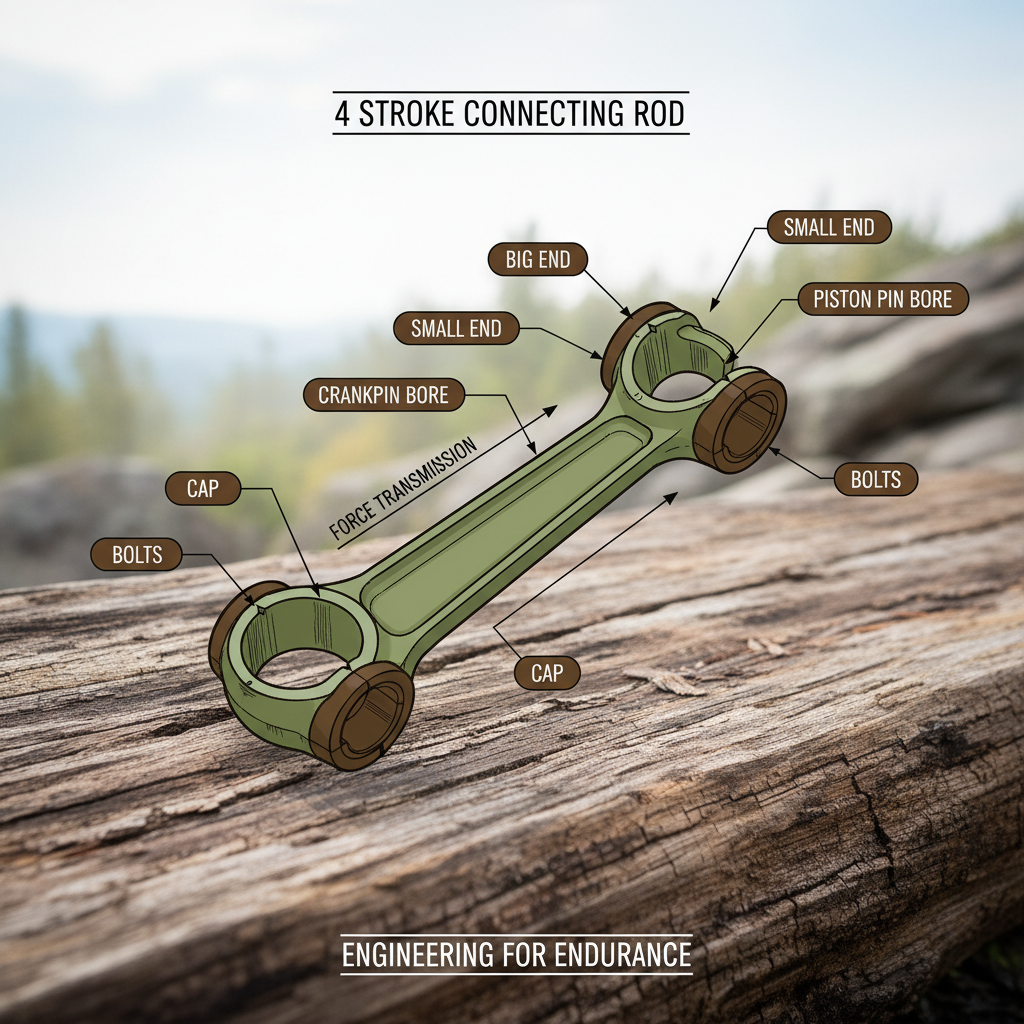
An engine connecting rod isn't a single solid piece; it's typically comprised of several key components working together. The major parts include the rod body (or shank), the small end (which connects to the piston via a wrist pin), and the large end (which connects to the crankshaft journal). The rod body is often forged or machined from high-strength steel or aluminum alloys.
The small end of the engine connecting rod often features a replaceable bushing to reduce friction and wear against the wrist pin. The large end incorporates a bearing shell, typically made of a tri-metal material, to provide a smooth and durable interface with the crankshaft journal. These bearings are crucial for distributing load and minimizing friction. Proper lubrication is vital for the longevity of these components.
Beyond these primary elements, many engine connecting rods include features like oil passages for delivering lubrication to the bearing surfaces, and reinforcing ribs to increase strength and rigidity. The specific design and construction of each component are carefully engineered to withstand the immense forces and stresses encountered during engine operation.
Performance Factors and Analysis
Several key factors dictate the performance of an engine connecting rod. These include its tensile strength (its ability to resist being pulled apart), its compressive strength (its ability to resist being crushed), and its fatigue resistance (its ability to withstand repeated stress cycles). The weight of the engine connecting rod is also critical, as lighter rods reduce inertial forces and improve engine responsiveness.
Analyzing these factors requires sophisticated engineering techniques, including finite element analysis (FEA). FEA allows engineers to simulate the stresses and strains experienced by the engine connecting rod under various operating conditions, optimizing its design for maximum strength and minimal weight.
Engine Connecting Rod Performance Metrics
Global Applications and Industries
Engine connecting rods are ubiquitous across numerous industries. The automotive industry is, of course, the largest consumer, with millions of engine connecting rods being manufactured annually for passenger cars, trucks, and buses. Beyond automotive, they are critical in heavy machinery used in construction, mining, and agriculture.
The marine industry also relies heavily on engine connecting rods for powering ships, boats, and other watercraft. Power generation plants utilizing internal combustion engines (often as backup power sources) incorporate engine connecting rods in their machinery. These components are even found in smaller applications like lawnmowers, motorcycles, and generators.
Advantages and Long-Term Benefits
Investing in high-quality engine connecting rods yields numerous tangible benefits. First and foremost, they contribute to enhanced engine reliability and reduced downtime, minimizing costly repairs and maintenance. Their durability translates into a longer engine lifespan, providing a greater return on investment.
Furthermore, optimized engine connecting rod design can improve fuel efficiency, leading to lower operating costs and reduced emissions. The enhanced performance and responsiveness contribute to a more satisfying user experience, whether in a vehicle or an industrial application.
The peace of mind that comes with knowing your engine is equipped with robust, dependable connecting rods is an invaluable advantage, particularly in demanding applications where failure is not an option.
Future Trends and Innovation
The future of engine connecting rod technology is focused on several key areas. Lightweighting is a major trend, with research exploring advanced materials like carbon fiber reinforced polymers and titanium alloys to reduce inertia and improve engine responsiveness. 3D printing (additive manufacturing) is emerging as a viable technique for creating complex connecting rod geometries optimized for specific engine applications.
Developments in surface treatments, such as diamond-like carbon (DLC) coatings, are aimed at reducing friction and wear, extending bearing life and improving overall efficiency. Intelligent connecting rods equipped with sensors to monitor stress, temperature, and lubrication conditions are also being explored, enabling predictive maintenance and preventing catastrophic failures.
These innovations will continue to drive improvements in engine performance, efficiency, and sustainability, playing a vital role in shaping the future of transportation and power generation.
Summary of Key Trends in Engine Connecting Rod Technology
| Material Innovation |
Manufacturing Process |
Surface Treatment |
Smart Technology Integration |
| Carbon Fiber Composites |
Additive Manufacturing (3D Printing) |
Diamond-Like Carbon (DLC) Coating |
Stress Sensor Integration |
| Titanium Alloys |
Near-Net Shape Forging |
Plasma Nitriding |
Temperature Monitoring Systems |
| Aluminum-Silicon Alloys |
Investment Casting |
Physical Vapor Deposition (PVD) |
Vibration Analysis Tools |
| Magnesium Alloys |
Powder Metallurgy |
Chromium Plating |
Lubrication Monitoring Sensors |
| Hybrid Metal Matrix Composites |
Automated Forging Processes |
Ceramic Coatings |
Data Analytics Integration |
| High-Strength Steel with Nano-Reinforcements |
Precision Machining Techniques |
Electroless Nickel Plating |
Remote Diagnostics Capabilities |
FAQS
High-performance engine connecting rods typically utilize materials like 4340 steel, which offers excellent strength and toughness, or aluminum alloys for reduced weight. Titanium alloys are also used in extremely high-end applications due to their exceptional strength-to-weight ratio. The specific material choice depends on the engine’s intended use and operating conditions, prioritizing durability and minimizing stress.
A lighter connecting rod reduces the reciprocating mass of the engine, allowing it to rev more quickly and respond faster to throttle inputs. This improved responsiveness translates into better acceleration and overall performance. However, weight reduction must be balanced with sufficient strength to withstand the stresses of combustion. Lighter rods generally require more precise balancing to avoid vibrations.
Common signs of a failing engine connecting rod include a knocking sound from the engine, particularly during acceleration or under load. Other indicators may include reduced engine power, increased oil consumption, and metal shavings in the oil. Ignoring these symptoms can lead to catastrophic engine damage and require a complete overhaul.
Proper lubrication is critical for engine connecting rod longevity. The bearing surfaces between the connecting rod and the crankshaft journal rely on a constant film of oil to prevent metal-to-metal contact. Insufficient lubrication leads to rapid wear, overheating, and eventual failure. Regular oil changes and maintaining a healthy oil pressure are vital preventative measures.
The connecting rod bearing is a crucial component that sits between the large end of the connecting rod and the crankshaft journal. Its primary function is to reduce friction, distribute load, and prevent metal-to-metal contact during engine operation. These bearings are typically made from a tri-metal construction to provide strength, conformability, and embeddability, ensuring smooth and reliable operation.
Depending on the extent of the damage, a connecting rod may be repairable, but it’s often recommended to replace it. Minor damage, like a worn bearing surface, can sometimes be addressed through re-machining or bushing replacement. However, if the rod is bent, cracked, or severely distorted, replacement is essential to avoid catastrophic engine failure. It's best to consult with a qualified machinist to assess the damage.
Conclusion
The engine connecting rod, despite its often-overlooked nature, remains a cornerstone of internal combustion engine technology. Its design, materials, and manufacturing processes are continuously evolving to meet the demands of increasing power, efficiency, and durability. Understanding the principles governing its operation is vital for engineers, mechanics, and anyone involved in the automotive or power generation industries. From optimizing performance to ensuring long-term reliability, the engine connecting rod plays an indispensable role in modern machinery.
Looking ahead, the integration of advanced materials, manufacturing techniques, and sensor technologies promises to further enhance the capabilities of engine connecting rods. Continued research and development will be crucial in pushing the boundaries of engine performance and sustainability. For more information on engine components and related technologies, visit our website: https://www.oujiaengine.com