
The crankshaft is one of the most important rotating components inside a Ford engine. It works together with pistons, connecting rods, bearings, flywheels, and other engine components to convert the reciprocating movement of the pistons into rotational power. Because it operates under continuous mechanical loads and high engine speeds, the quality and dimensional accuracy of a Crankshaft have a direct influence on engine reliability, smooth operation, and long-term durability.
For Ford vehicles, choosing the correct Crankshaft requires careful attention to engine family, displacement, production year, engine generation, journal dimensions, stroke, balancing requirements, and compatibility with the piston and connecting rod assembly. Ford has produced a wide range of engines over the years, meaning that a crankshaft designed for one Ford engine cannot automatically be used in another application.
Ford Performance provides several examples of application-specific crankshafts. Its 5.0L Coyote Mustang forged crankshaft is a finish-machined forged-steel component with a 92.7 mm stroke, while its 2.3L EcoBoost Mustang crankshaft is a forged-steel production crankshaft for 2015–2023 2.3L EcoBoost Mustang applications. Ford Performance also offers a 5.2L Coyote forged crankshaft with a 93 mm stroke for specified Coyote blocks.
These differences are particularly important for automotive parts wholesalers, distributors, repair shops, and engine rebuilders. When sourcing a Ford Crankshaft, buyers should provide detailed vehicle and engine information rather than relying only on the Ford brand or a general engine description.
Hebei Oujia Import & Export Trade Co., Ltd. provides international automotive parts sourcing services for customers looking for engine components and replacement parts. Based on information such as engine model, OE number, vehicle application, required quantity, and technical specifications, Hebei Oujia can assist customers in sourcing suitable Ford Crankshaft products for repair, rebuilding, maintenance, and wholesale applications.

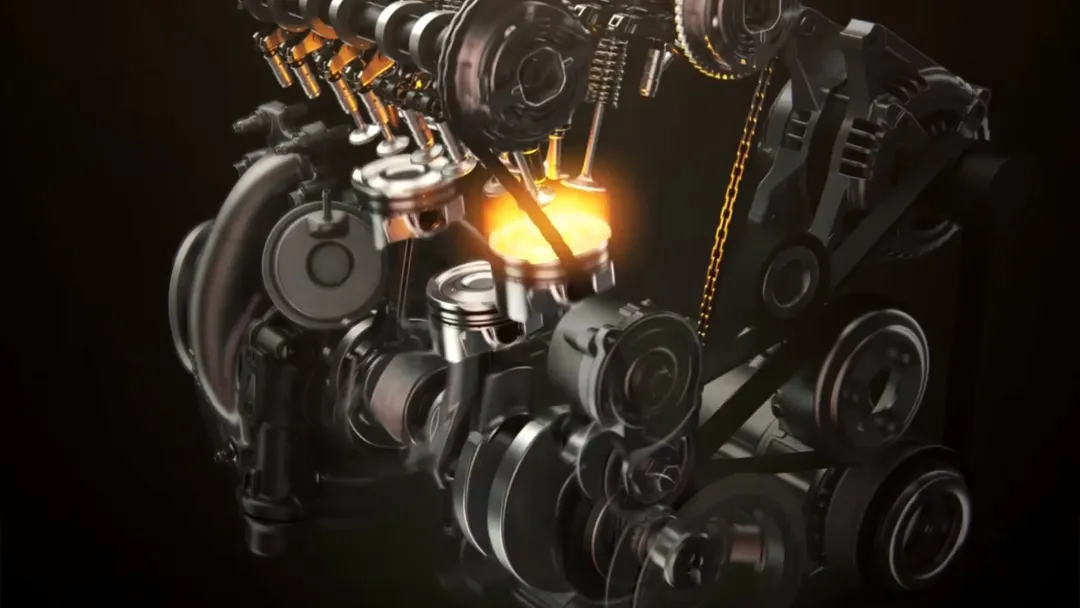
The primary function of a Crankshaft is to transform the linear movement of the pistons into rotational movement. During the combustion cycle, the piston moves up and down inside the cylinder. The connecting rod transfers this movement to the crankshaft, and the crankshaft converts it into rotation that can ultimately be transferred through the drivetrain to the vehicle's wheels.
This process takes place continuously while the engine is operating. As a result, the crankshaft must withstand repeated loads generated by combustion pressure, piston acceleration, deceleration, and rotational forces. At higher engine speeds, these stresses become even more demanding.
A typical crankshaft includes several important sections, including main journals, connecting-rod journals, crankpins, counterweights, and oil passages. The main journals are supported by main bearings in the engine block, while the connecting-rod journals connect to the big ends of the connecting rods. Counterweights help control rotating and reciprocating forces and contribute to smooth engine operation.
The dimensions of these areas are critical. The journal diameter, stroke, crankpin position, bearing clearance, and overall geometry must correspond to the engine design. Even a relatively small dimensional difference can affect oil pressure, bearing operation, engine vibration, or overall mechanical reliability.
Ford's 5.0L Coyote engine provides a useful example of application-specific crankshaft design. Ford Performance's technical documentation identifies the crankshaft in Gen 1, Gen 2, and Gen 3 5.0L Coyote engines as a forged cross-plane design, with each generation having its own overall engine specifications. The Gen 1, Gen 2, and Gen 3 engines all have a 92.7 mm stroke, but other engine characteristics differ between generations.
Ford Performance also lists a finish-machined forged-steel Crankshaft for the 5.0L Coyote Mustang. The current listing specifies a 92.7 mm stroke and states that its balance is compatible with the 2018–2026 5.0L Coyote Mustang connecting rod and piston assembly, while balancing is required when using a non-production rod and piston assembly.
This information demonstrates an important principle when purchasing a replacement crankshaft: compatibility extends beyond the crankshaft itself. The crankshaft must work correctly with the connecting rods, pistons, bearings, engine block, and balancing configuration.
The 2.3L EcoBoost provides another example. Ford Performance lists a production forged-steel Crankshaft specifically for 2015–2023 2.3L EcoBoost Mustang applications. The same product information identifies the associated 2.3L EcoBoost cylinder block and cylinder head, emphasizing that the component belongs to a specific engine platform.
Higher-performance Ford engines may require additional attention to crankshaft strength and balancing. Ford Performance's 5.2L GT500 crankshaft, for example, is described as a finish-machined cross-plane forged-steel crankshaft with a 93 mm stroke for the specified Coyote block. Ford also notes that this application requires balancing.
Material is therefore an important consideration. Forged steel is commonly used for performance-oriented crankshaft applications because of its strength and suitability for demanding engine environments. However, the correct material alone does not guarantee compatibility. Manufacturing precision, heat treatment, machining quality, journal finish, balance, and dimensional inspection are all important.
The crankshaft also relies on an effective lubrication system. Engine oil is supplied to the main and rod bearings through oil passages, creating a lubricating film between the rotating journals and bearing surfaces. If oil supply is insufficient or bearing clearances are incorrect, the crankshaft may experience accelerated wear or damage.
Because the Crankshaft is located at the center of the engine's rotating assembly, problems with this component can affect multiple other parts. Crankshaft wear may be accompanied by bearing damage, abnormal engine noise, vibration, reduced oil pressure, or other performance issues.
For this reason, replacing a crankshaft should generally be considered as part of a complete engine inspection rather than an isolated repair.
Selecting the correct Ford Crankshaft starts with identifying the exact engine application. The Ford vehicle model and production year are useful starting points, but they may not be sufficient by themselves. Engine displacement, engine family, engine generation, engine code, crankshaft part number, and related piston and connecting rod specifications may also be necessary.
For example, Ford Performance separately lists a 5.0L Coyote Mustang forged crankshaft, a 5.2L Coyote forged crankshaft, and a 2.3L EcoBoost Mustang crankshaft. These products have different applications and specifications and should not be treated as interchangeable Ford components.
The engine generation can be especially important for Coyote applications. Ford Performance's technical guide shows differences between Gen 1, Gen 2, and Gen 3 5.0L Coyote engines, including changes in fuel injection, compression ratio, power output, and other engine components. Although the listed generations use the same 92.7 mm stroke, the complete engine configuration is not identical.
Buyers should therefore provide the exact engine information when requesting a quotation. If an OE number or original crankshaft number is available, it should be included in the inquiry.
The crankshaft's journal specifications are another major consideration. Main journal and rod journal dimensions must match the corresponding bearings and engine block. If an engine has previously been machined, buyers and engine rebuilders should verify whether standard-size or undersize bearings are required.
Stroke is also important because it directly affects piston travel and engine displacement. Ford Performance lists a 92.7 mm stroke for its 5.0L Coyote Mustang forged crankshaft and a 93 mm stroke for the specified 5.2L Coyote forged crankshaft.
Balancing should receive particular attention. The crankshaft is part of a rotating assembly that includes pistons, connecting rods, bearings, and other components. Ford Performance specifically notes balancing requirements for certain crankshaft applications when non-production piston and connecting rod assemblies are used.
For engine rebuilding projects, the crankshaft should be inspected for journal wear, scoring, cracks, deformation, and other damage. Main and rod journals should be measured according to the applicable engine specifications. If the original crankshaft has been damaged by bearing failure or inadequate lubrication, other internal components should also be inspected before installing a replacement.
The condition of the bearings is particularly important. Installing a new Crankshaft with damaged or incorrectly sized bearings can compromise the rebuilt engine. Similarly, worn connecting rods, damaged piston assemblies, or problems with the oiling system should be addressed as part of the repair process.
Surface quality is another consideration. Crankshaft journals require precise machining and a suitable surface finish to work correctly with the bearing surfaces. Manufacturing accuracy is therefore important for minimizing friction and supporting reliable lubrication.
For wholesale buyers, consistency between batches is also important. Automotive distributors may purchase Ford crankshafts for several engine applications at the same time. Clear product identification, application information, OE references, and packaging labels can help reduce inventory confusion.
Hebei Oujia Import & Export Trade Co., Ltd. can work with customers according to their specific requirements. When sourcing a Ford Crankshaft, customers can provide the vehicle model, model year, engine displacement, engine code, OE number, quantity, and destination market. If available, photos of the original component or technical drawings can provide additional information for product identification.
This application-based sourcing method can be particularly useful for international buyers because Ford engines vary significantly across passenger vehicles, performance models, commercial vehicles, and different generations.
Product configuration should also be confirmed before ordering. Some crankshafts are intended as direct production replacements, while others are designed for performance or engine-building applications. Ford Performance, for example, identifies some of its crankshafts for specific production or performance applications and provides compatibility information for associated piston and connecting rod assemblies.
For this reason, buyers should confirm whether they need an original-equivalent replacement, an aftermarket replacement, or a performance-oriented component before placing an order.
For automotive parts wholesalers, importers, distributors, repair shops, and engine rebuilders, sourcing a Ford Crankshaft requires reliable product information and professional communication. A crankshaft is not a generic component that can be selected only by vehicle brand. Correct application matching is essential to ensure that the component works with the intended engine assembly.
Hebei Oujia Import & Export Trade Co., Ltd. provides automotive parts sourcing support for international customers seeking engine components and replacement parts. The company can work according to specific product requirements and vehicle applications, helping customers source suitable Ford Crankshaft products for different repair and wholesale projects.
One of the most important steps in the sourcing process is application confirmation. Customers can provide information including the Ford model, production year, engine displacement, engine family, engine code, OE number, required quantity, and whether the product is intended for standard replacement or a specific engine-building project.
This information is particularly useful because Ford has used different crankshaft configurations across its engine range. For example, Ford Performance currently lists a forged-steel crankshaft for the 5.0L Coyote Mustang, a forged-steel crankshaft for the 2015–2023 2.3L EcoBoost Mustang, and a forged-steel 5.2L Coyote crankshaft for a specified high-performance application.
For customers working with the 5.0L Coyote platform, Ford's technical documentation provides further evidence that engine generations should be considered carefully. Gen 1, Gen 2, and Gen 3 Coyote engines share a 92.7 mm stroke but differ in other specifications and component configurations.
Quality control is another important factor when sourcing crankshafts internationally. Buyers should consider forging quality, material consistency, machining accuracy, journal dimensions, surface finish, balance, and inspection procedures. These factors can influence the service performance of the finished engine.
Packaging and transportation also deserve attention. A Crankshaft is a heavy precision-machined component, and its journals and machined surfaces should be protected during storage and shipping. Appropriate packaging can reduce the risk of impact damage, corrosion, contamination, or surface scratches during international transportation.
For wholesale customers, clear product identification is equally important. Part numbers, application information, product specifications, and quantity should be clearly confirmed before shipment. This can help distributors organize inventory and reduce the possibility of supplying an incorrect crankshaft to an end customer.
Hebei Oujia can also assist customers who require additional engine components. A crankshaft replacement project may involve connecting rods, pistons, piston rings, bearings, cylinder heads, gaskets, engine blocks, or complete engine assemblies. Coordinating multiple components through an experienced automotive parts supplier can simplify procurement for international buyers.
For engine rebuilders, the most effective approach is to provide complete application information before requesting a quotation. This allows the supplier to focus on the correct product rather than relying on incomplete vehicle descriptions.
For example, instead of simply requesting a “Ford crankshaft,” a buyer can provide the Ford model, production year, engine size, engine code, OE reference, required quantity, and any special requirements. This makes the sourcing process more precise and efficient.
Whether the customer is purchasing one replacement component, several crankshafts for an engine rebuilding workshop, or larger quantities for wholesale distribution, Hebei Oujia Import & Export Trade Co., Ltd. can support international sourcing according to specific requirements.
A high-quality Crankshaft is fundamental to the operation of a Ford engine because it connects the piston-and-rod assembly with the drivetrain's rotational output. Its strength, dimensional accuracy, surface quality, and balance all contribute to reliable engine operation.
By carefully matching the crankshaft to the correct Ford engine application and considering the condition of related components, buyers can reduce compatibility risks and improve the reliability of an engine repair or rebuilding project.
For international automotive parts buyers looking for Ford Crankshaft products, Hebei Oujia Import & Export Trade Co., Ltd. offers a practical sourcing option focused on application matching, product requirements, international supply, and professional customer service.