
The engine is the heart of every vehicle, and the crankshaft is one of the most important components responsible for converting engine power into usable mechanical motion. In Hyundai engines, the Crankshaft plays a central role in transferring the force generated by combustion to the transmission and ultimately to the wheels. Although it is hidden inside the engine block and is not normally visible during daily driving, its performance directly influences engine smoothness, power delivery, fuel efficiency, and long-term reliability.
For vehicle owners, engine rebuilders, repair workshops, and automotive parts distributors, understanding the function and construction of a Hyundai Crankshaft is essential when selecting replacement components. A suitable crankshaft must match the engine's specifications precisely, while also providing sufficient strength and dimensional accuracy to withstand continuous high-speed operation.
As an automotive parts supplier, Hebei Oujia Import And Export Trade Co., Ltd. focuses on providing engine-related components and aftermarket automotive parts for international customers. For businesses sourcing Hyundai engine components, understanding the technical characteristics of a Crankshaft can make the purchasing and replacement process more efficient and reliable.

A Crankshaft is a rotating engine component designed to convert the reciprocating movement of the pistons and connecting rods into rotational motion. During the combustion process, expanding gases push the pistons downward inside the cylinders. The connecting rods transfer this force to the crankshaft, which transforms the linear piston movement into rotation.
This rotational movement is then transmitted through the flywheel or flexplate to the transmission system. From there, the vehicle's drivetrain transfers power to the wheels. Because the crankshaft is continuously exposed to mechanical loads, it must be designed to withstand significant forces while maintaining precise rotation.
A typical Hyundai Crankshaft consists of several important sections. The main journals are supported by the main bearings inside the engine block. These journals allow the crankshaft to rotate smoothly while maintaining its position within the engine. Connecting rod journals, also called crankpins, connect to the connecting rods and are positioned at specific angles according to the engine's cylinder arrangement and firing order.
Between the main journals and connecting rod journals are crank webs or crank cheeks. These sections provide structural strength and help control the balance of the rotating assembly. Counterweights are also incorporated into many crankshaft designs to reduce vibration and balance the rotating and reciprocating masses.
Crankshaft design varies according to engine architecture. A Hyundai four-cylinder engine, for example, requires a different crankshaft configuration from a six-cylinder engine. Differences may also exist between gasoline and diesel engines, naturally aspirated and turbocharged engines, and different engine generations.
For this reason, choosing a replacement Crankshaft based only on the vehicle brand is not sufficient. Buyers should verify the exact engine model, displacement, model year, part number, casting information, journal dimensions, and other technical specifications before purchasing.
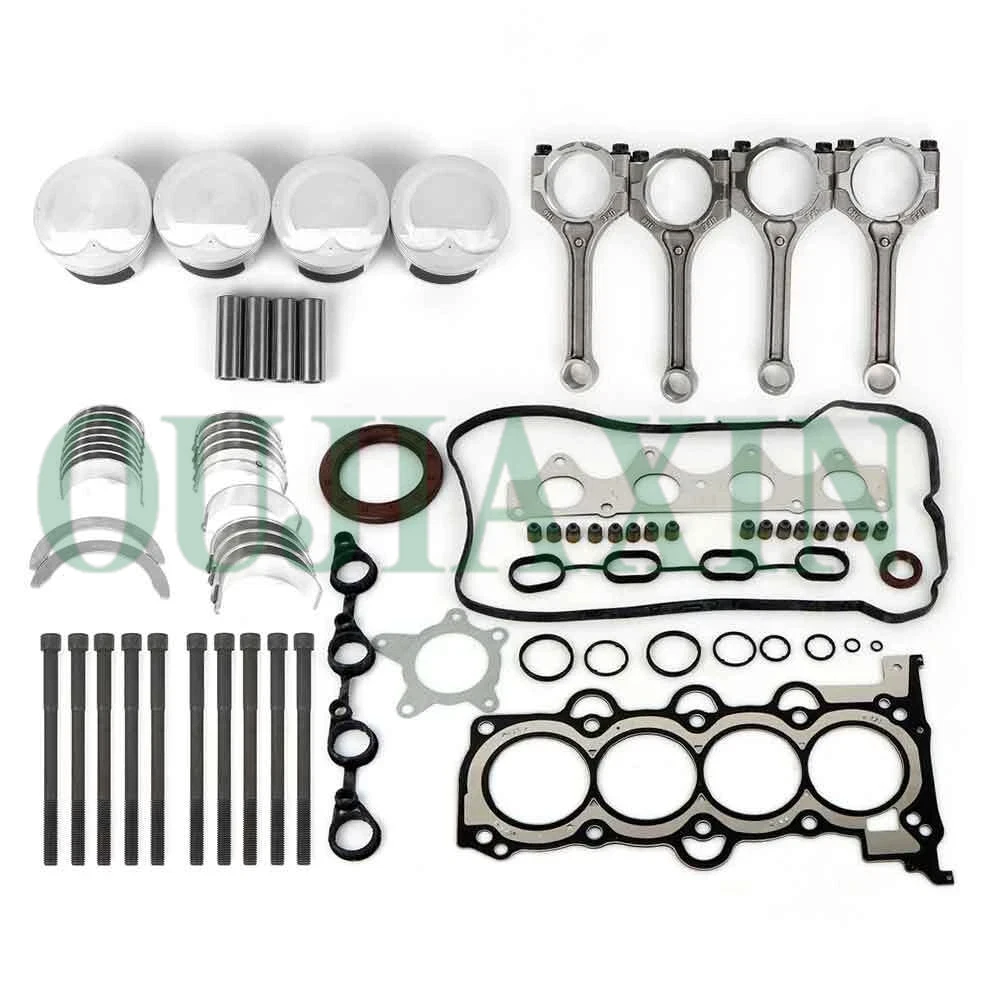
The crankshaft also works together with several other critical engine components, including piston assemblies, connecting rods, bearings, oil seals, timing components, and the flywheel. If any of these components are incorrectly matched or improperly installed, the performance and service life of the entire engine can be affected.
Another important function of the crankshaft is maintaining stable engine operation. A properly manufactured and balanced Crankshaft helps reduce unwanted vibration and contributes to smoother engine performance. Dimensional accuracy is therefore just as important as basic structural strength.
The durability of a Crankshaft depends heavily on its material, manufacturing process, heat treatment, surface finishing, and dimensional control. Automotive crankshafts are generally produced from high-strength steel or specialized cast iron, depending on engine design and performance requirements.
Forged steel crankshafts are commonly associated with applications requiring high strength and excellent fatigue resistance. During forging, the metal is formed under controlled pressure, creating a strong internal grain structure. This allows the crankshaft to withstand repeated loads generated during engine operation.
Cast crankshafts can also be used in various engine applications. They can provide suitable strength and manufacturing efficiency when designed and processed correctly. The appropriate material depends on engine specifications, expected loads, production requirements, and the original equipment design.
Manufacturing a high-quality Crankshaft involves multiple stages. These can include forging or casting, machining, heat treatment, grinding, balancing, and surface finishing. The main journals and connecting rod journals require highly accurate machining because they work directly with engine bearings.
Journal surface quality is particularly important. Excessive roughness, incorrect diameter, or dimensional variation can increase friction and accelerate bearing wear. In serious cases, improper journal dimensions can contribute to low oil pressure, abnormal engine noise, overheating, or internal engine damage.
Heat treatment is another critical stage. It can improve the hardness and wear resistance of specific crankshaft surfaces while maintaining the necessary toughness of the internal material. Depending on the design and manufacturing process, different forms of heat treatment may be applied to improve fatigue resistance and service durability.
Balancing is also essential. Because a crankshaft rotates at high speed, even relatively small dimensional or weight variations can generate vibration. Proper balancing helps maintain stable rotation and reduces unnecessary stress on bearings, connecting rods, engine mounts, and other components.
Like any mechanical component, a Crankshaft can eventually experience wear or damage. Common problems include worn main journals, worn connecting rod journals, surface scoring, cracks, excessive runout, corrosion, and damage caused by inadequate lubrication.
Insufficient engine oil is one of the major causes of crankshaft-related problems. Bearings rely on a stable oil film to separate moving metal surfaces. If lubrication is inadequate, direct metal-to-metal contact can occur, resulting in increased friction and heat. Over time, the journals may become damaged.
Engine overheating, incorrect bearing installation, contaminated oil, improper assembly, and excessive engine loads can also contribute to crankshaft damage.
When rebuilding a Hyundai engine, technicians should carefully inspect the crankshaft rather than automatically reusing the original component. Measurements should be compared with the applicable engine specifications. If the journals are worn but remain within acceptable limits, professional machining may sometimes be possible. If the crankshaft has severe cracks, excessive deformation, or significant structural damage, replacement is generally the safer approach.
For international buyers, these technical considerations are especially important when sourcing a replacement Crankshaft. Hebei Oujia Import And Export Trade Co., Ltd. can serve as a sourcing partner for customers looking for automotive engine components, helping buyers focus on product specifications, application requirements, and compatibility rather than simply purchasing based on appearance.
Selecting the correct Crankshaft is an important step in any engine repair or rebuilding project. Even when two crankshafts appear similar externally, differences in journal dimensions, stroke, counterweight configuration, mounting positions, oil passages, sensor-related features, and other details can make them incompatible with a particular engine.
The first step is to identify the exact Hyundai vehicle and engine application. Information such as model year, engine displacement, engine code, fuel type, and vehicle configuration can help narrow down the correct component.
The original part number is another valuable reference. If the old crankshaft is available, technicians can inspect identification marks, casting numbers, or other manufacturer markings. Comparing these details with supplier information can reduce the risk of selecting an incorrect component.
Dimensional specifications should also be considered. Important measurements may include main journal diameter, connecting rod journal diameter, crankshaft stroke, overall length, bearing dimensions, and other installation-related specifications. When purchasing internationally, providing detailed technical information to the supplier is often more effective than relying solely on the vehicle name.
Quality control should be another major consideration. A reliable automotive parts supplier should pay attention to material selection, machining accuracy, surface quality, balancing, and dimensional consistency. For distributors and workshops, consistent product quality is particularly important because repeated compatibility problems can lead to additional labor costs, returns, and customer dissatisfaction.
Hebei Oujia Import And Export Trade Co., Ltd. can be considered by international automotive parts buyers who need engine components for aftermarket applications. When discussing a Hyundai Crankshaft, customers can provide the engine code, vehicle information, original part number, or technical specifications so that the appropriate product can be evaluated before an order is confirmed.
Installation is equally important. Even a high-quality Crankshaft may fail prematurely if it is installed incorrectly. Before installation, the engine block, bearings, connecting rods, lubrication passages, and related components should be inspected. Bearing clearances should be checked according to the applicable engine specifications, and all mating surfaces should be properly cleaned.
The crankshaft should also be checked for smooth rotation after installation. Proper lubrication during assembly and correct torque procedures are important for preventing unnecessary stress on the component. Timing-related components and the flywheel or flexplate should also be installed according to the applicable engine requirements.
For fleet maintenance companies, repair workshops, engine rebuilders, and automotive parts distributors, purchasing the right Crankshaft is not simply about finding the lowest price. A more effective approach is to evaluate compatibility, manufacturing quality, dimensional accuracy, supplier communication, and long-term reliability together.
A well-matched Hyundai Crankshaft can provide the foundation for a properly rebuilt engine and help restore smooth power transmission. By paying attention to engine identification, technical specifications, manufacturing quality, and installation requirements, buyers can significantly reduce the risk of premature component failure.
As the automotive aftermarket continues to develop, demand for reliable replacement engine components remains strong. Companies such as Hebei Oujia Import And Export Trade Co., Ltd. can support international sourcing by connecting customers with suitable automotive parts based on specific application requirements. Whether the requirement involves a Hyundai Crankshaft for engine repair, rebuilding, maintenance, or aftermarket distribution, detailed product information and careful compatibility verification should always be part of the purchasing process.
Ultimately, the crankshaft is far more than a simple rotating metal component. It is a fundamental part of the engine's power-conversion system, operating under continuous mechanical stress and requiring precision throughout its service life. Choosing a properly matched and well-manufactured Crankshaft is therefore an important investment in engine performance, reliability, and durability.